
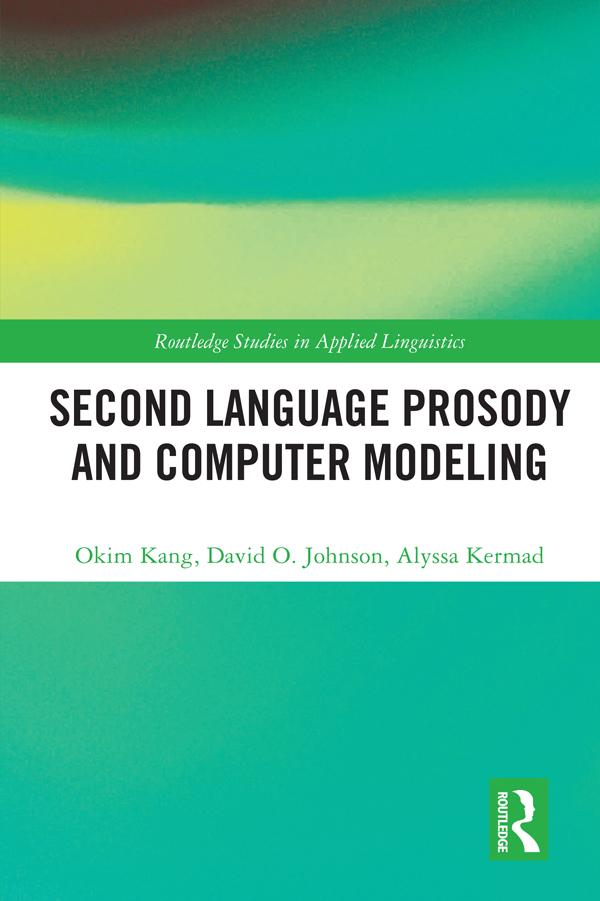
This volume presents an interdisciplinary approach to the study of second language prosody and computer modeling. It addresses the importance of prosody’s role in communication, bridging the gap between applied linguistics and computer science.
The book illustrates the growing importance of the relationship between automated speech recognition systems and language learning assessment in light of new technologies and showcases how the study of prosody in this context in particular can offer innovative insights into the computerized process of natural discourse. The book offers detailed accounts of different methods of analysis and computer models used and demonstrates how these models can be applied to L2 discourse analysis toward predicting real-world language use. Kang, Johnson, and Kermad also use these frameworks as a jumping-off point from which to propose new models of second language prosody and future directions for prosodic computer modeling more generally.
Making the case for the use of naturalistic data for real-world applications in empirical research, this volume will foster interdisciplinary dialogues across students and researchers in applied linguistics, speech communication, speech science, and computer engineering.
Payez facilement par carte, Klarna, Apple Pay ou Google Pay. Pas satisfait ? Vous avez toujours une garantie de remboursement de 14 jours. En savoir plus dans nos conditions. Si vous avez des questions, envoyez-nous un e-mail à hello@memmo.org.
Memmo facilite tes études, où que tu sois dans le monde. On rassemble tes manuels de cours et des outils d'étude intelligents au même endroit : résumés, quiz, podcasts et flashcards. Et il y a Ted, ton compagnon d'étude qui répond à toutes tes questions. Plus de 50 000 étudiants étudient déjà ici – conçu pour t'aider à apprendre plus vite et à moins stresser.