
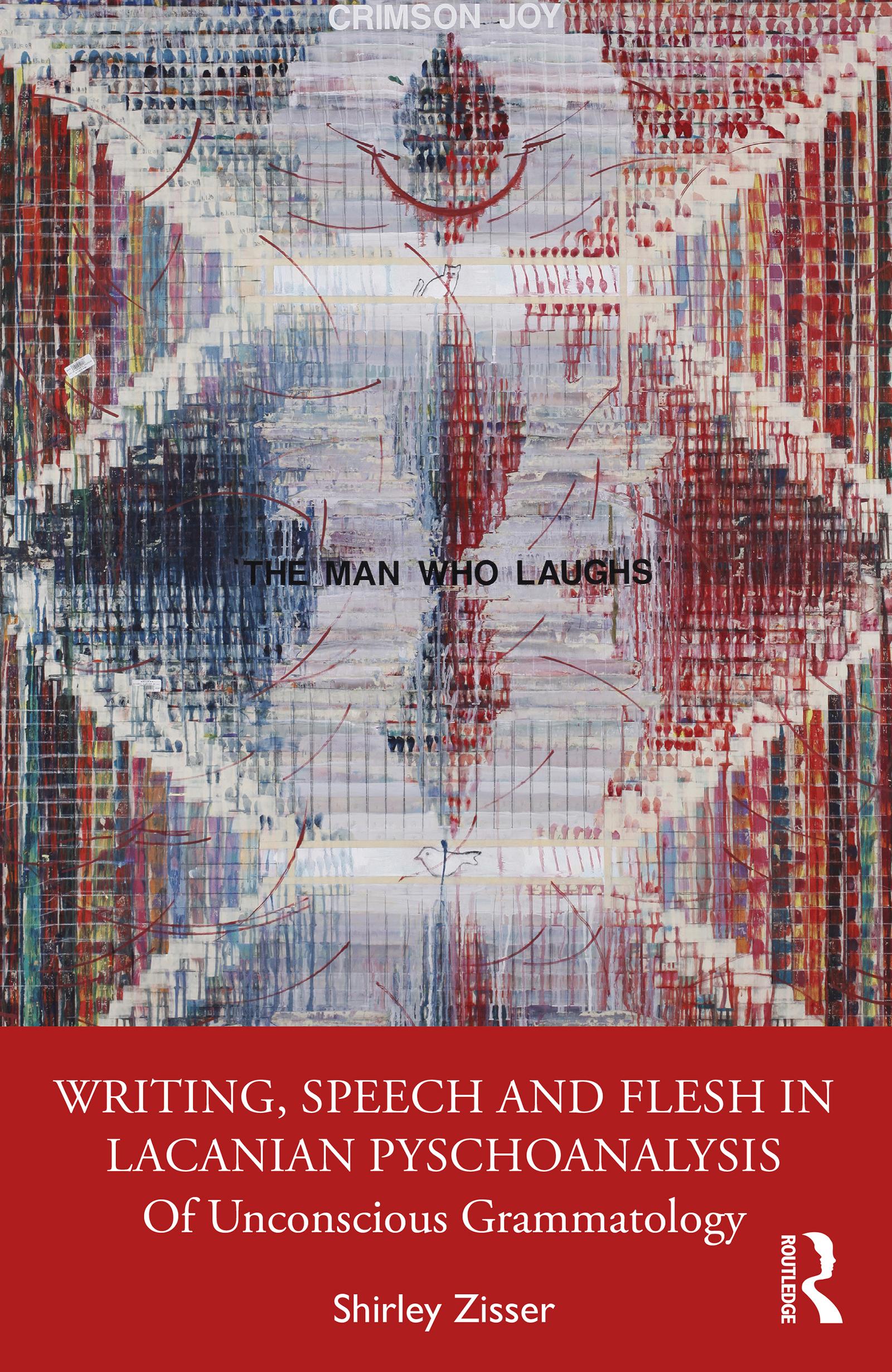
This book explores the place of the flesh in the linguistically-inflected categories of Freudian and Lacanian psychoanalysis, drawing explicit attention to the organic as an inherent part of the linguistic categories that appear in the writings of Freud and Lacan.
Lacan’s ‘return to Freud’ famously involves a ‘linguistic turn’ in psychoanalysis. The centering of language as a major operator in psychic life often leads to a dualistic or quasi-dualistic view in which language and the enjoyment of the body are polarized. Exploring the intricate connections of the linguistic and the organic in both Lacanian and Freudian psychoanalysis from its beginnings, Zisser shows that surprisingly, and not only in Lacan’s late teaching, psycho-linguistic categories turn out to be suffused with organicity. After unfolding the remnant of the flesh in the signifier as a major component of Lacan’s critique of Saussure, using visual artworks as objective correlatives as it does so, the book delineates two forms of psychic writing. These are aligned not only with two fundamental states of the psychic apparatus as described by Freud (pain and satisfaction), but with two ways of sculpting formulated by Alberti in the Renaissance but also referred to by Freud. Continuing in a Derridean vein, the book demonstrates the primacy of writing to speech in psychoanalysis, emphasizing how the relation between speech and writing is not binary but topological, as speech in its psychoanalytic conception is nothing but the folding inside-out of unconscious writing.
Innovatively placing the flesh at the core of its approach, the text also incorporates the seminal work of psychoanalyst Michèle Montrelay to articulate the precise relation between the linguistic and the organic. Writing, Speech and Flesh in Lacanian Psychoanalysis will be indispensable to psychoanalysts, literary theorists, rhetoricians, deconstructionists, and those studying at the intersection of psychoanalysis, language, and the visual arts.
Payez facilement par carte, Klarna, Apple Pay ou Google Pay. Pas satisfait ? Vous avez toujours une garantie de remboursement de 14 jours. En savoir plus dans nos conditions. Si vous avez des questions, envoyez-nous un e-mail à hello@memmo.org.
Memmo facilite tes études, où que tu sois dans le monde. On rassemble tes manuels de cours et des outils d'étude intelligents au même endroit : résumés, quiz, podcasts et flashcards. Et il y a Ted, ton compagnon d'étude qui répond à toutes tes questions. Plus de 50 000 étudiants étudient déjà ici – conçu pour t'aider à apprendre plus vite et à moins stresser.