
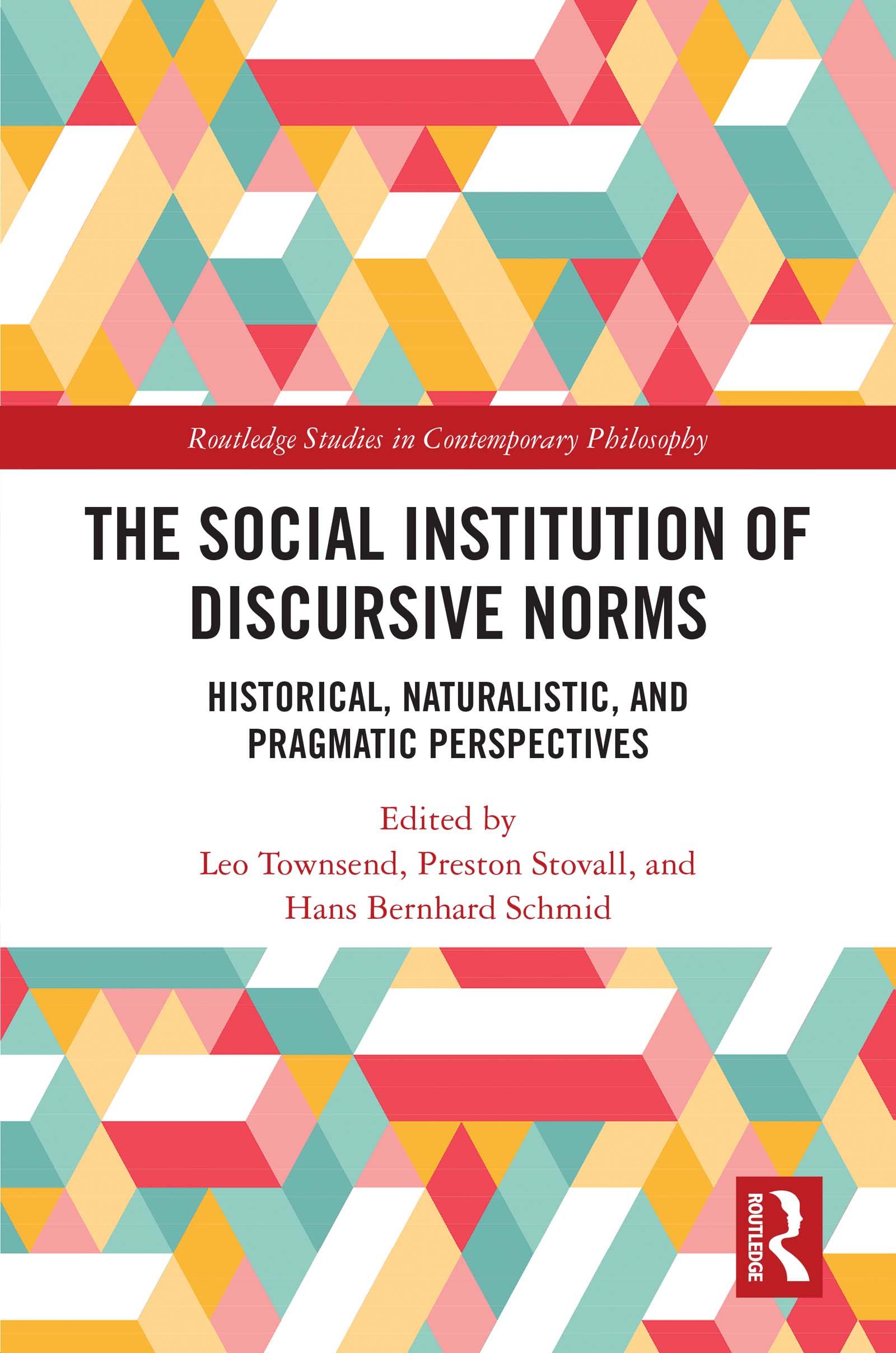
The essays in this collection explore the idea that discursive norms—the norms governing our thought and talk—are profoundly social. Not only do these norms govern and structure our social interactions, but they are sustained by a variety of social and institutional structures.
The chapters are divided into three thematic sections. The first offers historical perspectives on discursive norms, including a chapter by Robert Brandom on the way Hegel transformed Kant’s normativist approach to representation by adding both a social and a historicist dimension to it. Section II features four chapters that examine the sociality of normativity from within a broadly naturalistic framework. The third and final section focuses on the social dimension of linguistic phenomena such as online speech acts, oppressive speech, and assertions.
The Social Institution of Discursive Norms will be of interest to scholars and advanced students working in philosophy of language, philosophy of mind, and social philosophy.
Payez facilement par carte, Klarna, Apple Pay ou Google Pay. Pas satisfait ? Vous avez toujours une garantie de remboursement de 14 jours. En savoir plus dans nos conditions. Si vous avez des questions, envoyez-nous un e-mail à hello@memmo.org.
Memmo facilite tes études, où que tu sois dans le monde. On rassemble tes manuels de cours et des outils d'étude intelligents au même endroit : résumés, quiz, podcasts et flashcards. Et il y a Ted, ton compagnon d'étude qui répond à toutes tes questions. Plus de 50 000 étudiants étudient déjà ici – conçu pour t'aider à apprendre plus vite et à moins stresser.