
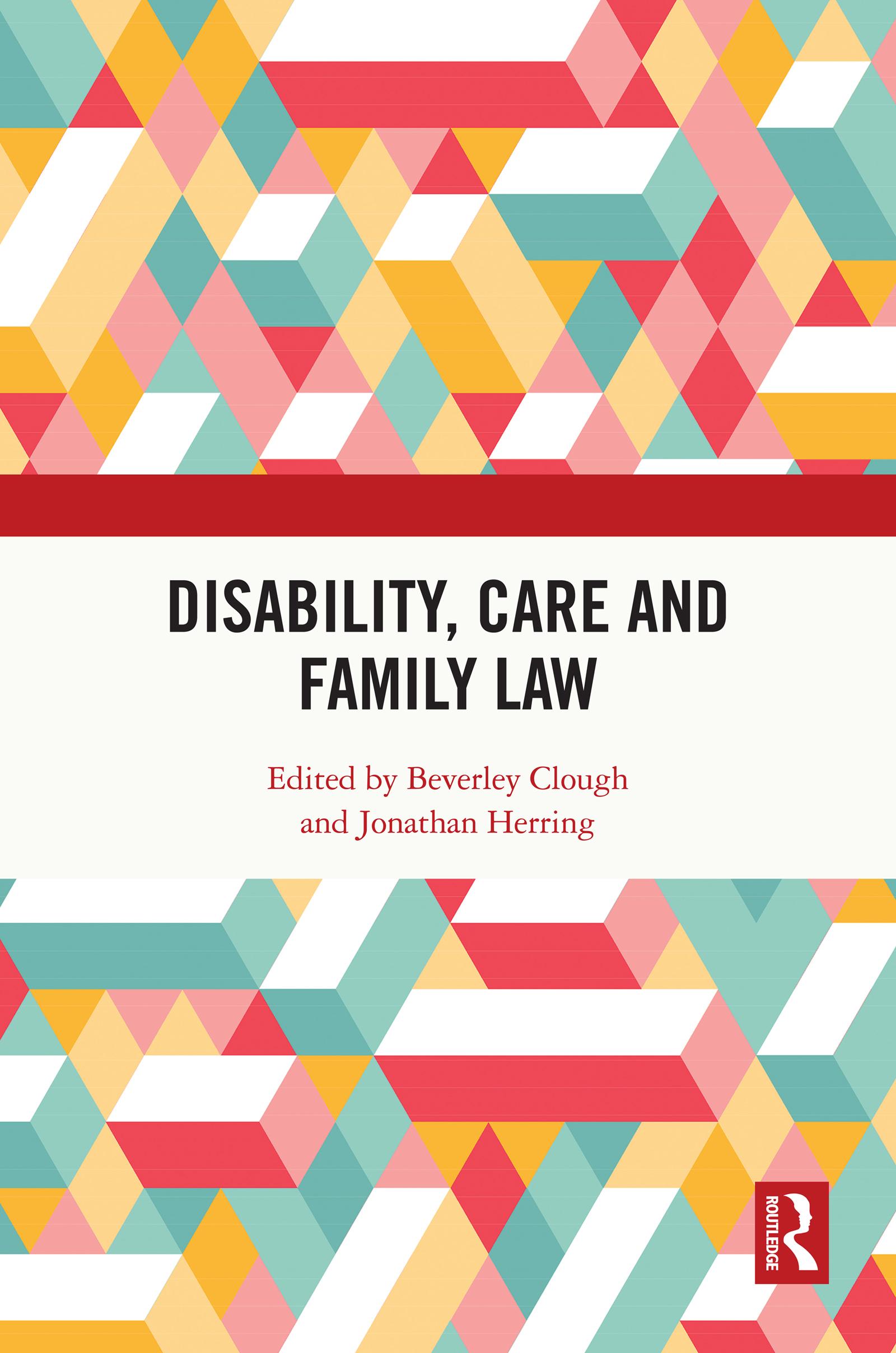
This book explores the series of issues that emerge at the intersection of disability, care and family law.
Disability studies is an area of increasing academic interest. In addition to a subject in its own right, there has been growing concern to ensure that mainstream subjects diversify and include marginalised voices, including those of disabled people. Family law in modern times is often based on an "able-bodied autonomous norm" but can fit less well with the complexities of living with disability. In response, this book addresses a range of important and highly topical issues: whether care proceedings are used too often in cases where parents have disabilities; how the law should respond to children who care for disabled parents – and the care of older family members with disabilities. It also considers the challenges posed by the UN Convention on the Rights of Persons with Disabilities, particularly around the different institutional and state responsibilities captured in the Convention, and around decision-making for both disabled adults and children.
This interdisciplinary collection – with contributors from law, criminology, sociology and social policy as well as from policy and activist backgrounds – will appeal to academic family lawyers and disability scholars as well as students interested in issues around family law, disability and care.
Payez facilement par carte, Klarna, Apple Pay ou Google Pay. Pas satisfait ? Vous avez toujours une garantie de remboursement de 14 jours. En savoir plus dans nos conditions. Si vous avez des questions, envoyez-nous un e-mail à hello@memmo.org.
Memmo facilite tes études, où que tu sois dans le monde. On rassemble tes manuels de cours et des outils d'étude intelligents au même endroit : résumés, quiz, podcasts et flashcards. Et il y a Ted, ton compagnon d'étude qui répond à toutes tes questions. Plus de 50 000 étudiants étudient déjà ici – conçu pour t'aider à apprendre plus vite et à moins stresser.