
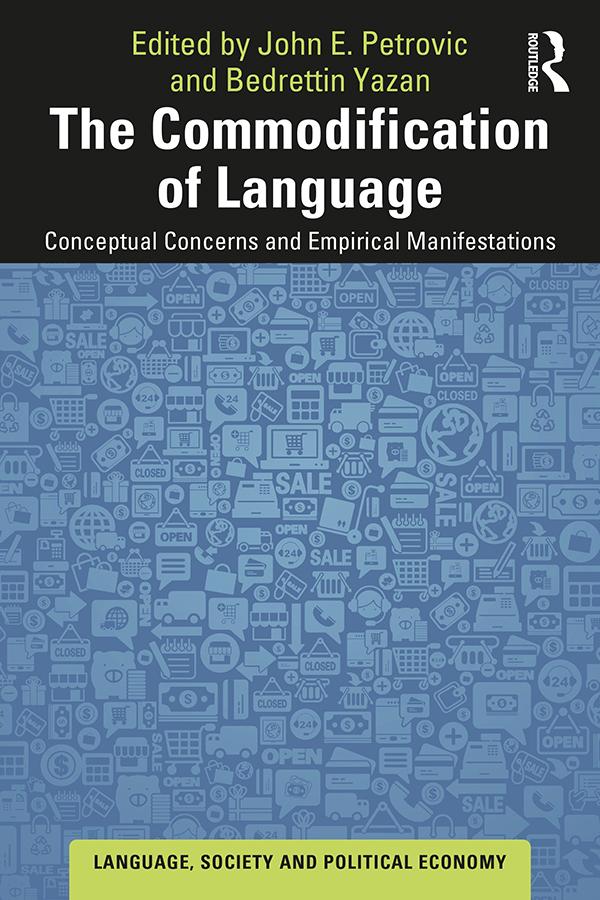
This volume seeks to add to our understanding of how language is constructed in late capitalist societies. Exploring the conceptual and theoretical underpinnings of the so-called "commodification of language" and its relationship to the notion of linguistic capital, the authors examine recent research that offers implications for language policy and planning.
Bringing together an international group of scholars, this collection includes chapters that address whether or not language can rightly be referred to as a commodity and, if so, under what circumstances. The different theoretical foundations of understanding language as a resource with exchange value – whether as commodity or capital – have practical implications for policy writ large. The implications of the "commodification of language" in more empirical terms are explored, both in terms of how it affects language as well as language policy at more micro levels. This includes more specific policy arenas such as language in education policy or family language policies as well as the implications for individual identity construction and linguistic communities.
With a conclusion written by leading scholar David Block, this is key reading for researchers and advanced students of critical sociolinguistics, language and economy, language and politics, language policy and linguistic anthropology within linguistics, applied linguistics, and language teacher education.
Payez facilement par carte, Klarna, Apple Pay ou Google Pay. Pas satisfait ? Vous avez toujours une garantie de remboursement de 14 jours. En savoir plus dans nos conditions. Si vous avez des questions, envoyez-nous un e-mail à hello@memmo.org.
Memmo facilite tes études, où que tu sois dans le monde. On rassemble tes manuels de cours et des outils d'étude intelligents au même endroit : résumés, quiz, podcasts et flashcards. Et il y a Ted, ton compagnon d'étude qui répond à toutes tes questions. Plus de 50 000 étudiants étudient déjà ici – conçu pour t'aider à apprendre plus vite et à moins stresser.