
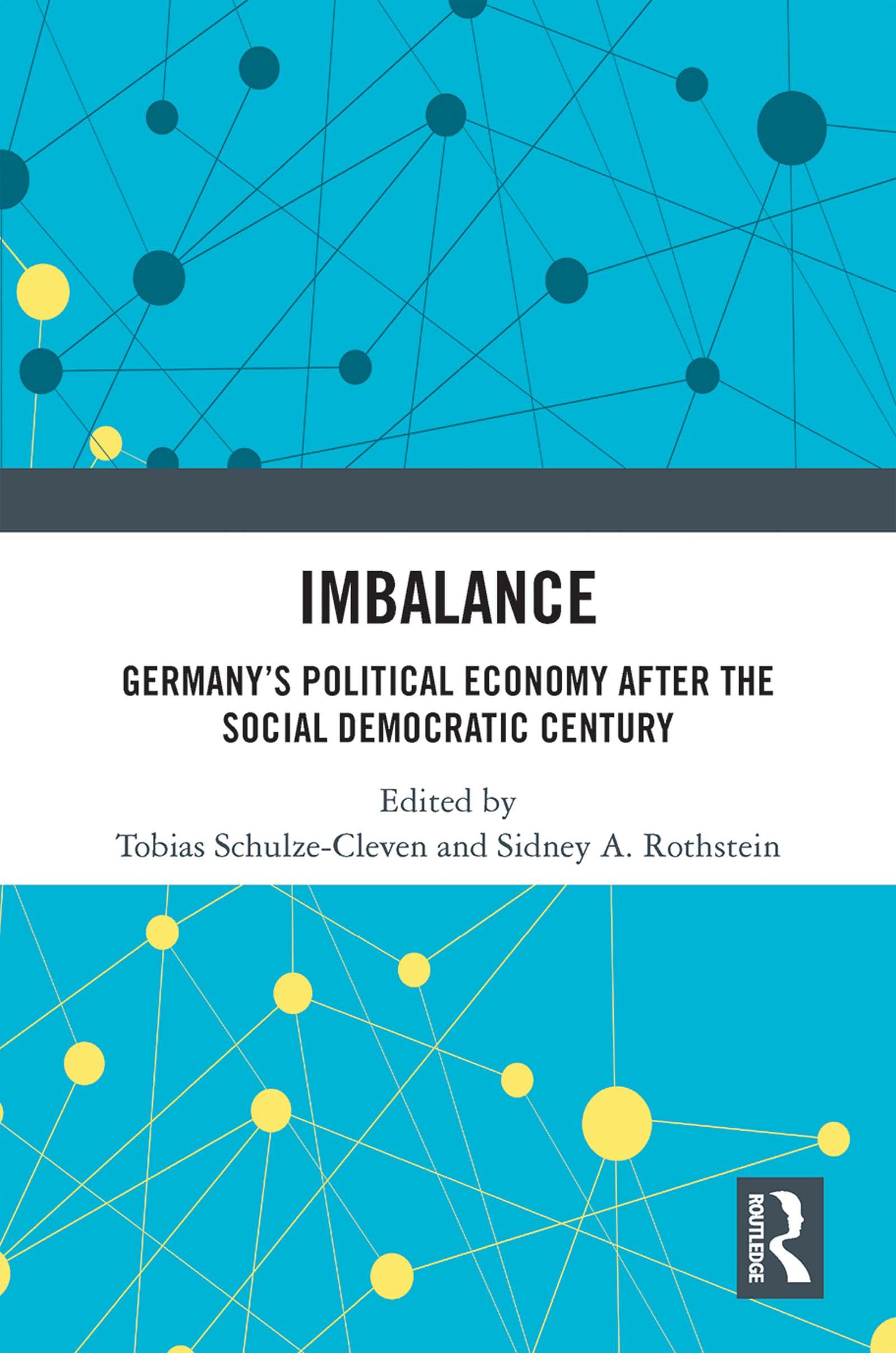
Germany is a central case for research on comparative political economy, which has inspired theorizing on national differences and historical trajectories. This book assesses Germany’s political economy after the end of the "social democratic" 20th century to rethink its dominant properties and create new opportunities for using the country as a powerful lens into the evolution of democratic capitalism.
Documenting large-scale changes and new tensions in the welfare state, company strategies, interest intermediation, and macroeconomic governance, the volume makes the case for analysing contemporary Germany through the politics of imbalance rather than the long-standing paradigm of institutional stability. This conceptual reorientation around inequalities and disparities provides much-needed traction for clarifying the causal dynamics that govern ongoing processes of institutional recomposition. Delving into the politics of imbalance, the volume explicates the systemic properties of capitalism, multivalent policy feedback, and the organizational foundations of creative adjustment as key vantage points for understanding new forms of distributional conflict within and beyond Germany.
The chapters in this book were originally published as a special issue of German Politics.
Payez facilement par carte, Klarna, Apple Pay ou Google Pay. Pas satisfait ? Vous avez toujours une garantie de remboursement de 14 jours. En savoir plus dans nos conditions. Si vous avez des questions, envoyez-nous un e-mail à hello@memmo.org.
Memmo facilite tes études, où que tu sois dans le monde. On rassemble tes manuels de cours et des outils d'étude intelligents au même endroit : résumés, quiz, podcasts et flashcards. Et il y a Ted, ton compagnon d'étude qui répond à toutes tes questions. Plus de 50 000 étudiants étudient déjà ici – conçu pour t'aider à apprendre plus vite et à moins stresser.