
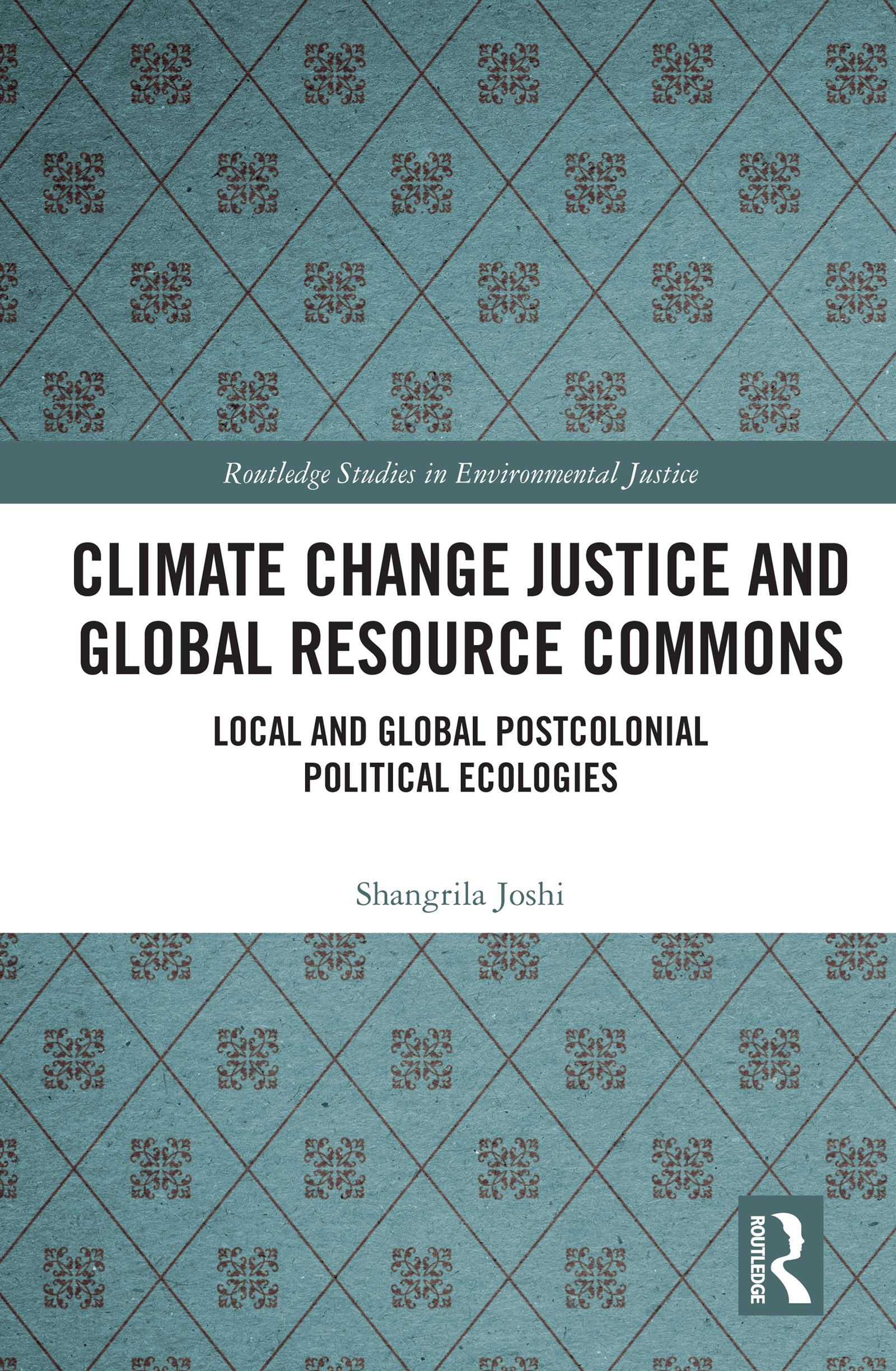
This book examines the multiple scales at which the inequities of climate change are borne out.
Shangrila Joshi engages in a multi-scalar analysis of the myriad ways in which various resource commons – predominantly atmosphere and forests – are implicated in climate governance, with a consistent emphasis throughout on the justice implications for disenfranchised communities. The book starts with an analysis of North-South inequities in responsibility, vulnerability, and capability, as evidenced in global climate treaty negotiations from Rio to Paris. It then moves on to examine the ways in which structural inequalities are built into the conceptualization and operationalization of various neoliberal climate solutions such as Reducing Emissions from Deforestation and Forest Degradation (REDD+) and the Clean Development Mechanism (CDM). Drawing on qualitative interviews conducted in Delhi, Kathmandu, and the Terai region of Nepal, participant observation at the Climate Conference in Copenhagen (COP-15), and textual analysis of official documents, the book articulates a geography of climate justice, considering how ideas of injustice pertaining to colonialism, race, Indigeneity, caste, gender, and global inequality intersect with the politics of scale.
This book will be of great interest to students and scholars of environmental justice, climate justice, climate policy, political ecology, and South Asian studies.
Payez facilement par carte, Klarna, Apple Pay ou Google Pay. Pas satisfait ? Vous avez toujours une garantie de remboursement de 14 jours. En savoir plus dans nos conditions. Si vous avez des questions, envoyez-nous un e-mail à hello@memmo.org.
Memmo facilite tes études, où que tu sois dans le monde. On rassemble tes manuels de cours et des outils d'étude intelligents au même endroit : résumés, quiz, podcasts et flashcards. Et il y a Ted, ton compagnon d'étude qui répond à toutes tes questions. Plus de 50 000 étudiants étudient déjà ici – conçu pour t'aider à apprendre plus vite et à moins stresser.