
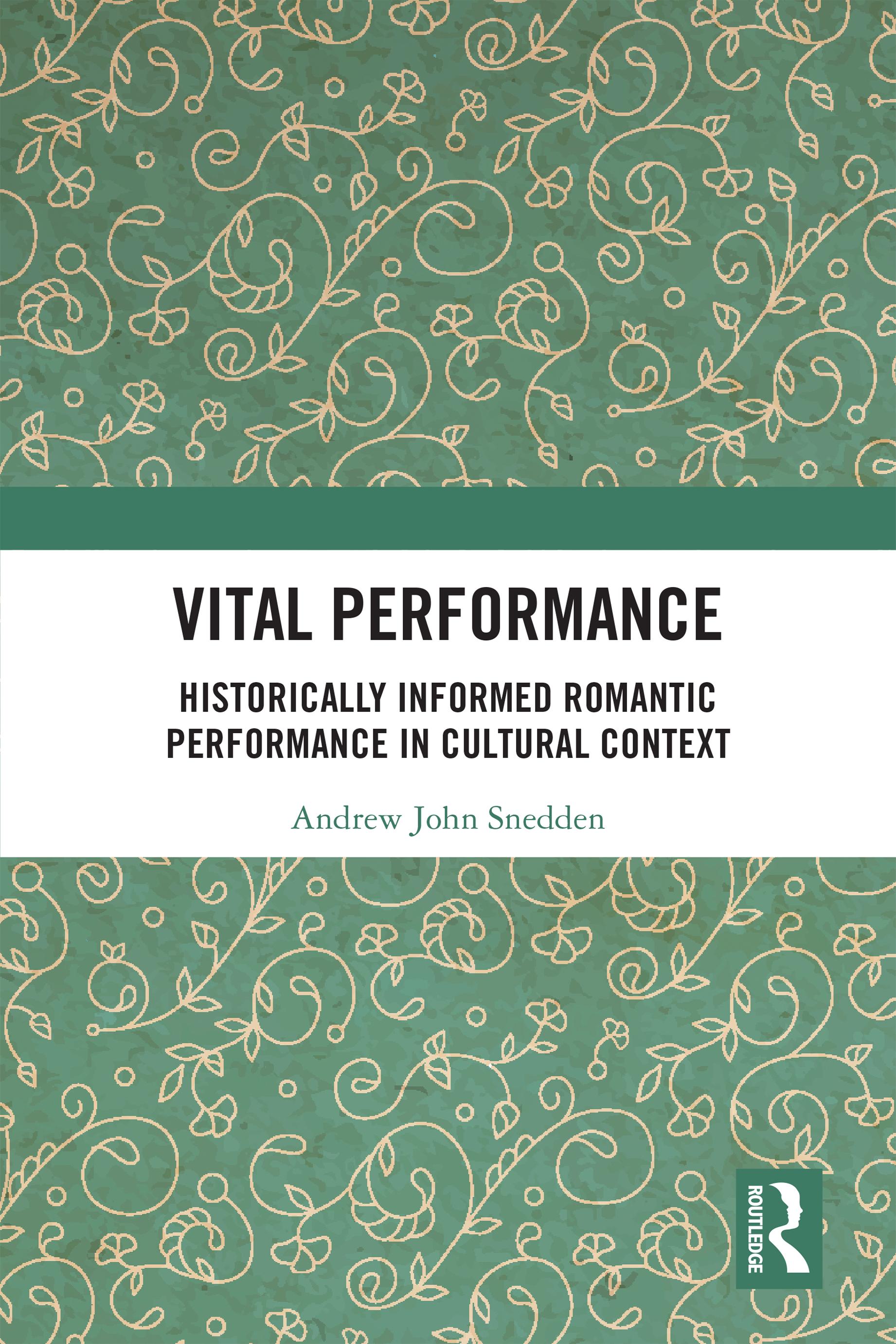
Historically Informed Performance, or HIP, has become an influential and exciting development for scholars, musicians, and audiences alike. Yet it has not been unchallenged, with debate over the desirability of its central goals and the accuracy of its results. The author suggests ways out of this impasse in Romantic performance style.
In this wide-ranging study, pianist and scholar Andrew John Snedden takes a step back, examining the strengths and limitations of HIP. He proposes that many problems are avoided when performance styles are understood as expressions of their cultural era rather than as simply composer intention, explaining not merely how we play, but why we play the way we do, and why the nineteenth century Romantics played very differently. Snedden examines the principal evidence we have for Romantic performance style, especially in translation of score indications and analysis of early recordings, finally focusing on the performance styles of Liszt and Chopin. He concludes with a call for the reanimation of culturally appropriate performance styles in Romantic repertoire.
This study will be of great interest to scholars, performers, and students, to anyone wondering about how our performances reflect our culture, and about how the Romantics played their own culturally-embedded music.
Payez facilement par carte, Klarna, Apple Pay ou Google Pay. Pas satisfait ? Vous avez toujours une garantie de remboursement de 14 jours. En savoir plus dans nos conditions. Si vous avez des questions, envoyez-nous un e-mail à hello@memmo.org.
Memmo facilite tes études, où que tu sois dans le monde. On rassemble tes manuels de cours et des outils d'étude intelligents au même endroit : résumés, quiz, podcasts et flashcards. Et il y a Ted, ton compagnon d'étude qui répond à toutes tes questions. Plus de 50 000 étudiants étudient déjà ici – conçu pour t'aider à apprendre plus vite et à moins stresser.