
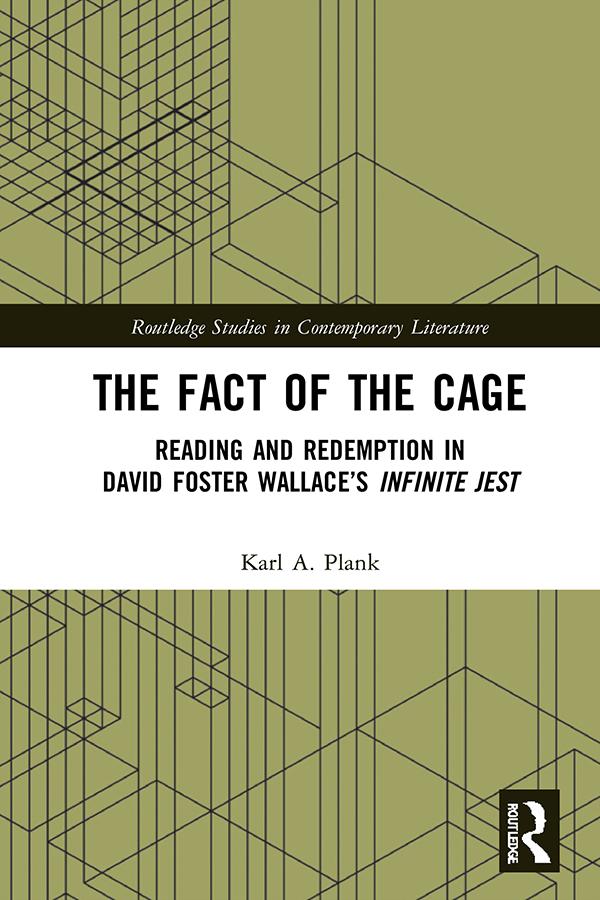
David Foster Wallace’s Infinite Jest raised expectations of what a novel might do. As he understood fiction to aim at what it means to be human, so he hoped his work might relieve the loneliness of human suffering. In that light, The Fact of the Cage shows how Wallace’s masterpiece dramatizes the condition of encagement and how it comes to be met by "Abiding" and through inter-relational acts of speaking and hearing, touching, and facing. Revealing Wallace’s theology of a "boneless Christ," The Fact of the Cage wagers that reading such a novel as Infinite Jest makes available to readers the redemption glimpsed in its pages, that reading fiction has ethical and religious significance—in short, that reading Infinite Jest makes one better. As such, Plank’s work takes steps to defend the ethics of fiction, the vital relation between religion and literature, and why one just might read at all.
Payez facilement par carte, Klarna, Apple Pay ou Google Pay. Pas satisfait ? Vous avez toujours une garantie de remboursement de 14 jours. En savoir plus dans nos conditions. Si vous avez des questions, envoyez-nous un e-mail à hello@memmo.org.
Memmo facilite tes études, où que tu sois dans le monde. On rassemble tes manuels de cours et des outils d'étude intelligents au même endroit : résumés, quiz, podcasts et flashcards. Et il y a Ted, ton compagnon d'étude qui répond à toutes tes questions. Plus de 50 000 étudiants étudient déjà ici – conçu pour t'aider à apprendre plus vite et à moins stresser.