
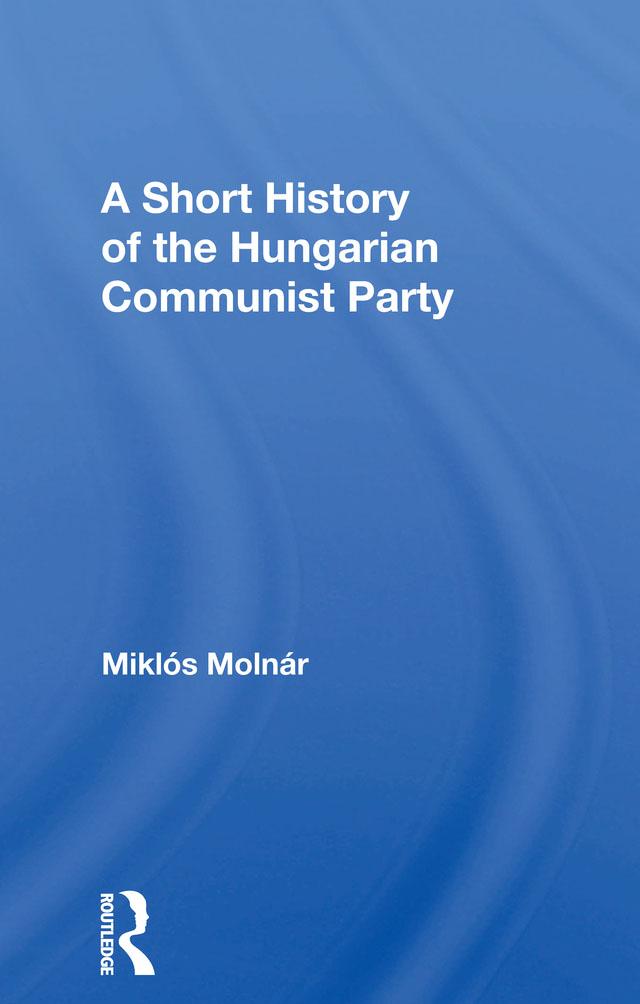
In spite of its small size, the Hungarian Communist party (HCP), founded in the fall of 1918, has played an important role both in Hungary's national history and in the international communist movement. Hungary, which was the only soviet republic other than the ephemeral Bavarian soviet republic to exist outside the USSR, lasted five months during the critical period of the Paris Peace Conference. The "veterans" of the Hungarian soviet republic, like Bela Kun, Georg Lukacs, and Eugen Varga, later held important posts in the Comintern and in the international Communist press. In the Stalinist era, the HCP distinguished itself by excessive zeal in the application of "integral Stalinism" in foreign policy (e.g., anti-Titoism), the economy, and political life (e.g., the Rajk and Kadar trials). However, the 1956 revolution was engineered by the revisionist communist intelligentsia and by such revisionist party leaders as Imre Nagy. Finally, in spite of its repressive role after the revolution, in the 1970s under Janos Kadar the HCP introduced a new system of "liberalism" and economic reform.
Payez facilement par carte, Klarna, Apple Pay ou Google Pay. Pas satisfait ? Vous avez toujours une garantie de remboursement de 14 jours. En savoir plus dans nos conditions. Si vous avez des questions, envoyez-nous un e-mail à hello@memmo.org.
Memmo facilite tes études, où que tu sois dans le monde. On rassemble tes manuels de cours et des outils d'étude intelligents au même endroit : résumés, quiz, podcasts et flashcards. Et il y a Ted, ton compagnon d'étude qui répond à toutes tes questions. Plus de 50 000 étudiants étudient déjà ici – conçu pour t'aider à apprendre plus vite et à moins stresser.
Tu pourrais aussi aimer
Acheter le livre0