
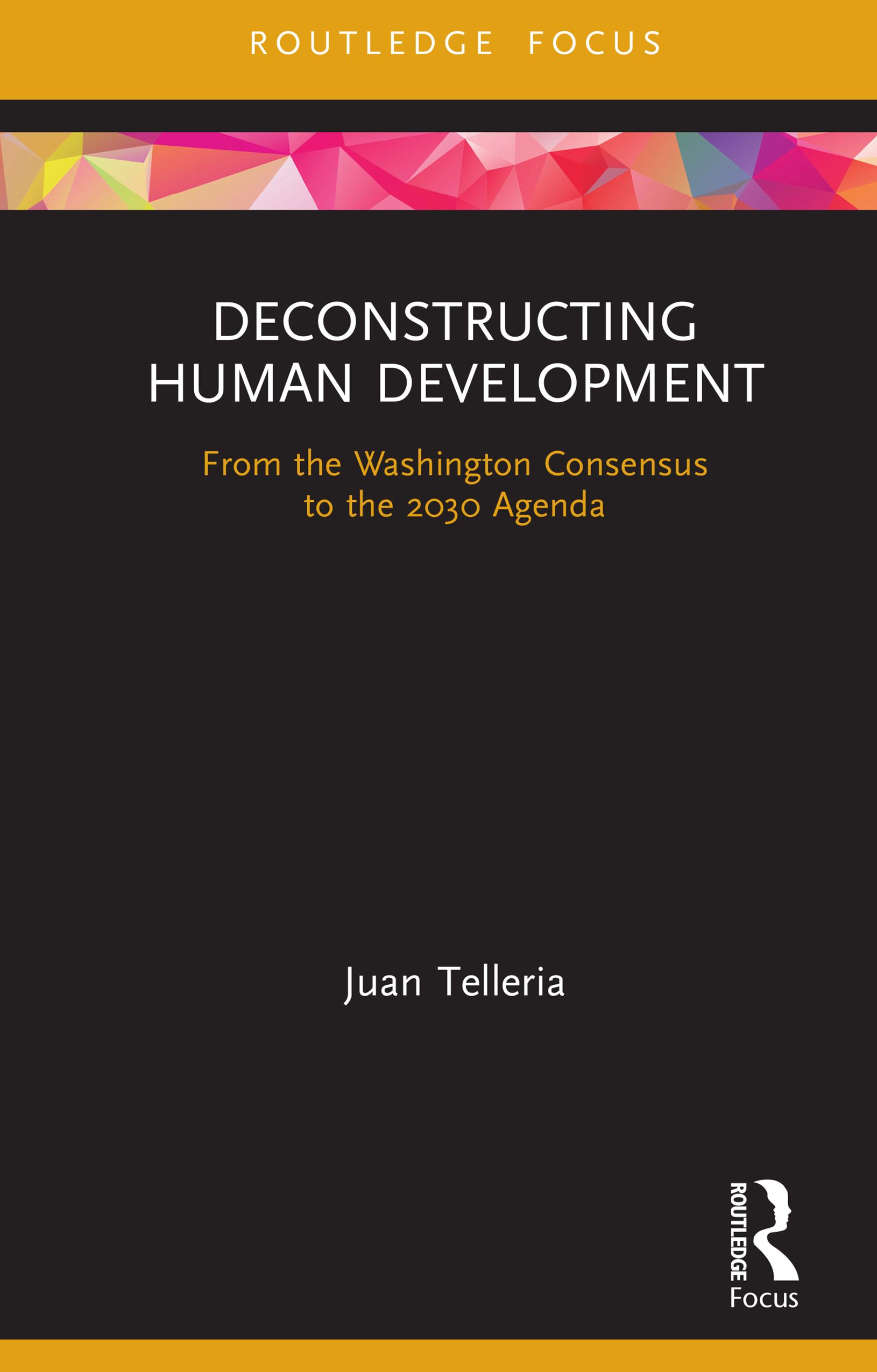
This book provides a critical deconstruction of the human development framework promoted by the United Nations Development Programme (UNDP) since 1990. Taking the Human Development Reports of the UNDP as its starting point for reflection, this book investigates the construction of this framework as well as its political function since the end of the Cold War. The book argues that the UNDP’s discourse on development relies on essentialist philosophical, cultural, and political assumptions dating back to the 19th century and concludes that these assumptions – also present in the MDGs and SDGs – impede a full grasp of the complex and multi-layered global problems of the current world. Whilst development critiques traditionally relied on liberal, Marxist or Foucauldian theoretical frameworks and focused on epistemological or political economy issues, this book draws on the post-foundational and post-structuralist work of Ernesto Laclau and Jacques Derrida and proposes an ontological and relational reading of development discourses that both complements and further develops the insights of previous critiques. This book is key reading for advanced students and researchers of Critical Development Studies, Political Science, the UN, and Sustainable Development.
Payez facilement par carte, Klarna, Apple Pay ou Google Pay. Pas satisfait ? Vous avez toujours une garantie de remboursement de 14 jours. En savoir plus dans nos conditions. Si vous avez des questions, envoyez-nous un e-mail à hello@memmo.org.
Memmo facilite tes études, où que tu sois dans le monde. On rassemble tes manuels de cours et des outils d'étude intelligents au même endroit : résumés, quiz, podcasts et flashcards. Et il y a Ted, ton compagnon d'étude qui répond à toutes tes questions. Plus de 50 000 étudiants étudient déjà ici – conçu pour t'aider à apprendre plus vite et à moins stresser.