
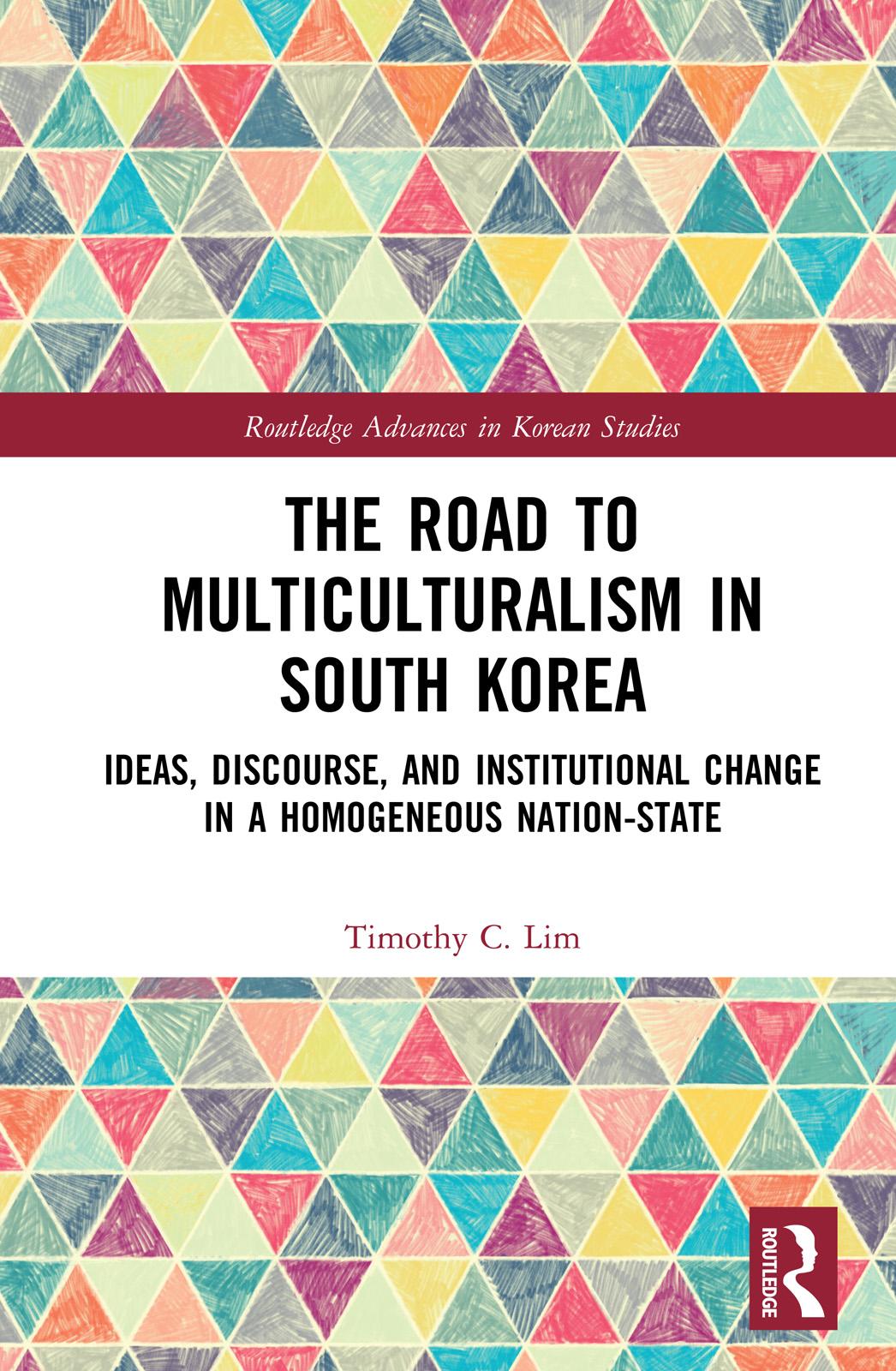
This book aims to capture the complicated development of Korea from monoethnic to multicultural society, challenging the narrative of “ethnonational continuity” in Korea through a discursive institutional approach.
At a time when immigration is changing the face of South Korea and an increasingly diverse society becomes empirical fact, this doesn’t necessarily mean that multiculturalism has been embraced as a normative, policy-based response to that fact. The approach here diverges from existing academic analyses, which tend to conclude that core institutions defining Korea’s immigration and nationality regimes — and which, crucially, also reflect a basic and hitherto unyielding commitment to racial and ethnic homogeneity — will remain largely unaffected by increasing diversity. Here, this title underscores the critical importance of “discursive agency” as a necessary corrective to still dominant power and interestbased arguments. In addition, “discursive agents” are found to play a central role in communicating, promoting, and helping to instill the ideas that create a basis for change on the road to remaking Korean society.
The Road to Multiculturalism in South Korea will be of interest to students and scholars of Asian studies, immigration and migration studies, race and ethnic studies, as well as comparative politics broadly.
Payez facilement par carte, Klarna, Apple Pay ou Google Pay. Pas satisfait ? Vous avez toujours une garantie de remboursement de 14 jours. En savoir plus dans nos conditions. Si vous avez des questions, envoyez-nous un e-mail à hello@memmo.org.
Memmo facilite tes études, où que tu sois dans le monde. On rassemble tes manuels de cours et des outils d'étude intelligents au même endroit : résumés, quiz, podcasts et flashcards. Et il y a Ted, ton compagnon d'étude qui répond à toutes tes questions. Plus de 50 000 étudiants étudient déjà ici – conçu pour t'aider à apprendre plus vite et à moins stresser.