
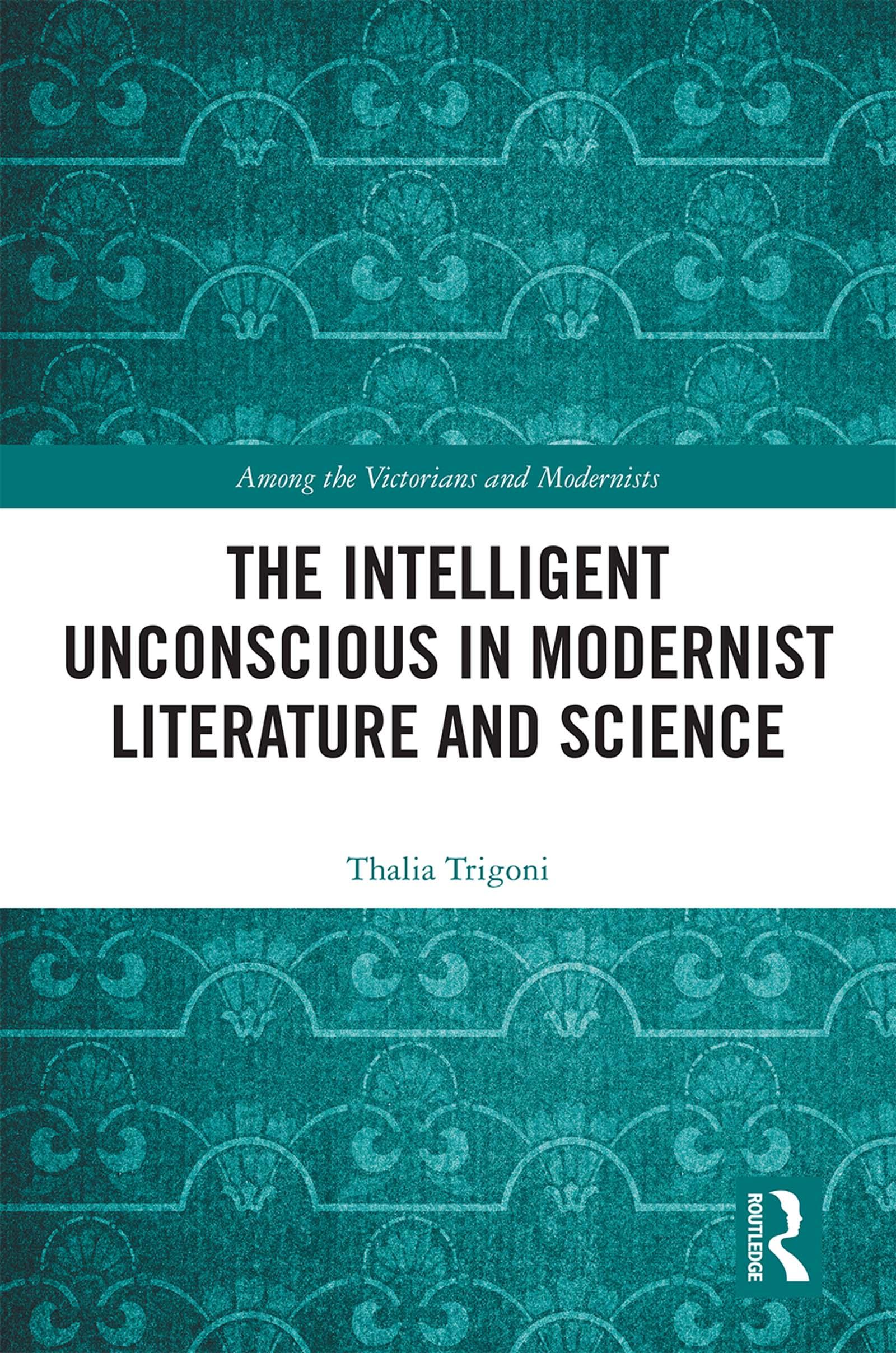
This book reassesses the philosophical, psychological and, above all, the literary representations of the unconscious in the early twentieth century. This period is distinctive in the history of responses to the unconscious because it gave rise to a line of thought according to which the unconscious is an intelligent agent able to perform judgements and formulate its own thoughts. The roots of this theory stretch back to nineteenth-century British physiologists. Despite the production of a number of studies on modernist theories of the relation of the unconscious to conscious cognition, the degree to which the notion of the intelligent unconscious influenced modernist thinkers and writers remains understudied. This study seeks to look back at modernism from beyond the Freudian model. It is striking that although we tend not to explore the importance of this way of thinking about the unconscious and its relationship to consciousness during this period, modernist writers adopted it widely. The intelligent unconscious was particularly appealing to literary authors as it is intertwined with creativity and artistic novelty through its ability to move beyond discursive logic. The book concentrates primarily on the works of D. H. Lawrence, Virginia Woolf and T.S. Eliot, authors who engaged the notion of the intelligent unconscious, reworked it and offered it for the consumption of the general populace in varied ways and for different purposes, whether aesthetic, philosophical, societal or ideological.
Shortlisted for the Modernist Studies Association (MSA) First Book Prize and for the 2021 British Society for Literature and Science Book Prize.
Payez facilement par carte, Klarna, Apple Pay ou Google Pay. Pas satisfait ? Vous avez toujours une garantie de remboursement de 14 jours. En savoir plus dans nos conditions. Si vous avez des questions, envoyez-nous un e-mail à hello@memmo.org.
Memmo facilite tes études, où que tu sois dans le monde. On rassemble tes manuels de cours et des outils d'étude intelligents au même endroit : résumés, quiz, podcasts et flashcards. Et il y a Ted, ton compagnon d'étude qui répond à toutes tes questions. Plus de 50 000 étudiants étudient déjà ici – conçu pour t'aider à apprendre plus vite et à moins stresser.