
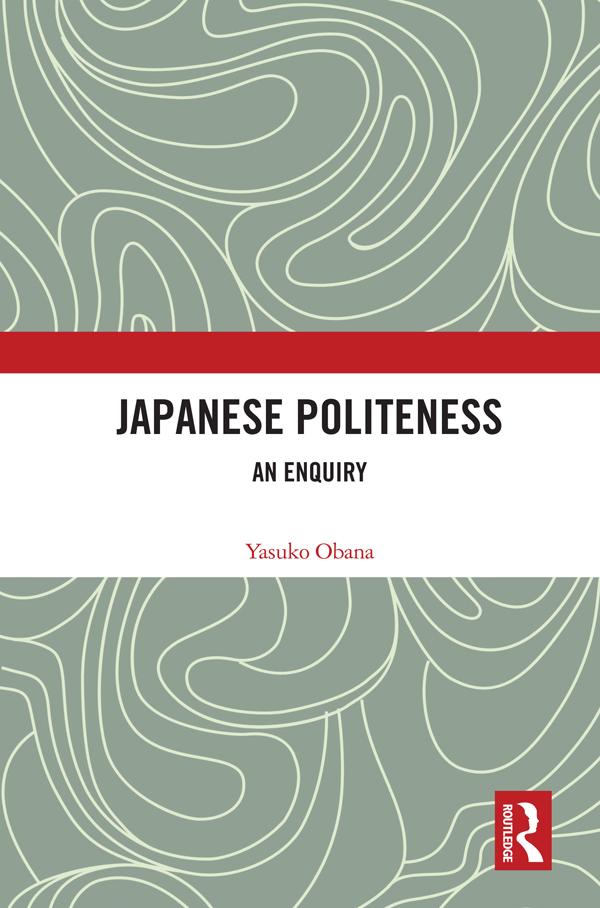
Although the Japanese language is one of the most quoted examples in politeness research, extant publications focus on particular areas of politeness, and very few of them enquire into the varied aspects of Japanese politeness. In this book, Yasuko Obana provides an integrated account of what signifies Japanese politeness.
By examining how far previous assumptions can apply to Japanese, Obana exposes a variety of characteristics of Japanese politeness. By taking a diachronic approach, she probes into what constitutes politeness, extracts key elements of the term ‘polite’ in Japanese, and demonstrates how modern honorifics’ apparent diverse, divergent uses and effects can be integrated into a systematic matrix. Furthermore, by quoting traditional Japanese language scholars’ (kokugo gakusha) studies, Obana brings different views into the open. She also carves out politeness strategies in Japanese that have not been adequately explored to date, and which often conform to the way in which honorifi cs behave because they refl ect social indexicality.
This book is a good reference for scholars in pragmatics, particularly for those who are working on politeness. It is useful for Japanese language teachers who want to know how to teach Japanese politeness to non-native learners. Postgraduate students of Japanese or pragmatics may also find this book useful for self-study.
Payez facilement par carte, Klarna, Apple Pay ou Google Pay. Pas satisfait ? Vous avez toujours une garantie de remboursement de 14 jours. En savoir plus dans nos conditions. Si vous avez des questions, envoyez-nous un e-mail à hello@memmo.org.
Memmo facilite tes études, où que tu sois dans le monde. On rassemble tes manuels de cours et des outils d'étude intelligents au même endroit : résumés, quiz, podcasts et flashcards. Et il y a Ted, ton compagnon d'étude qui répond à toutes tes questions. Plus de 50 000 étudiants étudient déjà ici – conçu pour t'aider à apprendre plus vite et à moins stresser.