
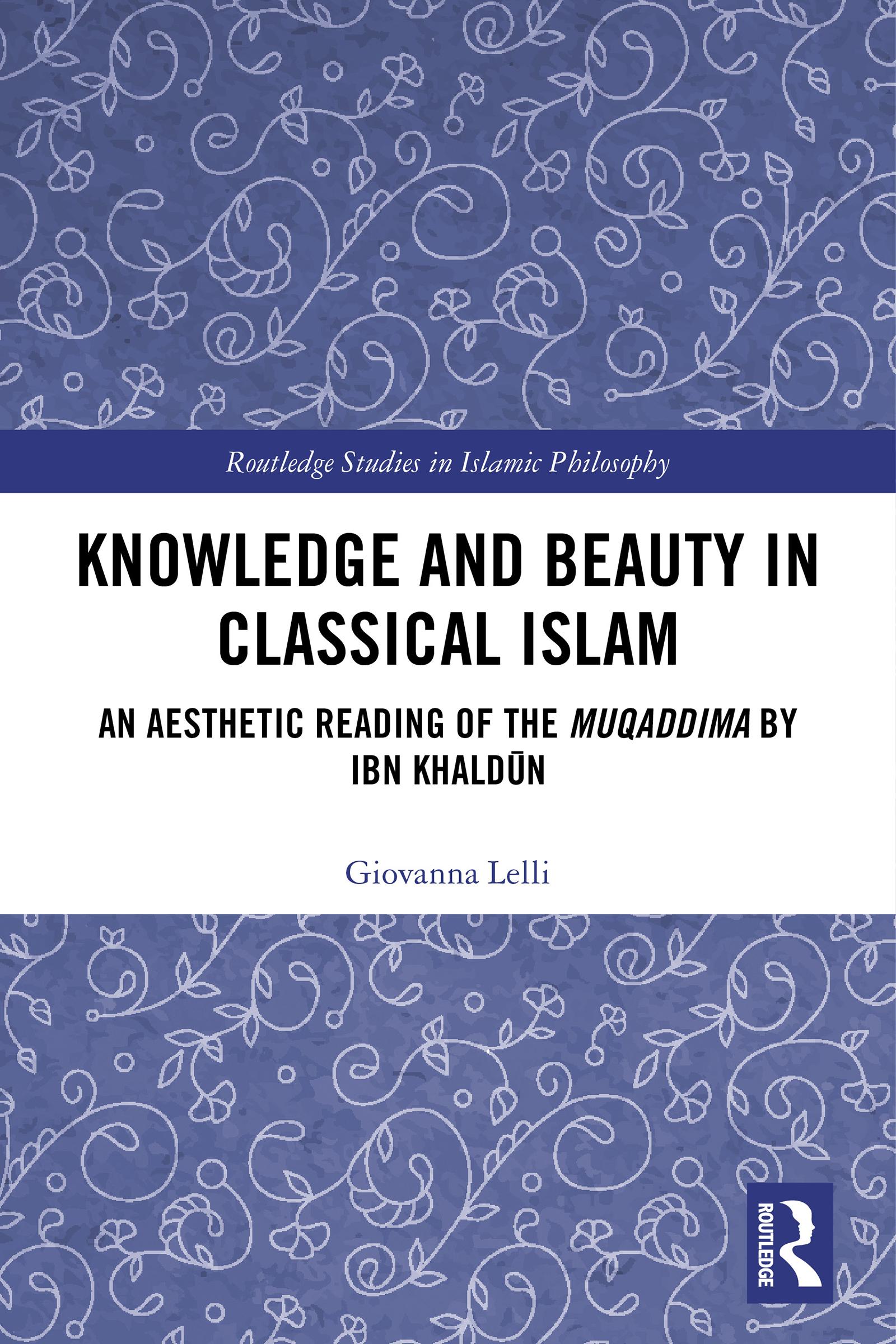
This volume offers an aesthetic reading of the Muqaddima by Ibn Khaldūn (d. 1406), a text that has been studied up to the present as a work on historiography. It argues that the Muqaddima is also a comprehensive treatise on classical Arab-Islamic culture and provides a picture of classical Arab-Islamic aesthetics in its totality.
The theme of the book is the intrinsic connection between beauty and knowledge in the Muqaddima. Whenever Ibn Khaldūn deals with the problem of knowledge and science, he also deals with the problem of sensual beauty as an instrument or an obstacle to attain it. Ibn Khaldūn’s philosophy of history is necessarily also an aesthetics of history. His key-notion of “group feeling”, the physical, ethic and aesthetic virtue of Bedouin societies, is at once the origin of the ascent of centralised States and the cause of their ruin. It represents a tragic contradiction that applies to the history of the Maghreb but then takes a universal value. It reflects a range of other contradictions inherent to the "system" of classical Arab-Islamic aesthetics. These contradictions undermine the aesthetic system of the Muqaddima from within and provide decisive elements for the emergence of modern aesthetics.
Offering a comparative approach, the volume is a key resource to scholars and students interested in Arabic and Islamic studies, philosophy, aesthetics and global history.
Payez facilement par carte, Klarna, Apple Pay ou Google Pay. Pas satisfait ? Vous avez toujours une garantie de remboursement de 14 jours. En savoir plus dans nos conditions. Si vous avez des questions, envoyez-nous un e-mail à hello@memmo.org.
Memmo facilite tes études, où que tu sois dans le monde. On rassemble tes manuels de cours et des outils d'étude intelligents au même endroit : résumés, quiz, podcasts et flashcards. Et il y a Ted, ton compagnon d'étude qui répond à toutes tes questions. Plus de 50 000 étudiants étudient déjà ici – conçu pour t'aider à apprendre plus vite et à moins stresser.