
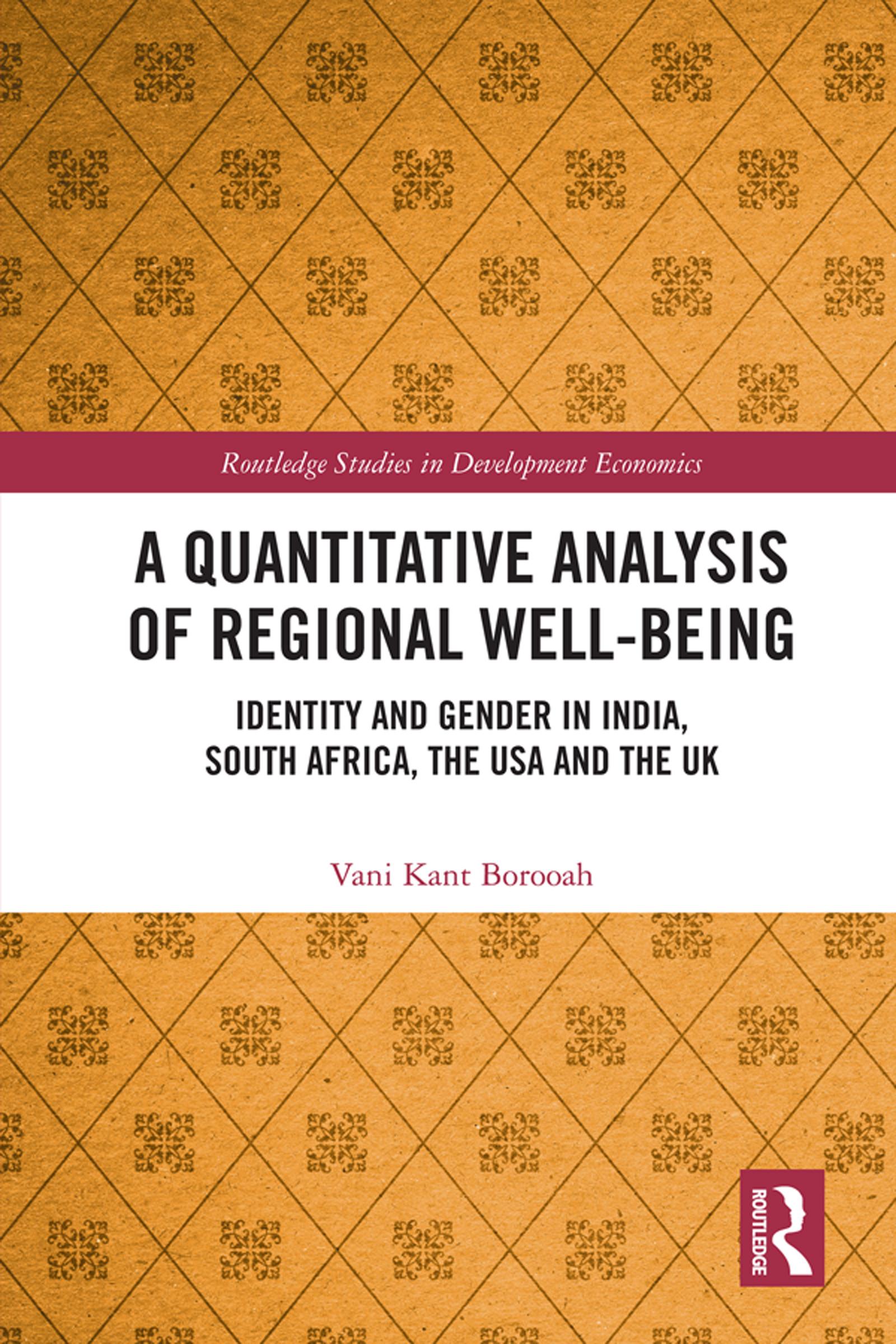
Using data from the World Values Survey, this book sheds light on the link between happiness and the social group to which one belongs. The work is based on a rigorous statistical analysis of differences in the probability of happiness and life satisfaction between the predominant social group and subordinate groups.
The cases of India and South Africa receive deep attention in dedicated chapters on cast and race, with other chapters considering issues such as cultural bias, religion, patriarchy, and gender. An additional chapter offers a global perspective. On top of this, the longitudinal nature of the data facilitates an examination of how world happiness has evolved between 1994 and 2014.
This book will be a valuable reference for advanced students, scholars and policymakers involved in development economics, well-being, development geography, and sociology.
Payez facilement par carte, Klarna, Apple Pay ou Google Pay. Pas satisfait ? Vous avez toujours une garantie de remboursement de 14 jours. En savoir plus dans nos conditions. Si vous avez des questions, envoyez-nous un e-mail à hello@memmo.org.
Memmo facilite tes études, où que tu sois dans le monde. On rassemble tes manuels de cours et des outils d'étude intelligents au même endroit : résumés, quiz, podcasts et flashcards. Et il y a Ted, ton compagnon d'étude qui répond à toutes tes questions. Plus de 50 000 étudiants étudient déjà ici – conçu pour t'aider à apprendre plus vite et à moins stresser.