
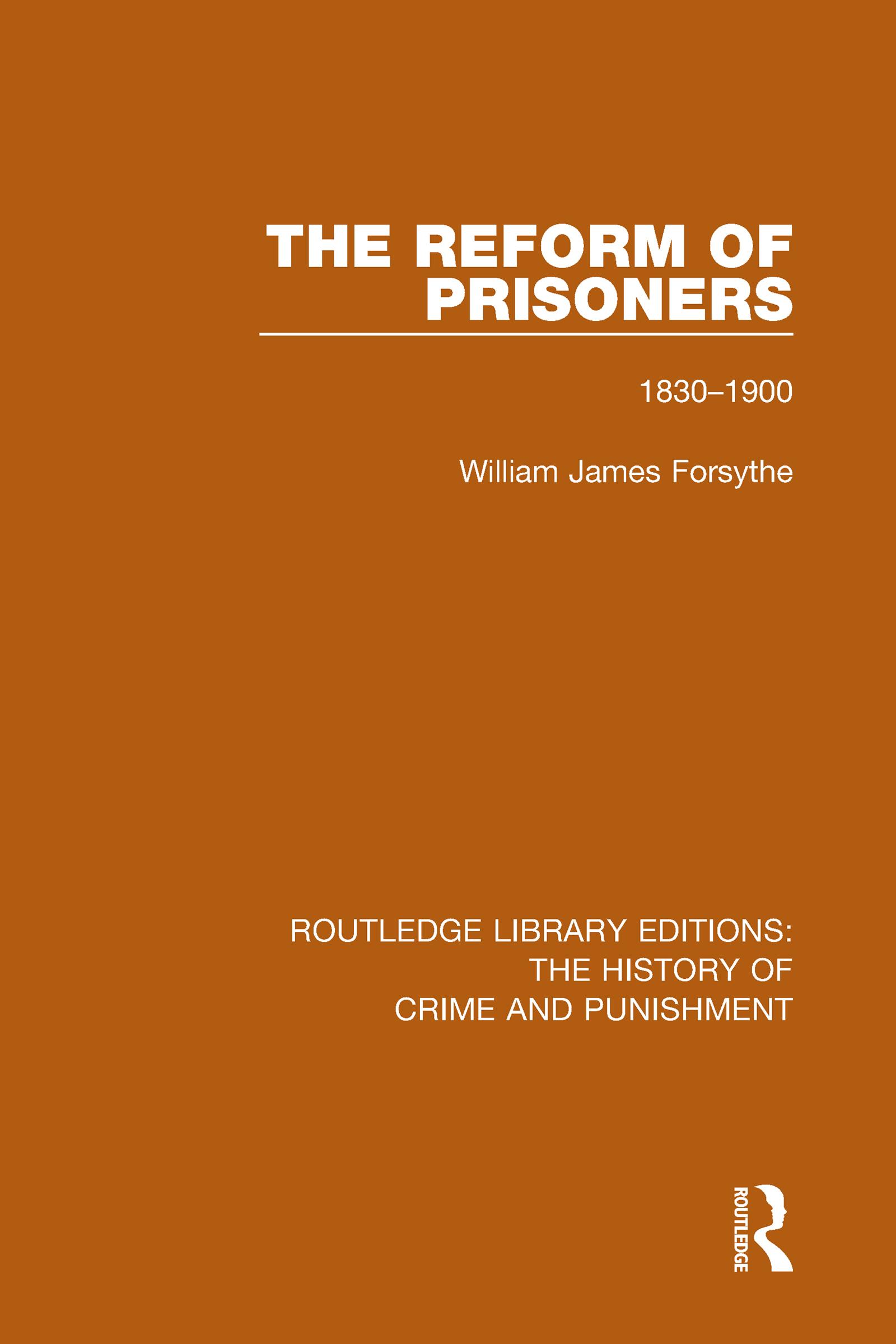
This study, first published in 1987, focuses on Victorian approaches to the moral reformation of prisoners, and aims to emphasise the ways in which the human value and social inclusion of prisoners were pursued. The author begins by discussing the evangelical view of social problems and human value in early-industrial Britain as well as the ‘associationist’ psychological analysis of human attitude developed by theorists from John Locke to Jeremy Bentham. The workings of these two theoretical frameworks in the practice of British prisons are then analyses, arguing that by 1860 both theories were basic to the approach to the incarceration of wrongdoers.
After 1860 the picture changed radically to an unambiguous deterrent severity. This was linked to a more ‘scientific’ and evolutionist analysis of human conduct and attitude; theological objections to reformism were also brought into play. In the last forty years of the nineteenth century prisoners came to be seen as constitutionally inferior beings for whom no hope of reform could be generally entertained. This title will be of interest to students of history and of criminology.
Payez facilement par carte, Klarna, Apple Pay ou Google Pay. Pas satisfait ? Vous avez toujours une garantie de remboursement de 14 jours. En savoir plus dans nos conditions. Si vous avez des questions, envoyez-nous un e-mail à hello@memmo.org.
Memmo facilite tes études, où que tu sois dans le monde. On rassemble tes manuels de cours et des outils d'étude intelligents au même endroit : résumés, quiz, podcasts et flashcards. Et il y a Ted, ton compagnon d'étude qui répond à toutes tes questions. Plus de 50 000 étudiants étudient déjà ici – conçu pour t'aider à apprendre plus vite et à moins stresser.