
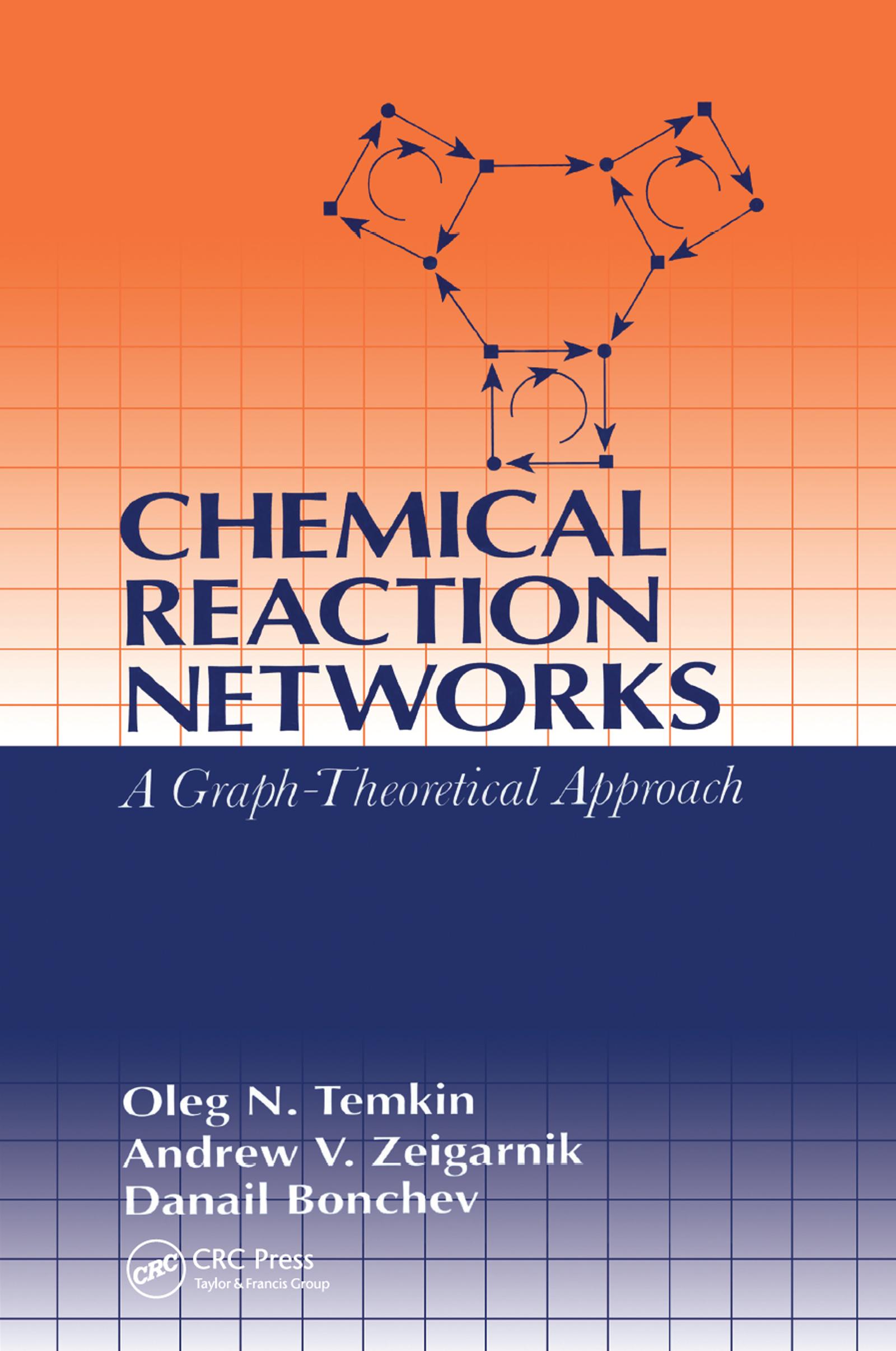
Over the last decade, increased attention to reaction dynamics, combined with the intensive application of computers in chemical studies, mathematical modeling of chemical processes, and mechanistic studies has brought graph theory to the forefront of research. It offers an advanced and powerful formalism for the description of chemical reactions and their intrinsic reaction mechanisms. Chemical Reaction Networks: A Graph-Theoretical Approach elegantly reviews and expands upon graph theory as applied to mechanistic theory, chemical kinetics, and catalysis.
The authors explore various graph-theoretical approaches to canonical representation, numbering, and coding of elementary steps and chemical reaction mechanisms, the analysis of their topological structure, the complexity estimation, and classification of reaction mechanisms. They discuss topologically distinctive features of multiroute catalytic and noncatalytic and chain reactions involving metal complexes.
With it's careful balance of clear language and mathematical rigor, the presentation of the authors' significant original work, and emphasis on practical applications and examples, Chemical Reaction Networks: A Graph Theoretical Approach is both an outstanding reference and valuable tool for chemical research.
Payez facilement par carte, Klarna, Apple Pay ou Google Pay. Pas satisfait ? Vous avez toujours une garantie de remboursement de 14 jours. En savoir plus dans nos conditions. Si vous avez des questions, envoyez-nous un e-mail à hello@memmo.org.
Memmo facilite tes études, où que tu sois dans le monde. On rassemble tes manuels de cours et des outils d'étude intelligents au même endroit : résumés, quiz, podcasts et flashcards. Et il y a Ted, ton compagnon d'étude qui répond à toutes tes questions. Plus de 50 000 étudiants étudient déjà ici – conçu pour t'aider à apprendre plus vite et à moins stresser.
Tu pourrais aussi aimer
Acheter le livre0