
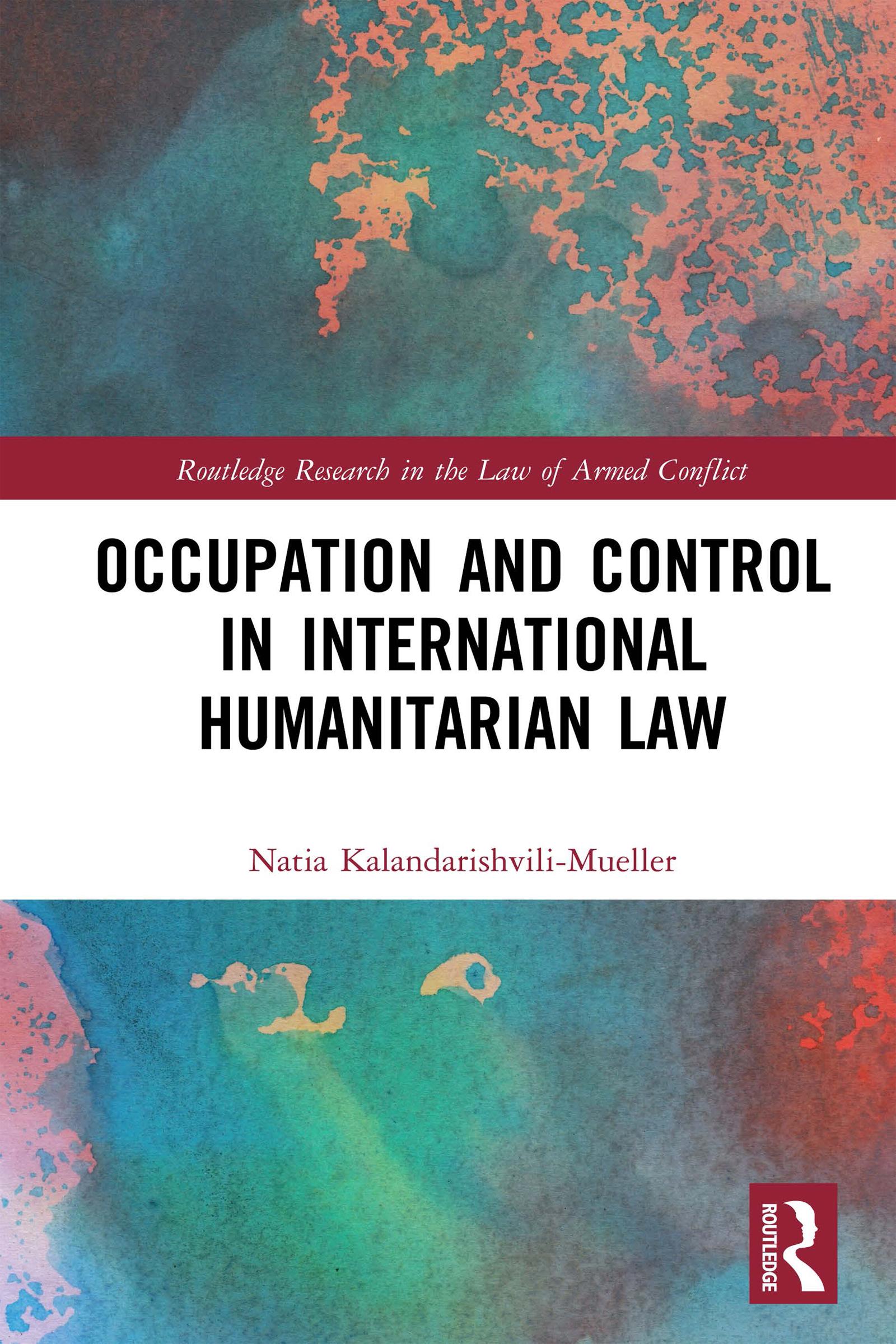
This book presents a systematic analysis of the notion of control in the law of military occupation. The work demonstrates that in present-day occupations, control as such occurs in different forms and variations. The polymorphic features of occupation can be seen in the way states establish control over territory either directly or indirectly, and in the manner in which they retain, relinquish or regain it. The question as to what level and type of control is needed to determine the existence and ending of military occupation is explored in great detail in light of various international humanitarian law instruments. The book provides an anatomy of the required tests of control in determining the existence of military occupation based on the law. It also discusses control in relation to occupation by proxy and when and how the end of control over territory occurs so that military occupation is considered terminated. The study is informed by relevant international jurisprudence. It draws on numerous pertinent case studies from all over the world, various reports by different UN entities and other international organisations, as well as legal doctrine.
The book will be a valuable resource for academics, researchers and practitioners working in the fields of international humanitarian law, international public law, and security studies
Payez facilement par carte, Klarna, Apple Pay ou Google Pay. Pas satisfait ? Vous avez toujours une garantie de remboursement de 14 jours. En savoir plus dans nos conditions. Si vous avez des questions, envoyez-nous un e-mail à hello@memmo.org.
Memmo facilite tes études, où que tu sois dans le monde. On rassemble tes manuels de cours et des outils d'étude intelligents au même endroit : résumés, quiz, podcasts et flashcards. Et il y a Ted, ton compagnon d'étude qui répond à toutes tes questions. Plus de 50 000 étudiants étudient déjà ici – conçu pour t'aider à apprendre plus vite et à moins stresser.