
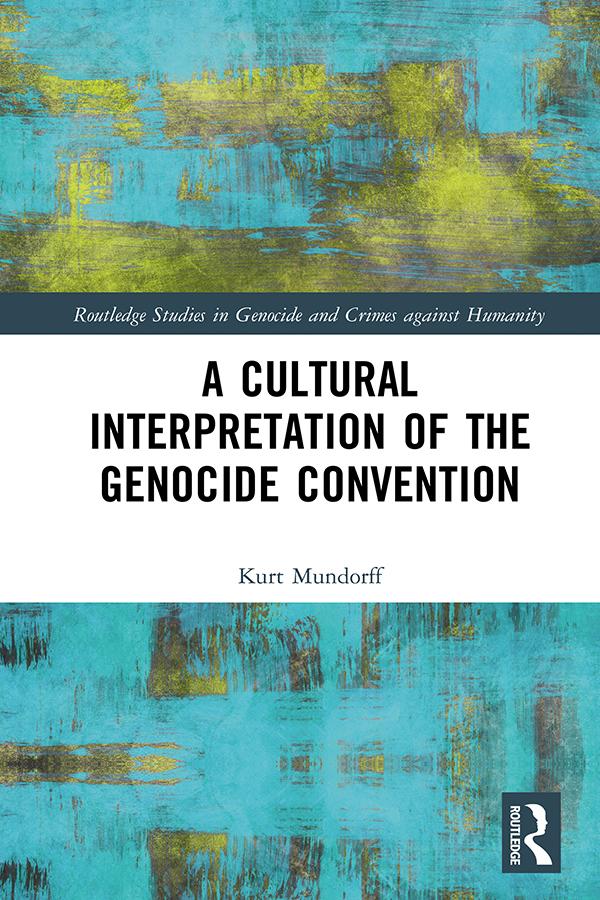
This book critiques the dominant physical and biological interpretation of the Genocide Convention and argues that the idea of "culture" is central to properly understanding the crime of genocide.
Using Raphael Lemkin’s personal papers, archival materials from the State Department and the UN, as well as the mid-century secondary literature, it situates the convention in the longstanding debate between Enlightenment notions of universality and individualism, and Romantic notions of particularism and holism. The author conducts a thorough review of the treaty and its preparatory work to show that the drafters brought strong culturalist ideas to the debate and that Lemkin’s ideas were held widely in the immediate postwar period. Reconstructing the mid-century conversation on genocide and situating it in the much broader mid-century discourse on justice and society he demonstrates that culture is not a distraction to be read out of the Genocide Convention; it is the very reason it exists.
This volume poses a forceful challenge to the materialist interpretation and calls into question decades of international case law. It will be of interest to scholars of genocide, human rights, international law, the history of international law and human rights, and treaty interpretation.
Payez facilement par carte, Klarna, Apple Pay ou Google Pay. Pas satisfait ? Vous avez toujours une garantie de remboursement de 14 jours. En savoir plus dans nos conditions. Si vous avez des questions, envoyez-nous un e-mail à hello@memmo.org.
Memmo facilite tes études, où que tu sois dans le monde. On rassemble tes manuels de cours et des outils d'étude intelligents au même endroit : résumés, quiz, podcasts et flashcards. Et il y a Ted, ton compagnon d'étude qui répond à toutes tes questions. Plus de 50 000 étudiants étudient déjà ici – conçu pour t'aider à apprendre plus vite et à moins stresser.