
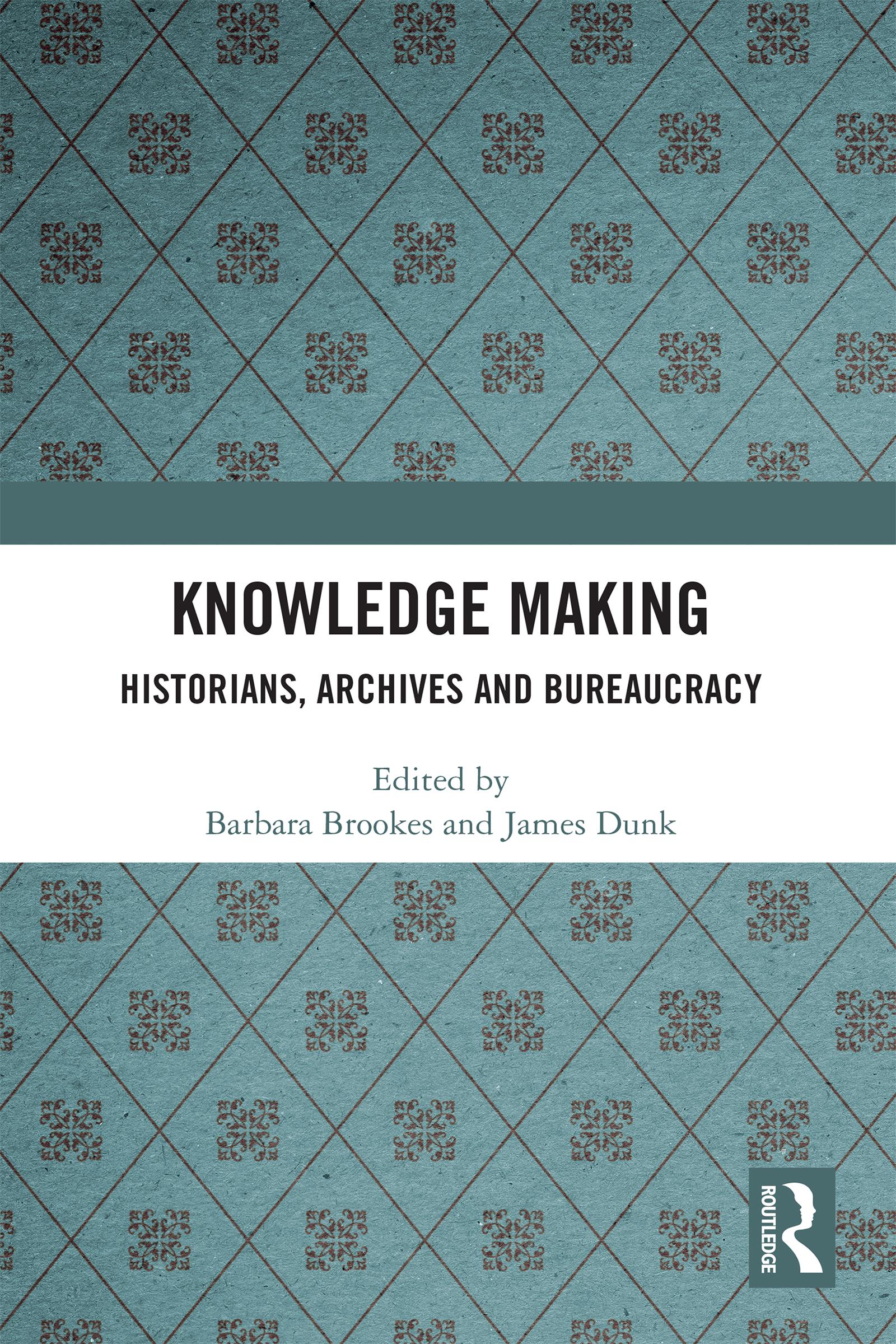
Paper has been the material of bureaucracy, and paperwork performs functions of order, control, and surveillance. Knowledge Making: Historians, Archives and Bureaucracy explores how those functions transform over time, allowing private challenges to the public narratives created by institutions and governments.
Paperwork and bureaucratic systems have determined what we know about the past. It seems that now, as the digital is overtaking paper (though mirroring its forms), historians are able to see the significance of the materiality of paper and its role in knowledge making – because it is no longer taken for granted.
The contributors to this volume discuss the ways in which public and private institutions – asylums, hospitals, and armies – developed bureaucratic systems which have determined the parameters of our access to the past. The authors present case studies of paperwork in different national contexts, which engage with themes of privacy and public accountability, the beginning of record-keeping practices, and their ‘ends’, both in the sense of their purposes and in what happens to paper after the work has finished, including preservation and curation in repositories of various kinds, through to the place of paper and paperwork in a ‘paperless’ world.
The chapters in this book were originally published in a special issue of Rethinking History: The Journal of Theory and Practice.
Payez facilement par carte, Klarna, Apple Pay ou Google Pay. Pas satisfait ? Vous avez toujours une garantie de remboursement de 14 jours. En savoir plus dans nos conditions. Si vous avez des questions, envoyez-nous un e-mail à hello@memmo.org.
Memmo facilite tes études, où que tu sois dans le monde. On rassemble tes manuels de cours et des outils d'étude intelligents au même endroit : résumés, quiz, podcasts et flashcards. Et il y a Ted, ton compagnon d'étude qui répond à toutes tes questions. Plus de 50 000 étudiants étudient déjà ici – conçu pour t'aider à apprendre plus vite et à moins stresser.