
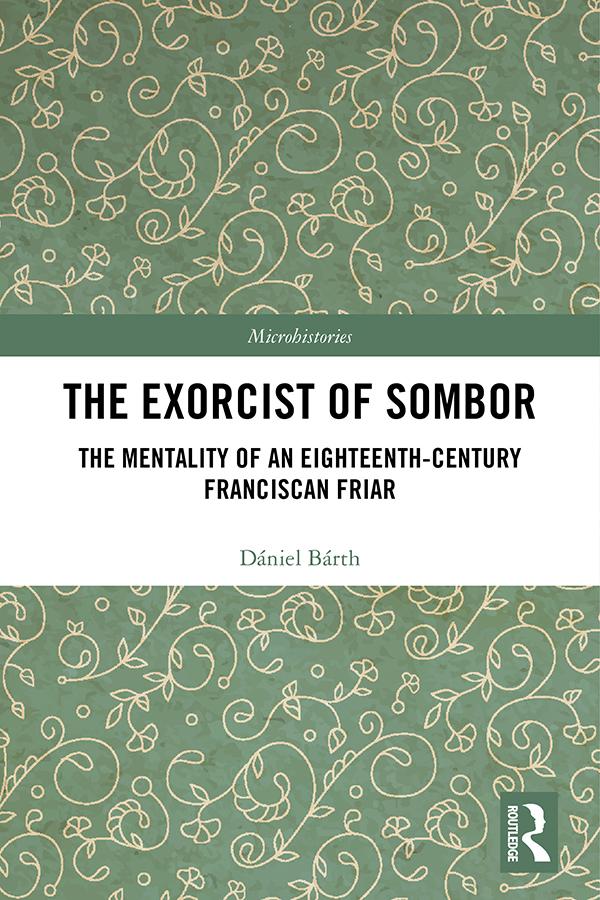
The Exorcist of Sombor examines the life course, practice and mentality of an eighteenth-century Franciscan friar, based on his own letters and documentation, creating a frame around the tightly packed history of events that took place between 1766-1769, and analysing the series of exorcism scandals that erupted in the Hungarian town of Sombor, from the perspectives of social history and cultural history.
The author employs a method which reflects historical anthropology, the history of ideas and the influence of Italian microhistory. Based on the activity of an exorcist priest in the early modern period, the documents of the ecclesiastical courts and a considerable body of autograph correspondence are thoroughly examined. Analysing these letters gives the reader a chance to come into close proximity with the way of thinking of a person from the eighteenth century. The research questions in connection to the documentation aim to identify the causes for the conflict. How was it possible to have "correct" and "wrong" methods of exorcism within the practice of one and the same church? What sort of criteria were used when certain previously accepted practices were dubbed superstitious in the second half of the eighteenth century? What were the changes that took place in the attitude of priests and friars within the ecclesiastical society of the period? How can a conflict be focussed on a practice (healing by exorcism) which has roots going back thousands of years? How many different variants of demonology existed in the clerical thinking of the age?
As a highly accomplished source analysis within microhistory, The Exorcist of Sombor will be of great interest to early modern historians, anthropologists and culture researchers interested in microhistory and themes such as religion, magic, occultism and witchcraft.
Payez facilement par carte, Klarna, Apple Pay ou Google Pay. Pas satisfait ? Vous avez toujours une garantie de remboursement de 14 jours. En savoir plus dans nos conditions. Si vous avez des questions, envoyez-nous un e-mail à hello@memmo.org.
Memmo facilite tes études, où que tu sois dans le monde. On rassemble tes manuels de cours et des outils d'étude intelligents au même endroit : résumés, quiz, podcasts et flashcards. Et il y a Ted, ton compagnon d'étude qui répond à toutes tes questions. Plus de 50 000 étudiants étudient déjà ici – conçu pour t'aider à apprendre plus vite et à moins stresser.