
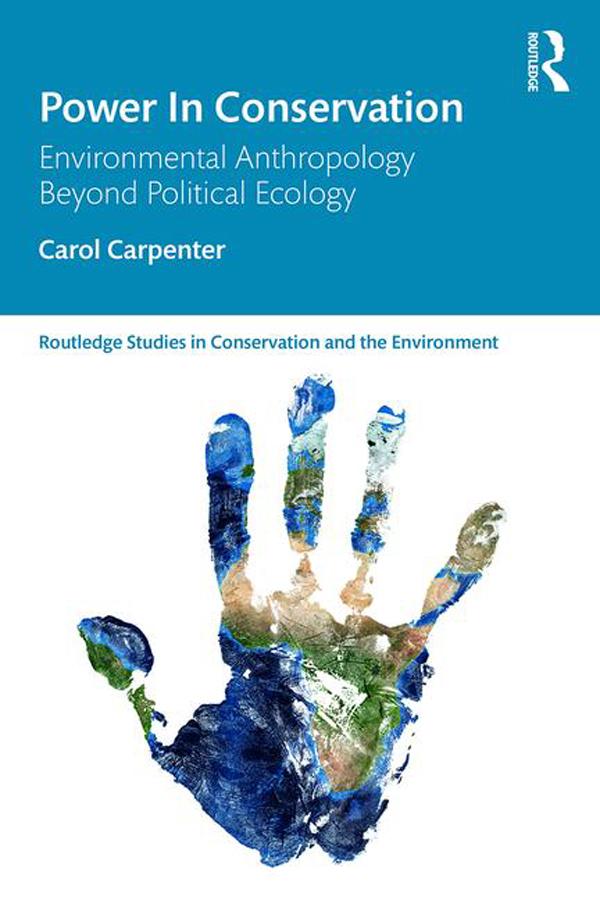
This book examines theories and ethnographies related to the anthropology of power in conservation.
Conservation thought and practice is power laden—conservation thought is powerfully shaped by the history of ideas of nature and its relation to people, and conservation interventions govern and affect peoples and ecologies. This book argues that being able to think deeply, particularly about power, improves conservation policy-making and practice. Political ecology is by far the most well-known and well-published approach to thinking about power in conservation. This book analyzes the relatively neglected but robust anthropology of conservation literature on politics and power outside political ecology, especially literature rooted in Foucault. It is intended to make four of Foucault’s concepts of power accessible, concepts that are most used in the anthropology of conservation: the power of discourses, discipline and governmentality, subject formation, and neoliberal governmentality. The important ethnographic literature that these concepts have stimulated is also examined. Together, theory and ethnography underpin our emerging understanding of a new, Anthropocene-shaped world.
This book will be of great interest to students and scholars of conservation, environmental anthropology, and political ecology, as well as conservation practitioners and policy-makers.
Payez facilement par carte, Klarna, Apple Pay ou Google Pay. Pas satisfait ? Vous avez toujours une garantie de remboursement de 14 jours. En savoir plus dans nos conditions. Si vous avez des questions, envoyez-nous un e-mail à hello@memmo.org.
Memmo facilite tes études, où que tu sois dans le monde. On rassemble tes manuels de cours et des outils d'étude intelligents au même endroit : résumés, quiz, podcasts et flashcards. Et il y a Ted, ton compagnon d'étude qui répond à toutes tes questions. Plus de 50 000 étudiants étudient déjà ici – conçu pour t'aider à apprendre plus vite et à moins stresser.