
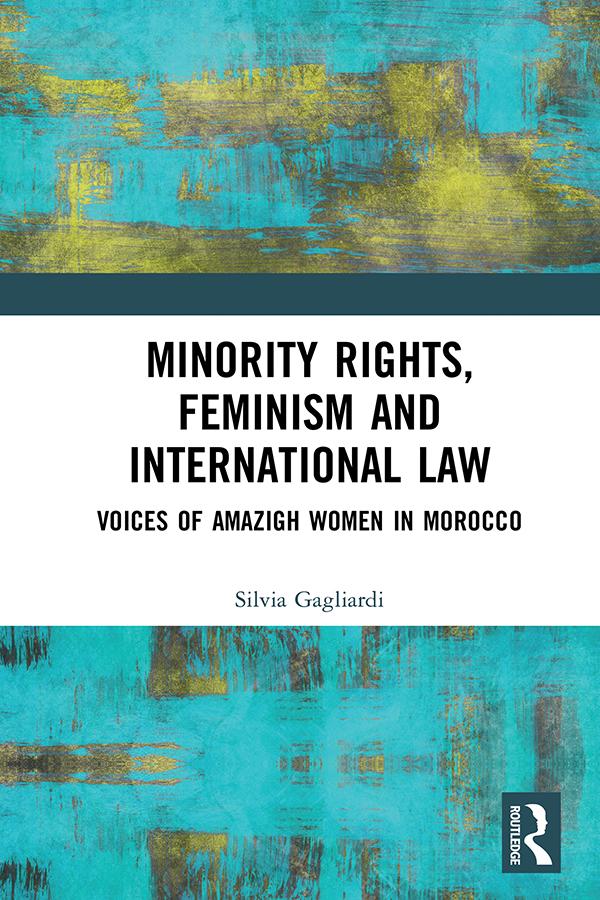
Investigating minority and indigenous women’s rights in Muslim-majority states, this book critically examines the human rights regime within international law.
Based on extensive and diverse ethnographic research on Amazigh women in Morocco, the book unpacks and challenges generally accepted notions of rights and equality. Significantly, and controversially, the book challenges the supposedly ‘emancipatory’ power vested in the human rights project; arguing that rights-based discourses are sites of contestation for different groups that use them to assert their agency in society. More specifically, it shows how the very conditions that make minority and indigenous women instrumental to the preservation of their culture may condemn them to a position of subalternity. In response, and engaging the notion and meaning of Islamic feminism, the book proposes that feminism should be interpreted and contextualised locally in order to be effective and inclusive, and so in order for the human rights project to fully realise its potential to empower the marginalised and make space for their voices to be heard.
Providing a detailed, empirically based, analysis of rights in action, this book will be of relevance to scholars, students and practitioners in human rights policy and practice, in international law, minorities’ and indigenous peoples’ rights, gender studies, and Middle Eastern and North African Studies.
Payez facilement par carte, Klarna, Apple Pay ou Google Pay. Pas satisfait ? Vous avez toujours une garantie de remboursement de 14 jours. En savoir plus dans nos conditions. Si vous avez des questions, envoyez-nous un e-mail à hello@memmo.org.
Memmo facilite tes études, où que tu sois dans le monde. On rassemble tes manuels de cours et des outils d'étude intelligents au même endroit : résumés, quiz, podcasts et flashcards. Et il y a Ted, ton compagnon d'étude qui répond à toutes tes questions. Plus de 50 000 étudiants étudient déjà ici – conçu pour t'aider à apprendre plus vite et à moins stresser.