
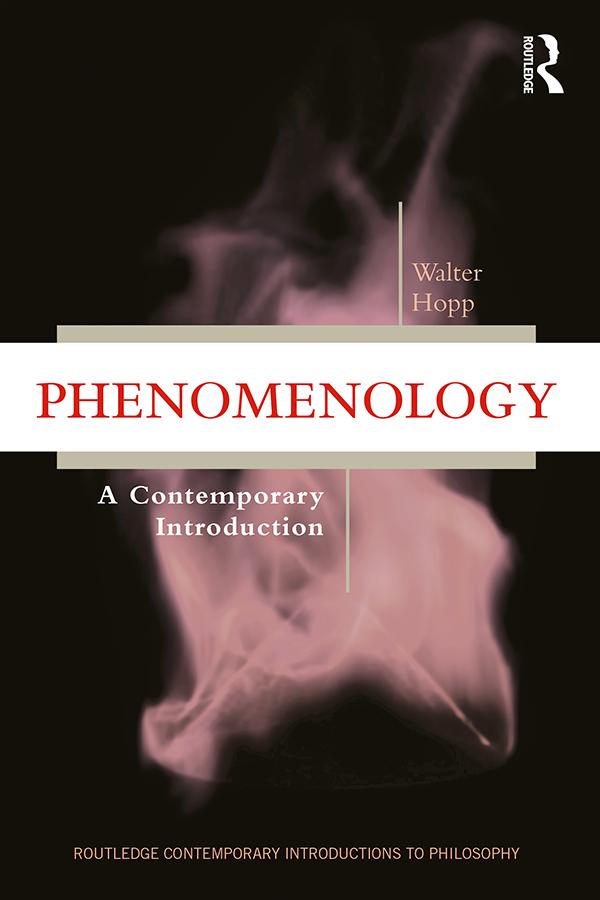
The central task of phenomenology is to investigate the nature of consciousness and its relations to objects of various types. The present book introduces students and other readers to several foundational topics of phenomenological inquiry, and illustrates phenomenology’s contemporary relevance. The main topics include consciousness, intentionality, perception, meaning, and knowledge. The book also contains critical assessments of Edmund Husserl’s phenomenological method. It argues that knowledge is the most fundamental mode of consciousness, and that the central theses constitutive of Husserl’s "transcendental idealism" are compatible with metaphysical realism regarding the objects of thought, perception, and knowledge.
Helpful tools include introductions that help the reader segue from the previous chapter to the new one, chapter conclusions, and suggested reading lists of primary and some key secondary sources.
Key Features:
- Elucidates and engages with contemporary work in analytic epistemology and philosophy of mind
- Provides clear prose explanations of the necessary distinctions and arguments required for understanding the subject
- Places knowledge at the center of phenomenological inquiry
Payez facilement par carte, Klarna, Apple Pay ou Google Pay. Pas satisfait ? Vous avez toujours une garantie de remboursement de 14 jours. En savoir plus dans nos conditions. Si vous avez des questions, envoyez-nous un e-mail à hello@memmo.org.
Memmo facilite tes études, où que tu sois dans le monde. On rassemble tes manuels de cours et des outils d'étude intelligents au même endroit : résumés, quiz, podcasts et flashcards. Et il y a Ted, ton compagnon d'étude qui répond à toutes tes questions. Plus de 50 000 étudiants étudient déjà ici – conçu pour t'aider à apprendre plus vite et à moins stresser.