
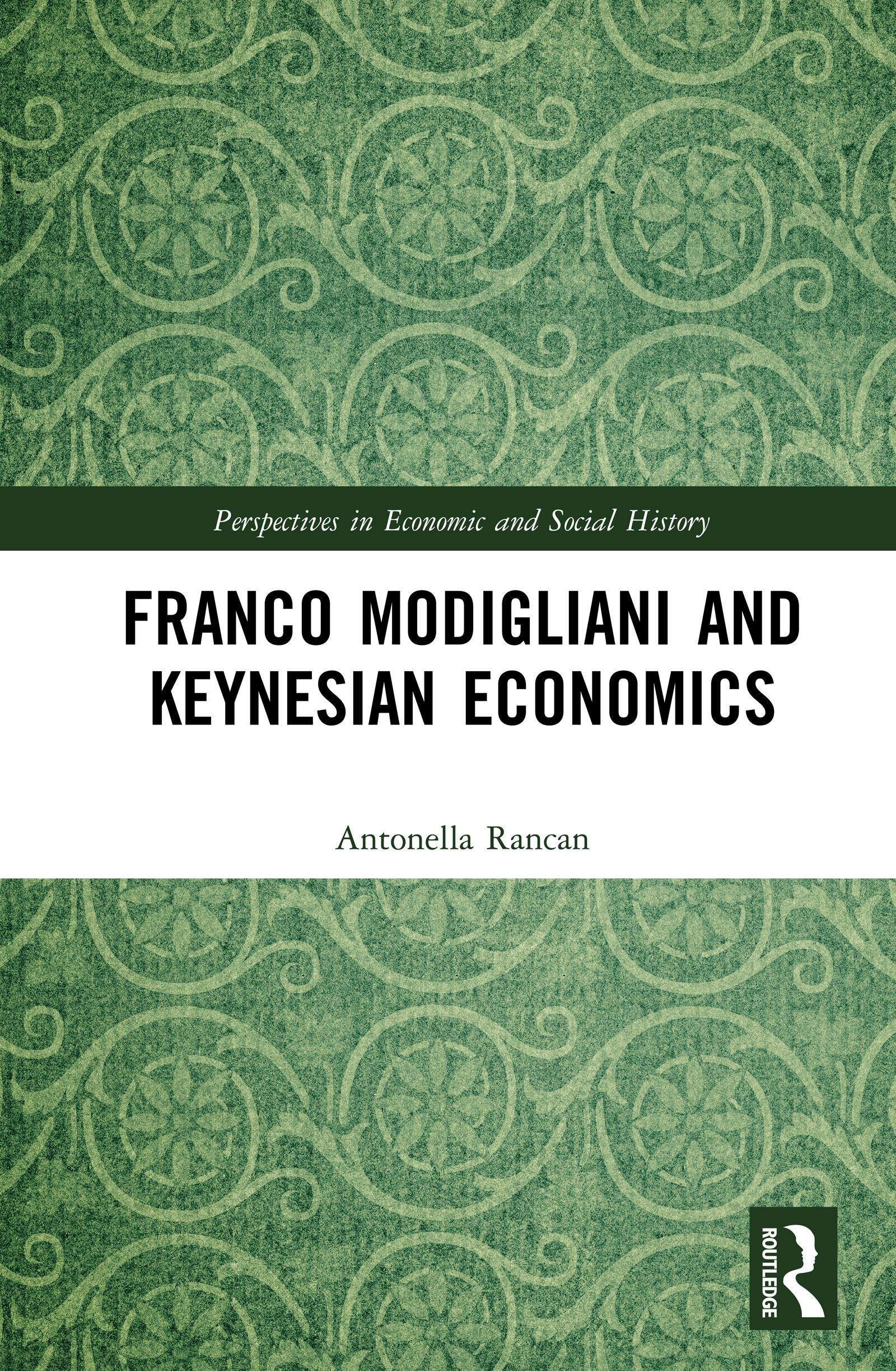
This book follows the intellectual path of Franco Modigliani, Nobel Prize winner and one of the most influential Keynesian economists of the twentieth century, tracing his development and examining the impact of his research.
The book begins with Modigliani’s early work as a young law student in 1930s Italy and traces his development through his emigration to the US, his introduction to Keynes’ General Theory at the New School, and his seminal 1944 article on Keynesian and classical economics. The book also examines Modigliani’s pioneering theory of savings: the life-cycle hypothesis (with Richard Brumberg), and the Modigliani–Miller theorem, a cornerstone of modern theory of finance. The book argues that although Modigliani is placed amongst the most prominent Keynesian economists, his connections with Keynesian theory are of secondary importance until the beginning of the 1960s when he joined MIT.
This is the first book to place Modigliani’s thought in its proper historical context, showing how it related to wider economic concerns and examining the social and political implications of his work. It will be of interest to scholars in the history of economic thought, and especially post-war American Keynesian economics.
Payez facilement par carte, Klarna, Apple Pay ou Google Pay. Pas satisfait ? Vous avez toujours une garantie de remboursement de 14 jours. En savoir plus dans nos conditions. Si vous avez des questions, envoyez-nous un e-mail à hello@memmo.org.
Memmo facilite tes études, où que tu sois dans le monde. On rassemble tes manuels de cours et des outils d'étude intelligents au même endroit : résumés, quiz, podcasts et flashcards. Et il y a Ted, ton compagnon d'étude qui répond à toutes tes questions. Plus de 50 000 étudiants étudient déjà ici – conçu pour t'aider à apprendre plus vite et à moins stresser.