
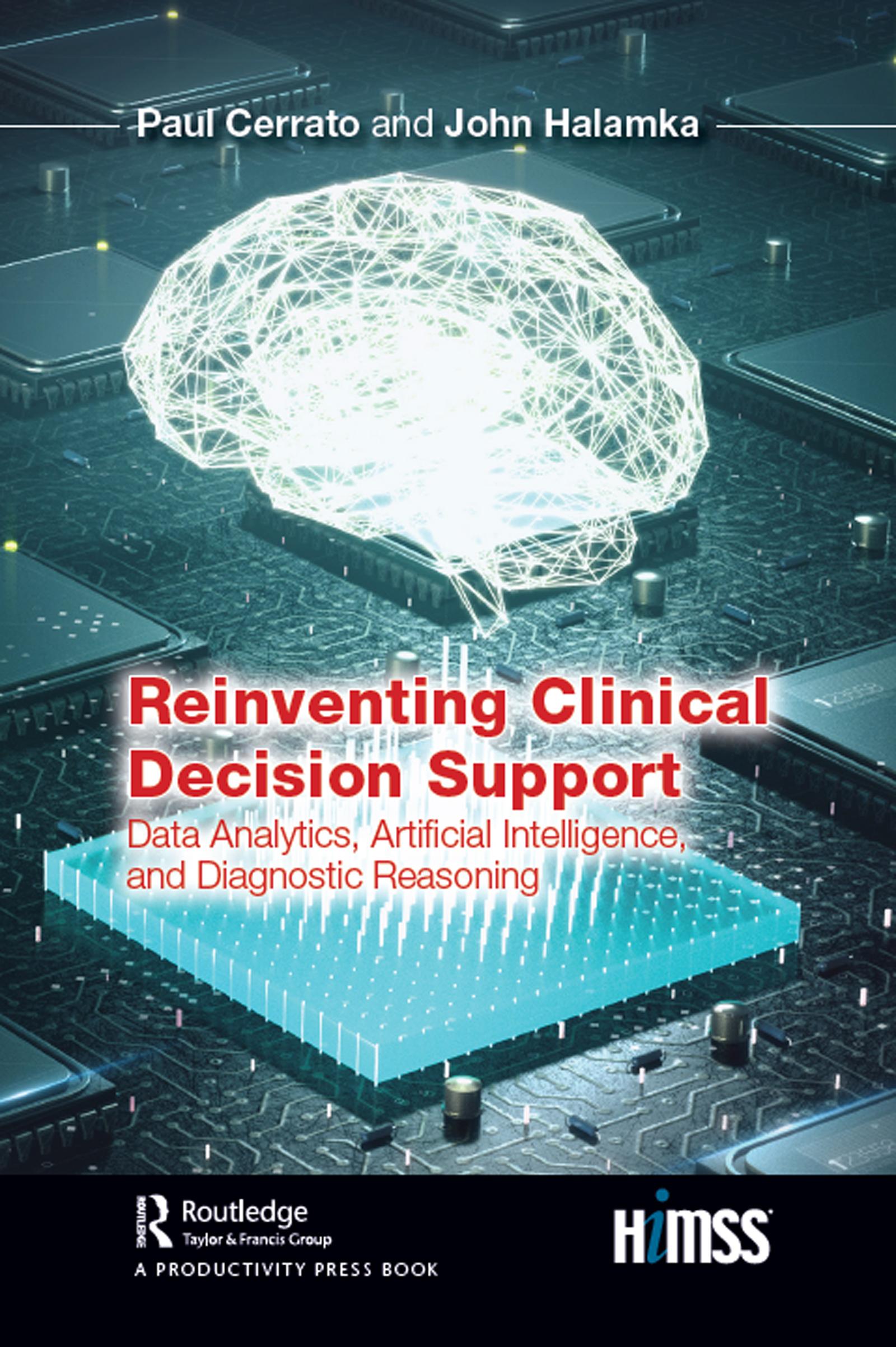
This book takes an in-depth look at the emerging technologies that are transforming the way clinicians manage patients, while at the same time emphasizing that the best practitioners use both artificial and human intelligence to make decisions.
AI and machine learning are explored at length, with plain clinical English explanations of convolutional neural networks, back propagation, and digital image analysis. Real-world examples of how these tools are being employed are also discussed, including their value in diagnosing diabetic retinopathy, melanoma, breast cancer, cancer metastasis, and colorectal cancer, as well as in managing severe sepsis.
With all the enthusiasm about AI and machine learning, it was also necessary to outline some of criticisms, obstacles, and limitations of these new tools. Among the criticisms discussed: the relative lack of hard scientific evidence supporting some of the latest algorithms and the so-called black box problem. A chapter on data analytics takes a deep dive into new ways to conduct subgroup analysis and how it’s forcing healthcare executives to rethink the way they apply the results of large clinical trials to everyday medical practice. This re-evaluation is slowly affecting the way diabetes, heart disease, hypertension, and cancer are treated. The research discussed also suggests that data analytics will impact emergency medicine, medication management, and healthcare costs.
An examination of the diagnostic reasoning process itself looks at how diagnostic errors are measured, what technological and cognitive errors are to blame, and what solutions are most likely to improve the process. It explores Type 1 and Type 2 reasoning methods; cognitive mistakes like availability bias, affective bias, and anchoring; and potential solutions such as the Human Diagnosis Project. Finally, the book explores the role of systems biology and precision medicine in clinical decision support and provides several case studies of how next generation AI is transforming patient care.
Payez facilement par carte, Klarna, Apple Pay ou Google Pay. Pas satisfait ? Vous avez toujours une garantie de remboursement de 14 jours. En savoir plus dans nos conditions. Si vous avez des questions, envoyez-nous un e-mail à hello@memmo.org.
Memmo facilite tes études, où que tu sois dans le monde. On rassemble tes manuels de cours et des outils d'étude intelligents au même endroit : résumés, quiz, podcasts et flashcards. Et il y a Ted, ton compagnon d'étude qui répond à toutes tes questions. Plus de 50 000 étudiants étudient déjà ici – conçu pour t'aider à apprendre plus vite et à moins stresser.