
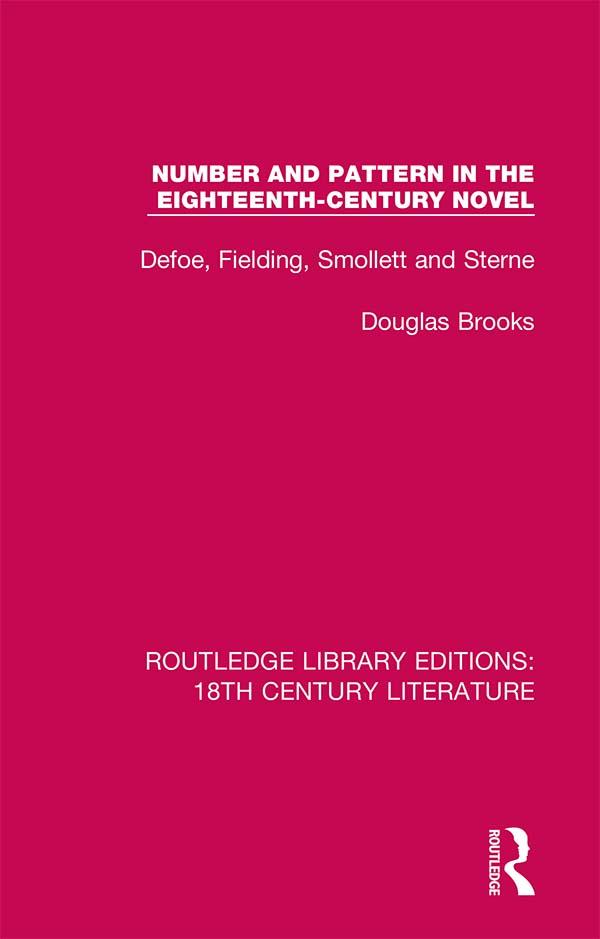
Numerological patterning in literature, where structural details of a literary work are symbolically related to its meaning on the verbal level, was particularly common from the Middle Ages up to the seventeenth century. Originally published in 1973, the author breaks new ground in revealing that familiarity with this technique lived on into the eighteenth century, supplying the more artistically aware of the early British novelists with meaningful formal guidelines.
An account is given of the origins and continuity of the numerological tradition in Western European – and particularly English – thought as it affected literary structure. The careful structural patterning in the novels of Defoe and in Fielding’s Joseph Andrews and Tom Jones is examined in detail. Smollett, too, is shown to have been interested in exploring the possibilities of number and pattern, and the clear-cut numerological framework of Sterne’s Tristram Shandy is revealed.
This original and controversial study combines structural analysis with fresh interpretative insights, and draws parallels with painting, music and architecture. It also has an important bearing on the history of ideas in the first half of the eighteenth century.
Payez facilement par carte, Klarna, Apple Pay ou Google Pay. Pas satisfait ? Vous avez toujours une garantie de remboursement de 14 jours. En savoir plus dans nos conditions. Si vous avez des questions, envoyez-nous un e-mail à hello@memmo.org.
Memmo facilite tes études, où que tu sois dans le monde. On rassemble tes manuels de cours et des outils d'étude intelligents au même endroit : résumés, quiz, podcasts et flashcards. Et il y a Ted, ton compagnon d'étude qui répond à toutes tes questions. Plus de 50 000 étudiants étudient déjà ici – conçu pour t'aider à apprendre plus vite et à moins stresser.