
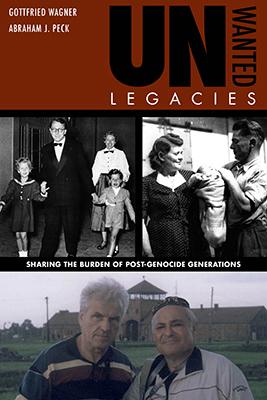
How does a society reconcile itself in a post-genocide era? How can generations of those whose families were victims and victimizers break the cycle of hate, mistrust, shame, and guilt that characterizes their relationship? What family reactions do they face as they seek to begin the act of sitting across from each other and facing their legacies? For more than two decades, Gottfried Wagner, great-grandson of composer Richard Wagner, whose music inspired Adolf Hitler and whose family helped the Nazis rise to power, and Abraham J. Peck, the son of two survivors whose entire families were murdered in the Holocaust, have been engaged in a unique and often torturous discussion on the German-Jewish relationship after the Shoah. That discussion has focused on their family histories and on the myths and realities of the relationship between Germans and Jews since the beginning of the nineteenth century and the process of reshaping that relationship for those Germans and Jews born after 1945. Rejecting the notion that they are either victims or perpetrators, both authors examine the “unwanted legacies” they inherited and have had to confront and overcome.
Payez facilement par carte, Klarna, Apple Pay ou Google Pay. Pas satisfait ? Vous avez toujours une garantie de remboursement de 14 jours. En savoir plus dans nos conditions. Si vous avez des questions, envoyez-nous un e-mail à hello@memmo.org.
Memmo facilite tes études, où que tu sois dans le monde. On rassemble tes manuels de cours et des outils d'étude intelligents au même endroit : résumés, quiz, podcasts et flashcards. Et il y a Ted, ton compagnon d'étude qui répond à toutes tes questions. Plus de 50 000 étudiants étudient déjà ici – conçu pour t'aider à apprendre plus vite et à moins stresser.
Tu pourrais aussi aimer
Acheter le livre0