
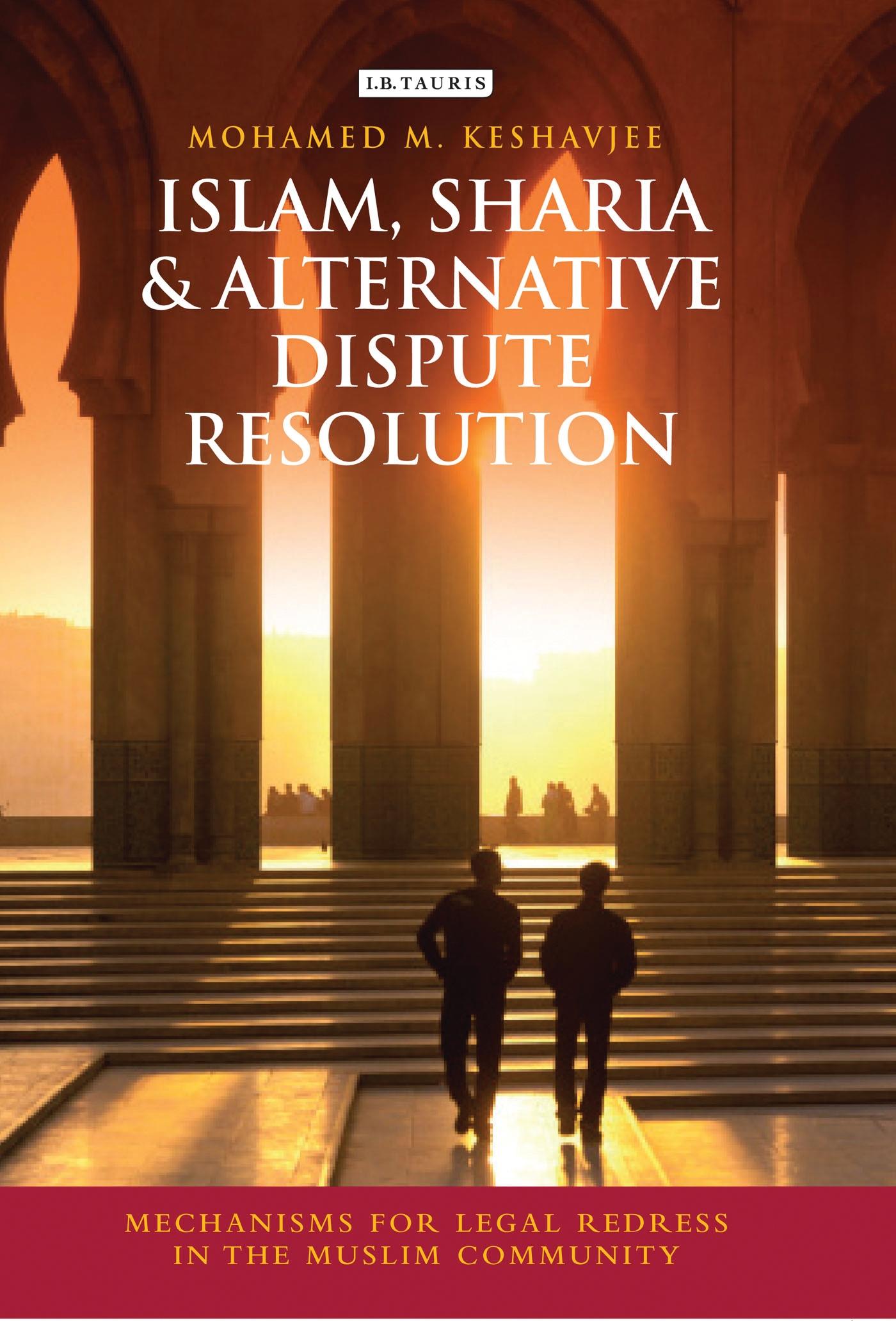
The meanings and contexts of Shari'a are the subject of both curiosity and misunderstanding by non-Muslims. Shari'a is sometimes crudely characterised by outsiders as a punitive legal system operating broadly outside, and separate from, national laws and customs. This groundbreaking book shows that Shari'a and its 'fiqh' (laws set forward by various Islamic legal schools) comprise a far more nuanced matrix of interpretations than is often assumed to be the case. Far from being monolithic or impervious to change from without, Muslim legal tradition has - since its beginnings in the early Islamic period - placed an emphasis on equity and non-adversarial conflict-resolution. Mohamed Keshavjee examines both Sunni and Shi'a applications of Islamic law, demonstrating how political, cultural and other factors have influenced the practice of fiqh and Shari'a in the West. Exploring in particular the modern development of Alternative Dispute Resolution (ADR), the author shows that this process can revitalise some of the essential principles that underlie Muslim teachings and jurispudence, delivering not only formal remedies but also perceived justice, even to non-Muslims.
Payez facilement par carte, Klarna, Apple Pay ou Google Pay. Pas satisfait ? Vous avez toujours une garantie de remboursement de 14 jours. En savoir plus dans nos conditions. Si vous avez des questions, envoyez-nous un e-mail à hello@memmo.org.
Memmo facilite tes études, où que tu sois dans le monde. On rassemble tes manuels de cours et des outils d'étude intelligents au même endroit : résumés, quiz, podcasts et flashcards. Et il y a Ted, ton compagnon d'étude qui répond à toutes tes questions. Plus de 50 000 étudiants étudient déjà ici – conçu pour t'aider à apprendre plus vite et à moins stresser.