
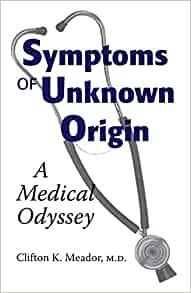
For years after graduating from medical school, Dr. Clifton K. Meador assumed that symptoms of the body, when obviously not imaginary, indicate a disease of the body--something to be treated with drugs, surgery, or other traditional means. But, over several decades, as he saw patients with clear symptoms but no discernable disease, he concluded that his own assumptions were too narrow and, indeed, that the underlying basis for much of clinical medicine was severely limited.
Recounting a series of fascinating case studies, Meador shows in this book how he came to reject a strict adherence to the prevailing biomolecular model of disease and its separation of mind and body. He studied other theories and approaches--George Engel's biopsychosocial model of disease, Michael Balint's study of physicians as pharmacological agents--and adjusted his practice accordingly to treat what he called "nondisease." He had to retool, learn new and more in-depth interviewing and listening techniques, and undergo what Balint termed a "slight but significant change in personality."
In chapters like "The Woman Who Believed She Was a Man" and "The Diarrhea of Agnes," Meador reveals both the considerable harm that can result from wrong diagnoses of nonexistent diseases and the methods he developed to help patients with chronic symptoms not defined by a medical disease. Throughout the book, he recommends subsequent studies to test his observations, and he urges full application of the scientific method to the doctor-patient relationship, pointing out that few objective studies of these all-important interactions have ever been done.
Recounting a series of fascinating case studies, Meador shows in this book how he came to reject a strict adherence to the prevailing biomolecular model of disease and its separation of mind and body. He studied other theories and approaches--George Engel's biopsychosocial model of disease, Michael Balint's study of physicians as pharmacological agents--and adjusted his practice accordingly to treat what he called "nondisease." He had to retool, learn new and more in-depth interviewing and listening techniques, and undergo what Balint termed a "slight but significant change in personality."
In chapters like "The Woman Who Believed She Was a Man" and "The Diarrhea of Agnes," Meador reveals both the considerable harm that can result from wrong diagnoses of nonexistent diseases and the methods he developed to help patients with chronic symptoms not defined by a medical disease. Throughout the book, he recommends subsequent studies to test his observations, and he urges full application of the scientific method to the doctor-patient relationship, pointing out that few objective studies of these all-important interactions have ever been done.
Payez facilement par carte, Klarna, Apple Pay ou Google Pay. Pas satisfait ? Vous avez toujours une garantie de remboursement de 14 jours. En savoir plus dans nos conditions. Si vous avez des questions, envoyez-nous un e-mail à hello@memmo.org.
Memmo facilite tes études, où que tu sois dans le monde. On rassemble tes manuels de cours et des outils d'étude intelligents au même endroit : résumés, quiz, podcasts et flashcards. Et il y a Ted, ton compagnon d'étude qui répond à toutes tes questions. Plus de 50 000 étudiants étudient déjà ici – conçu pour t'aider à apprendre plus vite et à moins stresser.
Tu pourrais aussi aimer
Acheter le livre0