
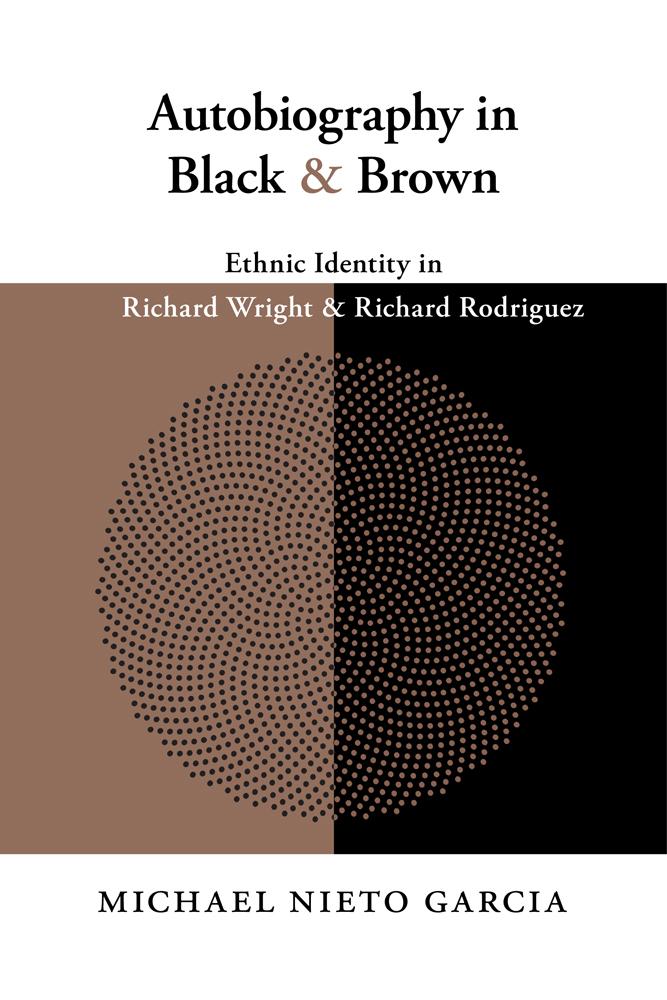
Richard Wright was the grandson of slaves, Richard Rodriguez the son of immigrants. One black, the other brown, each author prominently displays his race in the title of his autobiography: Black Boy and Brown. Wright was a radical left winger, while Rodriguez is widely viewed as a reactionary. Despite their differences, Michael Nieto Garcia points out, the two share a preoccupation with issues of agency, class struggle, ethnic identity, the search for community, and the quest for social justice. Garcia’s study, the first to compare these two widely read writers, argues that ethnic autobiography reflects the complexity of ethnic identity, revealing a narrative self that is bound to a visible ethnicity yet is also protean and free.
These autobiographies, according to Garcia, exemplify the tensions and contradictions inherent in identity. In their presentation of the self we see the rejection not only of essentialized notions of ethnic authenticity but also of any conception of an ethnic self that is not also communally derived. The image reflected in the mirror of autobiography also reminds us that consciousness itself is altered by our reading, and that the construction of modern ethnicity is shaped to a considerable extent by print culture.
Payez facilement par carte, Klarna, Apple Pay ou Google Pay. Pas satisfait ? Vous avez toujours une garantie de remboursement de 14 jours. En savoir plus dans nos conditions. Si vous avez des questions, envoyez-nous un e-mail à hello@memmo.org.
Memmo facilite tes études, où que tu sois dans le monde. On rassemble tes manuels de cours et des outils d'étude intelligents au même endroit : résumés, quiz, podcasts et flashcards. Et il y a Ted, ton compagnon d'étude qui répond à toutes tes questions. Plus de 50 000 étudiants étudient déjà ici – conçu pour t'aider à apprendre plus vite et à moins stresser.