
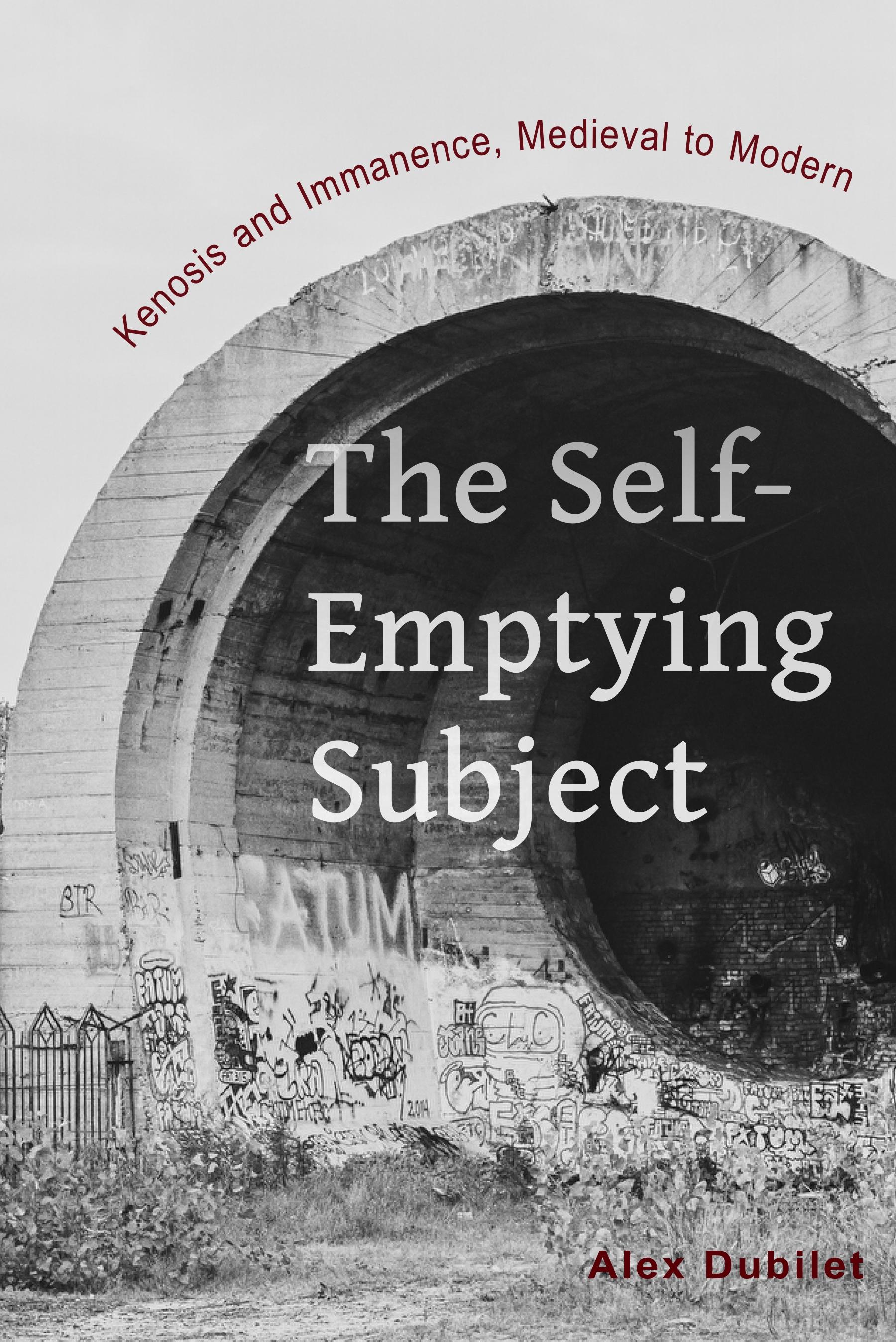
Against the two dominant ethical paradigms of continental philosophy–Emmanuel Levinas’s ethics of the Other and Michel Foucault’s ethics of self-cultivation—The Self-Emptying Subject theorizes an ethics of self-emptying, or kenosis, that reveals the immanence of an impersonal and dispossessed life “without a why.” Rather than aligning immanence with the enclosures of the subject, The Self-Emptying Subject engages the history of Christian mystical theology, modern philosophy, and contemporary theories of the subject to rethink immanence as what precedes and exceeds the very difference between the (human) self and the (divine) other, between the subject and transcendence. By arguing that transcendence operates and subjects life in secular no less than in religious domains, this book challenges the dominant distribution of concepts in contemporary theoretical discourse, which insists on associating transcendence exclusively with religion and theology and immanence exclusively with modern secularity and philosophy.
The Self-Emptying Subject argues that it is important to resist framing the relationship between medieval theology and modern philosophy as a transition from the affirmation of divine transcendence to the establishment of autonomous subjects. Through an engagement with Meister Eckhart, G.W.F. Hegel, and Georges Bataille, it uncovers a medieval theological discourse that rejects the primacy of pious subjects and the transcendence of God (Eckhart); retrieves a modern philosophical discourse that critiques the creation of self-standing subjects through a speculative re-writing of the concepts of Christian theology (Hegel); and explores a discursive site that demonstrates the subjecting effects of transcendence across theological and philosophical operations and archives (Bataille). Taken together, these interpretations suggest that if we suspend the antagonistic relationship between theological and philosophical discourses, and decenter our periodizing assumptions and practices, we might encounter a yet unmapped theoretical fecundity of self-emptying that frees life from transcendent powers that incessantly subject it for their own ends.
Payez facilement par carte, Klarna, Apple Pay ou Google Pay. Pas satisfait ? Vous avez toujours une garantie de remboursement de 14 jours. En savoir plus dans nos conditions. Si vous avez des questions, envoyez-nous un e-mail à hello@memmo.org.
Memmo facilite tes études, où que tu sois dans le monde. On rassemble tes manuels de cours et des outils d'étude intelligents au même endroit : résumés, quiz, podcasts et flashcards. Et il y a Ted, ton compagnon d'étude qui répond à toutes tes questions. Plus de 50 000 étudiants étudient déjà ici – conçu pour t'aider à apprendre plus vite et à moins stresser.