
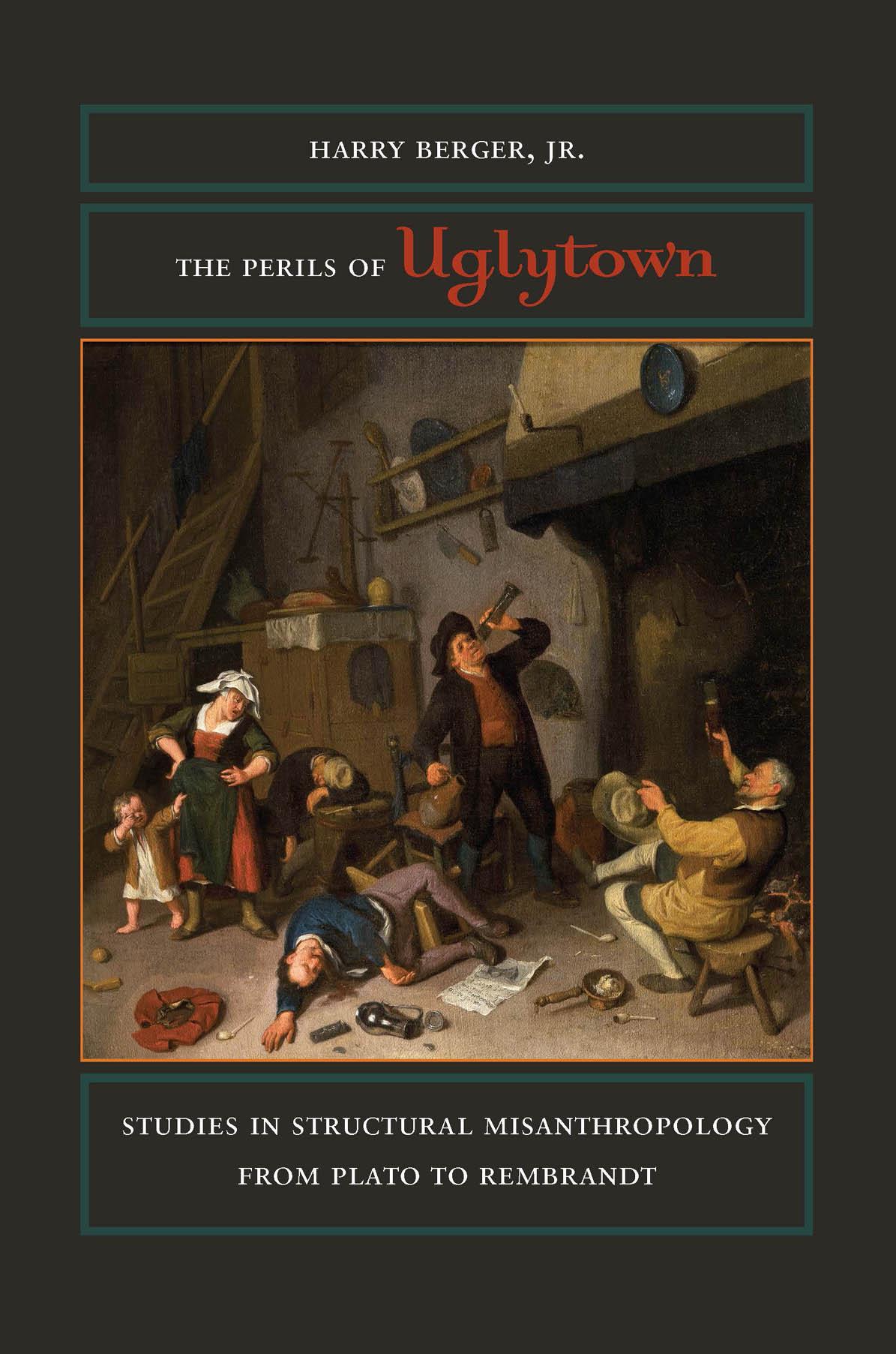
With characteristic wit, Harry Berger, Jr., brings his flair for close reading to texts and images across two millennia that illustrate what he calls “structural misanthropology.” Beginning with a novel reading of Plato, Berger emphasizes Socrates’s self-acknowledged failures. The dialogues, he shows, offer up, only to dispute, a misanthropic polis. The Athenian city-state, they worry, is founded on a social order motivated by apprehension—both the desire to take and the fear of being taken. In addition to suggesting new political
and philosophical dimensions to Platonic thought, Berger’s attention to rhetorical practice offers novel ways of parsing the dialogic method itself.
In the book’s second half, Berger revisits and revises his earlier accounts of Italian humanism, Elizabethan drama, and Dutch painting. Berger shows how structural misanthropology helps us to read the competitive practices that characterize Renaissance writing and art, whether in Machiavelli’s constitutional prostheses, Shakespeare’s pageants of humiliation, or the elbow jabs of Dutch portraiture.
Payez facilement par carte, Klarna, Apple Pay ou Google Pay. Pas satisfait ? Vous avez toujours une garantie de remboursement de 14 jours. En savoir plus dans nos conditions. Si vous avez des questions, envoyez-nous un e-mail à hello@memmo.org.
Memmo facilite tes études, où que tu sois dans le monde. On rassemble tes manuels de cours et des outils d'étude intelligents au même endroit : résumés, quiz, podcasts et flashcards. Et il y a Ted, ton compagnon d'étude qui répond à toutes tes questions. Plus de 50 000 étudiants étudient déjà ici – conçu pour t'aider à apprendre plus vite et à moins stresser.