
Honorable Mention, 2022 Rhetoric Society of America Book Award
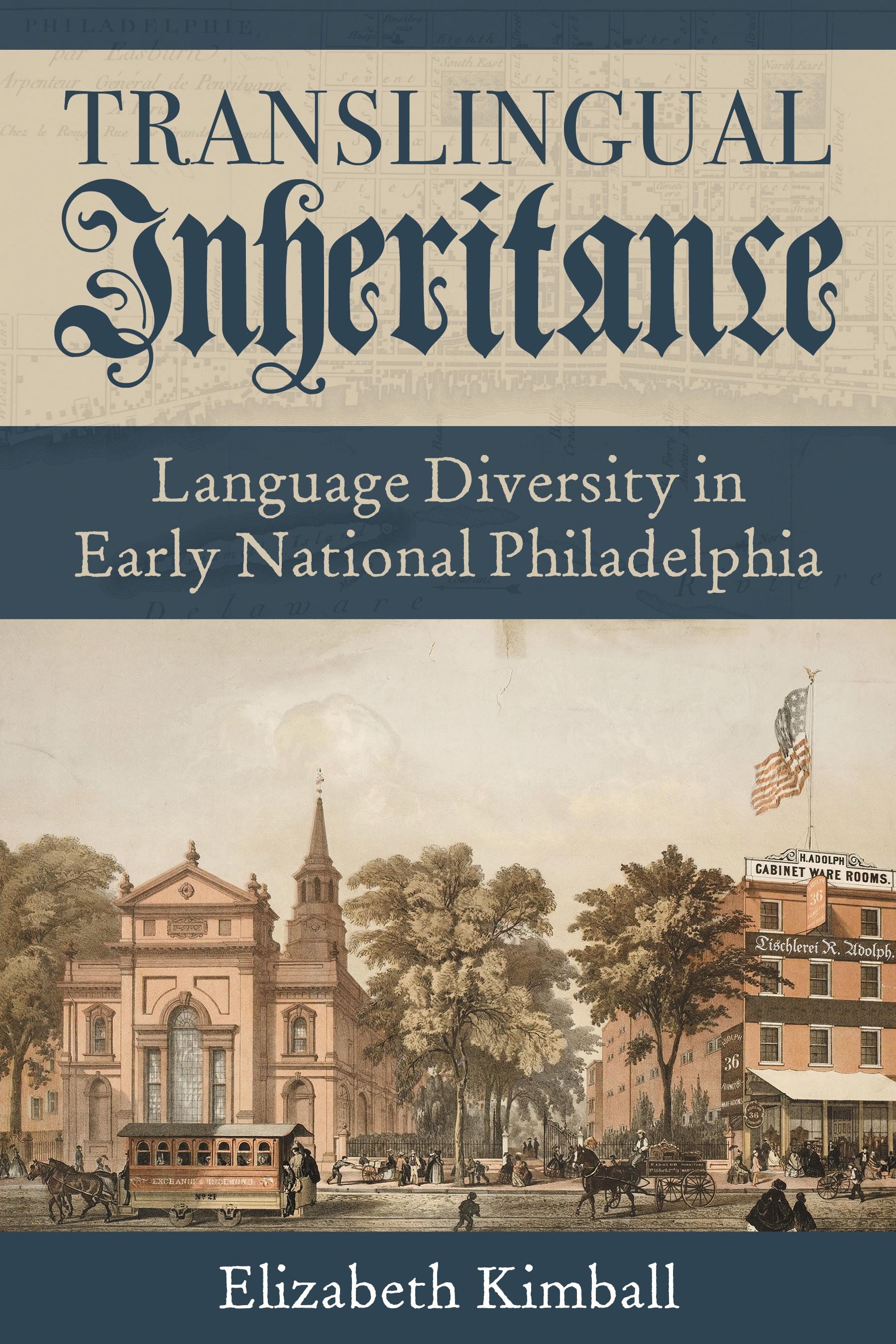
Translingual Inheritance tells a new story of the early days of democracy in the United States, when English had not yet become the only dominant language. Drawing on translingual theory, which exposes how language use contrasts with the political constructions of named languages, Elizabeth Kimball argues that Philadelphians developed complex metalinguistic conceptions of what language is and how it mattered in their relations. In-depth chapters introduce the democratically active communities of Philadelphia between 1750 and 1830 and introduce the three most populous: Germans, Quakers (the Society of Friends), and African Americans. These communities had ways of knowing and using their own languages to create identities and serve the common good outside of English. They used these practices to articulate plans and pedagogies for schools, exercise their faith, and express the promise of the young democracy. Kimball draws on primary sources and archival texts that have been little seen or considered to show how citizens consciously took on the question of language and its place in building their young country and how such practice is at the root of what made democracy possible.
Translingual Inheritance tells a new story of the early days of democracy in the United States, when English had not yet become the only dominant language. Drawing on translingual theory, which exposes how language use contrasts with the political constructions of named languages, Elizabeth Kimball argues that Philadelphians developed complex metalinguistic conceptions of what language is and how it mattered in their relations. In-depth chapters introduce the democratically active communities of Philadelphia between 1750 and 1830 and introduce the three most populous: Germans, Quakers (the Society of Friends), and African Americans. These communities had ways of knowing and using their own languages to create identities and serve the common good outside of English. They used these practices to articulate plans and pedagogies for schools, exercise their faith, and express the promise of the young democracy. Kimball draws on primary sources and archival texts that have been little seen or considered to show how citizens consciously took on the question of language and its place in building their young country and how such practice is at the root of what made democracy possible.
Payez facilement par carte, Klarna, Apple Pay ou Google Pay. Pas satisfait ? Vous avez toujours une garantie de remboursement de 14 jours. En savoir plus dans nos conditions. Si vous avez des questions, envoyez-nous un e-mail à hello@memmo.org.
Memmo facilite tes études, où que tu sois dans le monde. On rassemble tes manuels de cours et des outils d'étude intelligents au même endroit : résumés, quiz, podcasts et flashcards. Et il y a Ted, ton compagnon d'étude qui répond à toutes tes questions. Plus de 50 000 étudiants étudient déjà ici – conçu pour t'aider à apprendre plus vite et à moins stresser.
Tu pourrais aussi aimer
Acheter le livre0