
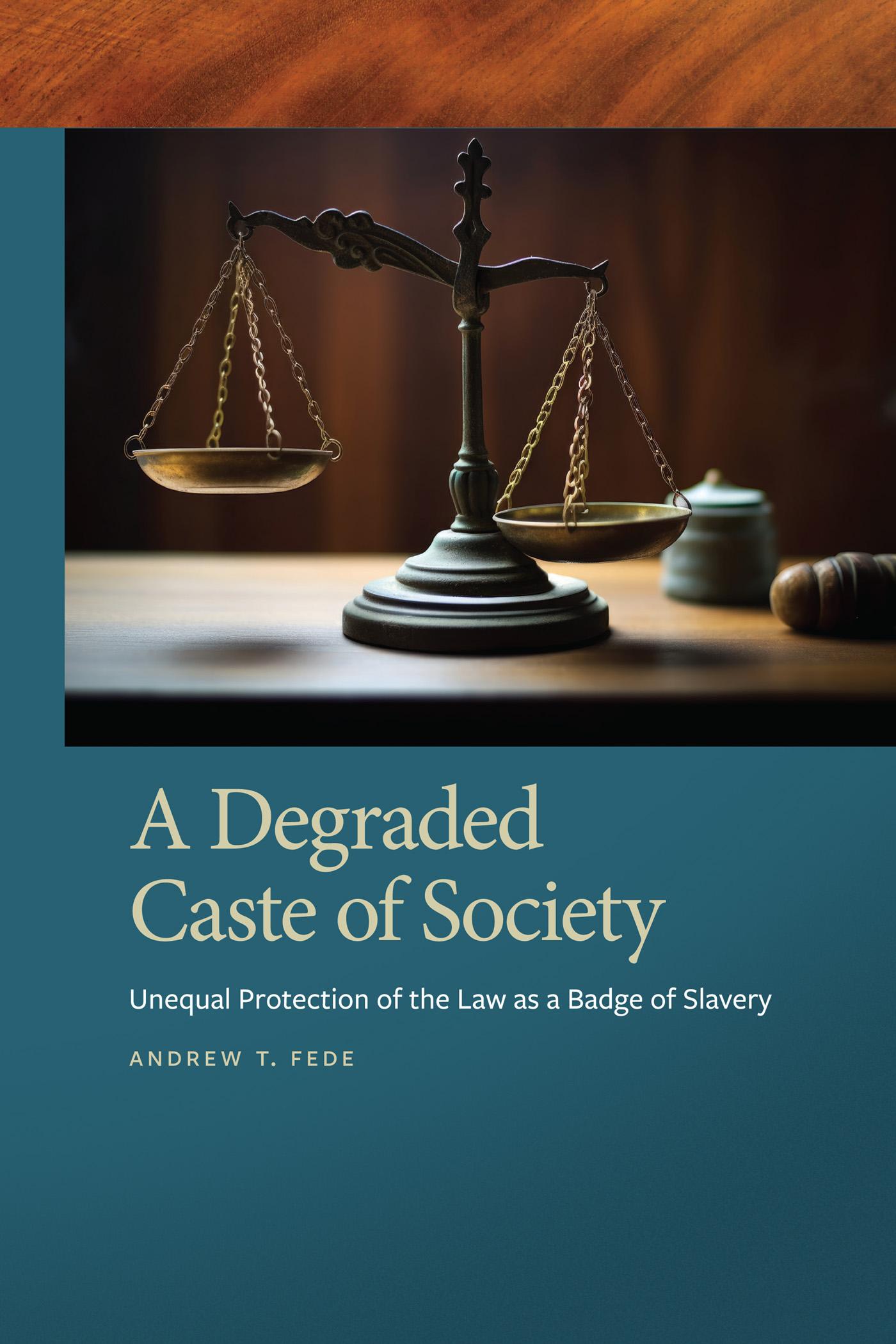
A Degraded Caste of Society traces the origins of twenty-first-century cases of interracial violence to the separate and unequal protection principles of the criminal law of enslavement in the southern United States. Andrew T. Fede explains how antebellum appellate court opinions and statutes, when read in a context that includes newspaper articles and trial court and census records, extended this doctrine to the South’s free Black people, consigning them to what South Carolina justice John Belton O’Neall called “a degraded caste of society,” in which they were “in no respect, on a perfect equality with the white man.”
This written law either criminalized Black insolence or privileged private white interracial violence, which became a badge of slavery that continued to influence the law in action, contrary to the Constitution’s mandate of equal protection of the criminal law. The U.S. Supreme Court enabled this denial of equal justice, as did Congress, which did not make all private white racially motivated violence a crime until 2009, when it adopted the Matthew Shepard and James Byrd Jr. Hate Crimes Prevention Act.
Fede’s analysis supports that law’s constitutionality under the Thirteenth Amendment, while suggesting why—during the Jim Crow era and beyond—equal protection of the criminal law was not always realized, and why the curse of interracial violence has been a lingering badge of slavery.
Payez facilement par carte, Klarna, Apple Pay ou Google Pay. Pas satisfait ? Vous avez toujours une garantie de remboursement de 14 jours. En savoir plus dans nos conditions. Si vous avez des questions, envoyez-nous un e-mail à hello@memmo.org.
Memmo facilite tes études, où que tu sois dans le monde. On rassemble tes manuels de cours et des outils d'étude intelligents au même endroit : résumés, quiz, podcasts et flashcards. Et il y a Ted, ton compagnon d'étude qui répond à toutes tes questions. Plus de 50 000 étudiants étudient déjà ici – conçu pour t'aider à apprendre plus vite et à moins stresser.