
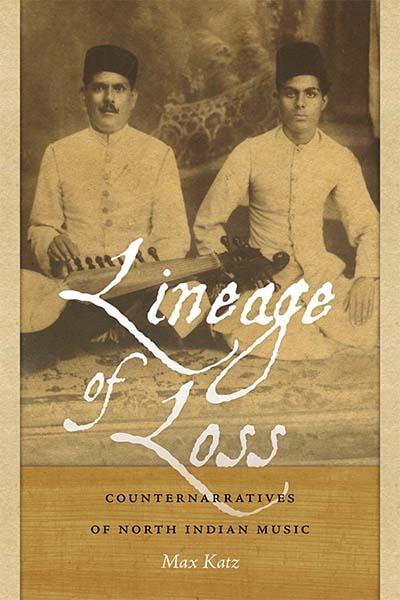
In the middle of the nineteenth century a new family of hereditary musicians emerged in the royal court of Lucknow and subsequently rose to the heights of renown throughout North India. Today this musical lineage, or ghar n, lives on in the music and memories of only a small handful of descendants and players of the family instrument, the sarod. Drawing on six years of ethnographic and archival research, and fifteen years of musical apprenticeship, Max Katz explores the oral history and written record of the Lucknow ghar n ,tracing its displacement, loss of prestige, and erasure from the collective memory. In doing so he illuminates a hidden history of ideological and social struggle in North Indian music culture, intervenes in ongoing debates over the anti-Muslim agenda of Hindustani music's reform movement, and reanimates a lost vision in which Muslim scholar-artists defined the music of the nation. An interdisciplinary, postmodern counter-history, Lineage of Loss offers a new and unsettling narrative of Hindustani music's encounter with modernity.
Payez facilement par carte, Klarna, Apple Pay ou Google Pay. Pas satisfait ? Vous avez toujours une garantie de remboursement de 14 jours. En savoir plus dans nos conditions. Si vous avez des questions, envoyez-nous un e-mail à hello@memmo.org.
Memmo facilite tes études, où que tu sois dans le monde. On rassemble tes manuels de cours et des outils d'étude intelligents au même endroit : résumés, quiz, podcasts et flashcards. Et il y a Ted, ton compagnon d'étude qui répond à toutes tes questions. Plus de 50 000 étudiants étudient déjà ici – conçu pour t'aider à apprendre plus vite et à moins stresser.