
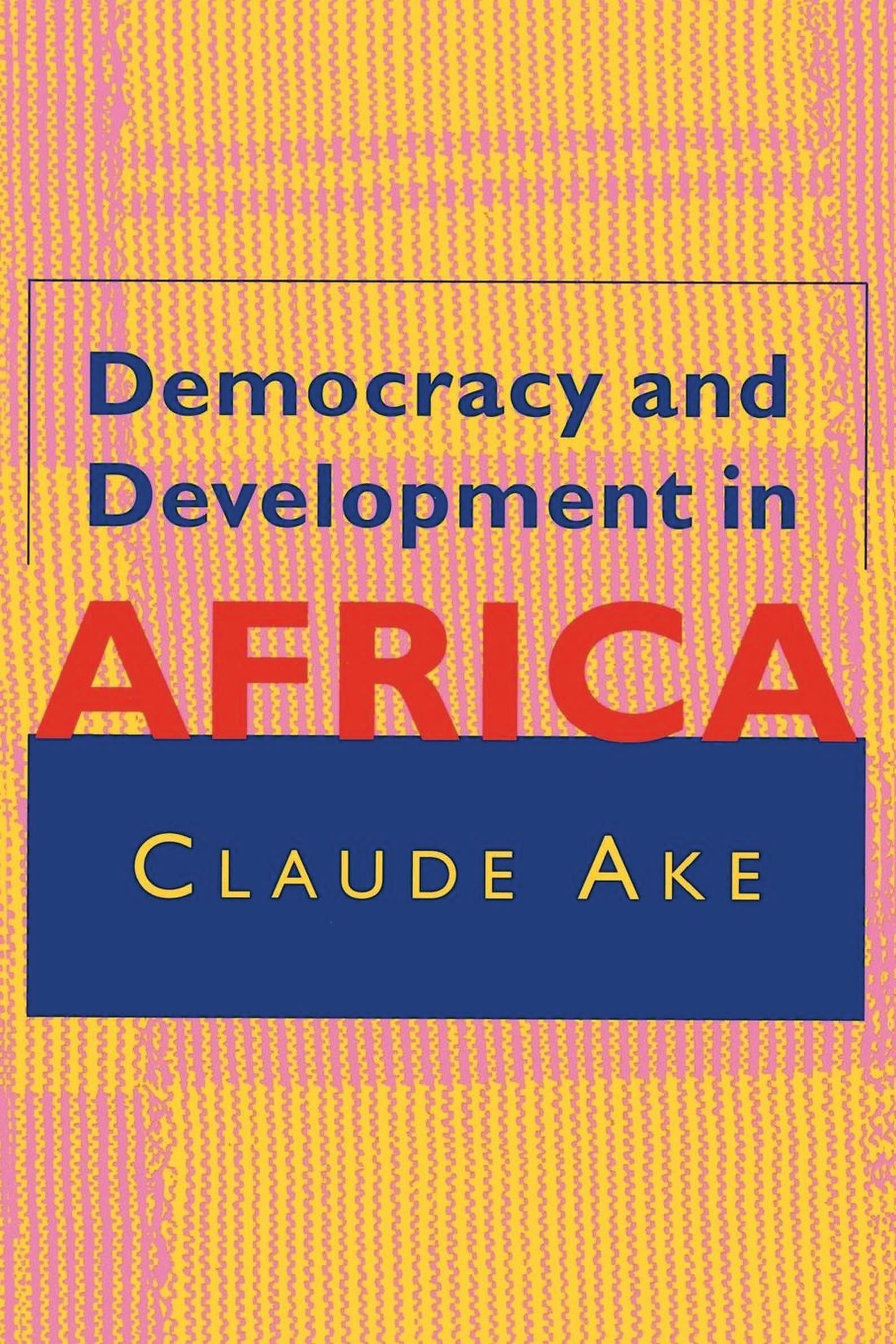
Despite three decades of preoccupation with development in Africa, the economies of most African nations are still stagnating or regressing. For most Africans, incomes are lower than they were two decades ago, health prospects are poorer, malnourishment is widespread, and infrastructures and social institutions are breaking down.
An array of factors have been offered to explain the apparent failure of development in Africa, including the colonial legacy, social pluralism, corruption, poor planning and incompetent management, limited in-flow of foreign capital, and low levels of saving and investment. Alone or in combination, these factors are serious impediments to development, but Claude Ake contends that the problem is not that development has failed, but that it was never really on the agenda. He maintains that political conditions in Africa are the greatest impediment to development.
In this book, Ake traces the evolution and failure of development policies, including the IMF stabilization programs that have dominated international efforts. He identifies the root causes of the problem in the authoritarian political structure of the African states derived from the previous colonial entities. Ake sketches the alternatives that are struggling to emerge from calamitous failure--economic development based on traditional agriculture, political development based on the decentralization of power, and reliance on indigenous communities that have been providing some measure of refuge from the coercive power of the central state. Ake's argument may become a new paradigm for development in Africa.
An array of factors have been offered to explain the apparent failure of development in Africa, including the colonial legacy, social pluralism, corruption, poor planning and incompetent management, limited in-flow of foreign capital, and low levels of saving and investment. Alone or in combination, these factors are serious impediments to development, but Claude Ake contends that the problem is not that development has failed, but that it was never really on the agenda. He maintains that political conditions in Africa are the greatest impediment to development.
In this book, Ake traces the evolution and failure of development policies, including the IMF stabilization programs that have dominated international efforts. He identifies the root causes of the problem in the authoritarian political structure of the African states derived from the previous colonial entities. Ake sketches the alternatives that are struggling to emerge from calamitous failure--economic development based on traditional agriculture, political development based on the decentralization of power, and reliance on indigenous communities that have been providing some measure of refuge from the coercive power of the central state. Ake's argument may become a new paradigm for development in Africa.
Pages: 173
Catégorie: Statsvetenskap & Politik
e-ISBN: 9780815723486
Poids d'expédition: 1.2 kg
Expédié sous: 1-2 jours
Payez facilement par carte, Klarna, Apple Pay ou Google Pay. Pas satisfait ? Vous avez toujours une garantie de remboursement de 14 jours. En savoir plus dans nos conditions. Si vous avez des questions, envoyez-nous un e-mail à hello@memmo.org.
Memmo facilite tes études, où que tu sois dans le monde. On rassemble tes manuels de cours et des outils d'étude intelligents au même endroit : résumés, quiz, podcasts et flashcards. Et il y a Ted, ton compagnon d'étude qui répond à toutes tes questions. Plus de 50 000 étudiants étudient déjà ici – conçu pour t'aider à apprendre plus vite et à moins stresser.