
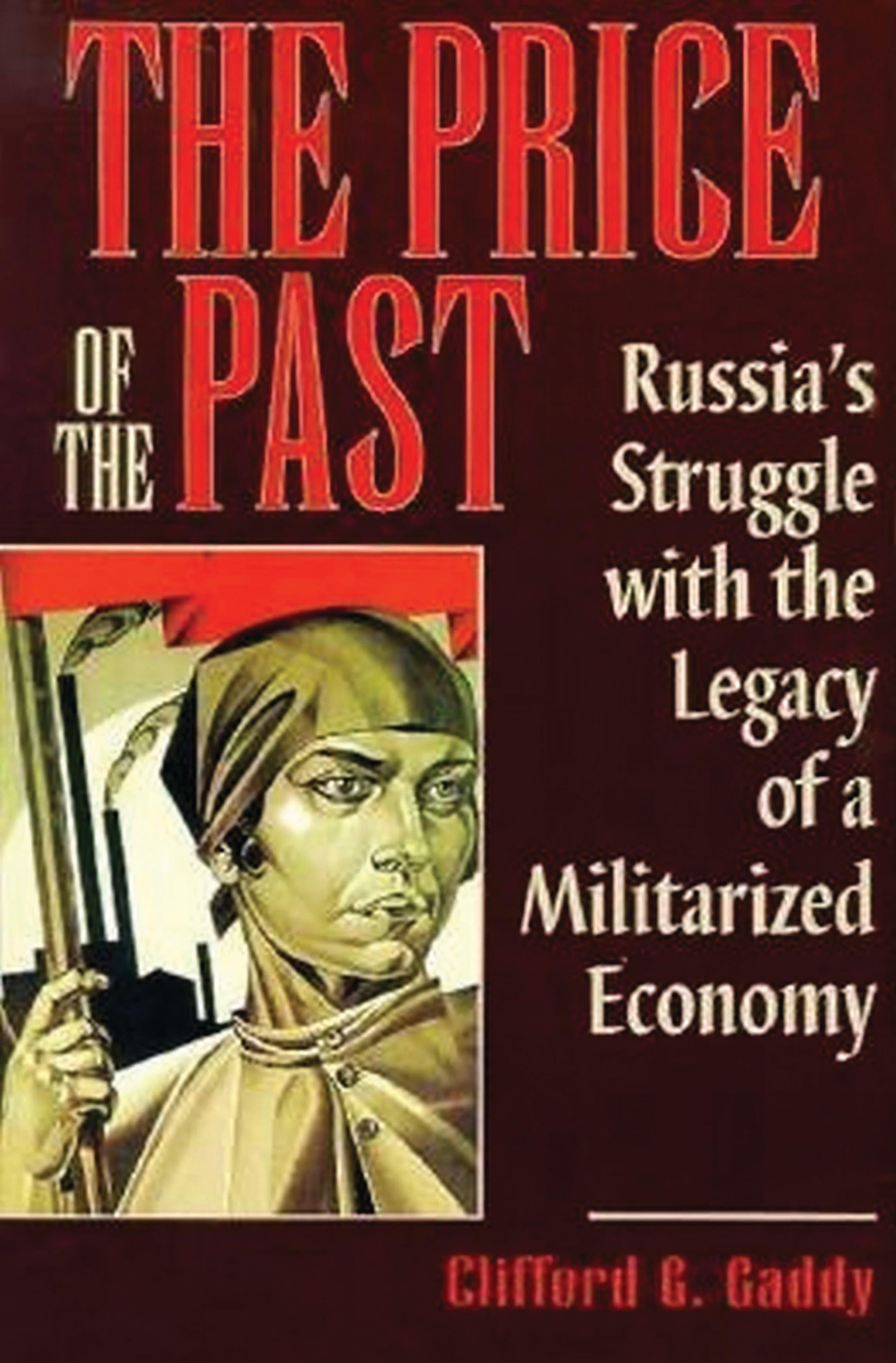
For nearly sixty years, the Soviet Union had the most militarized economy in history. The sheer volume of arms produced, and the physical and human dimensions of the industrial apparatus used to produce those arms, was unmatched. Militarization affected every fiber of the economic system; for individuals and households, it provided support for measures to restrict free choice in almost every aspect of people's personal lives, from where they lived and worked to what they ate and wore.
All of this has now changed radically. Russia has removed nearly all the restrictions on individuals and it is now drastically reducing its military-industrial sector. By some measures, one could say that the country has already demilitarized. Russia today produces only a small fraction of the arms it did five years ago, but militarization of the economy is far from an issue of the past for Russia. As this book clearly demonstrates, the costs which it imposed represent one of the biggest continuing burdens that Russia will have to bear. One of Clifford Gaddy's main purposes of this book is to uncover the enduring costs of militarization.
This book differs from other studies of the overall effect of militarization on Soviet society in two ways. First, it stresses the connection between market reform and demilitarization. It shows how introducing market prices and giving citizens and firms freedom of choice have progressively stripped away many of the advantages previously enjoyed by the Soviet military-industrial complex. Second, the book concentrates on the consequences of militarization and demilitarization not only for enterprises, but also for individuals and local communities. This broad view provides new insights into how pervasive militarization really was in the past and how difficult demilitarization is and will continue to be in the transition period.
The book is divided into two parts that focus loosely on ""the system"" and ""the people."" The first talks about what the Soviet defense economy was and how it has become encompassed by the overall reform process since 1985. The second analyzes how the behavior of the people at the grassroots is helping to shape the overall process of demilitarization in Russia. Gaddy focuses on the workers of the Russian defense enterprises, the notion of a paternalistic enterprise, and the cities and regions that depend on the defense enterprises. He concludes by assessing what the future of demilitarization will be, with attention to three levels: the enterprises, the people, and the regions.
All of this has now changed radically. Russia has removed nearly all the restrictions on individuals and it is now drastically reducing its military-industrial sector. By some measures, one could say that the country has already demilitarized. Russia today produces only a small fraction of the arms it did five years ago, but militarization of the economy is far from an issue of the past for Russia. As this book clearly demonstrates, the costs which it imposed represent one of the biggest continuing burdens that Russia will have to bear. One of Clifford Gaddy's main purposes of this book is to uncover the enduring costs of militarization.
This book differs from other studies of the overall effect of militarization on Soviet society in two ways. First, it stresses the connection between market reform and demilitarization. It shows how introducing market prices and giving citizens and firms freedom of choice have progressively stripped away many of the advantages previously enjoyed by the Soviet military-industrial complex. Second, the book concentrates on the consequences of militarization and demilitarization not only for enterprises, but also for individuals and local communities. This broad view provides new insights into how pervasive militarization really was in the past and how difficult demilitarization is and will continue to be in the transition period.
The book is divided into two parts that focus loosely on ""the system"" and ""the people."" The first talks about what the Soviet defense economy was and how it has become encompassed by the overall reform process since 1985. The second analyzes how the behavior of the people at the grassroots is helping to shape the overall process of demilitarization in Russia. Gaddy focuses on the workers of the Russian defense enterprises, the notion of a paternalistic enterprise, and the cities and regions that depend on the defense enterprises. He concludes by assessing what the future of demilitarization will be, with attention to three levels: the enterprises, the people, and the regions.
Pages: 263
Catégorie: Ekonomi & Utveckling
e-ISBN: 9780815723301
Poids d'expédition: 1.2 kg
Expédié sous: 1-2 jours
Payez facilement par carte, Klarna, Apple Pay ou Google Pay. Pas satisfait ? Vous avez toujours une garantie de remboursement de 14 jours. En savoir plus dans nos conditions. Si vous avez des questions, envoyez-nous un e-mail à hello@memmo.org.
Memmo facilite tes études, où que tu sois dans le monde. On rassemble tes manuels de cours et des outils d'étude intelligents au même endroit : résumés, quiz, podcasts et flashcards. Et il y a Ted, ton compagnon d'étude qui répond à toutes tes questions. Plus de 50 000 étudiants étudient déjà ici – conçu pour t'aider à apprendre plus vite et à moins stresser.