
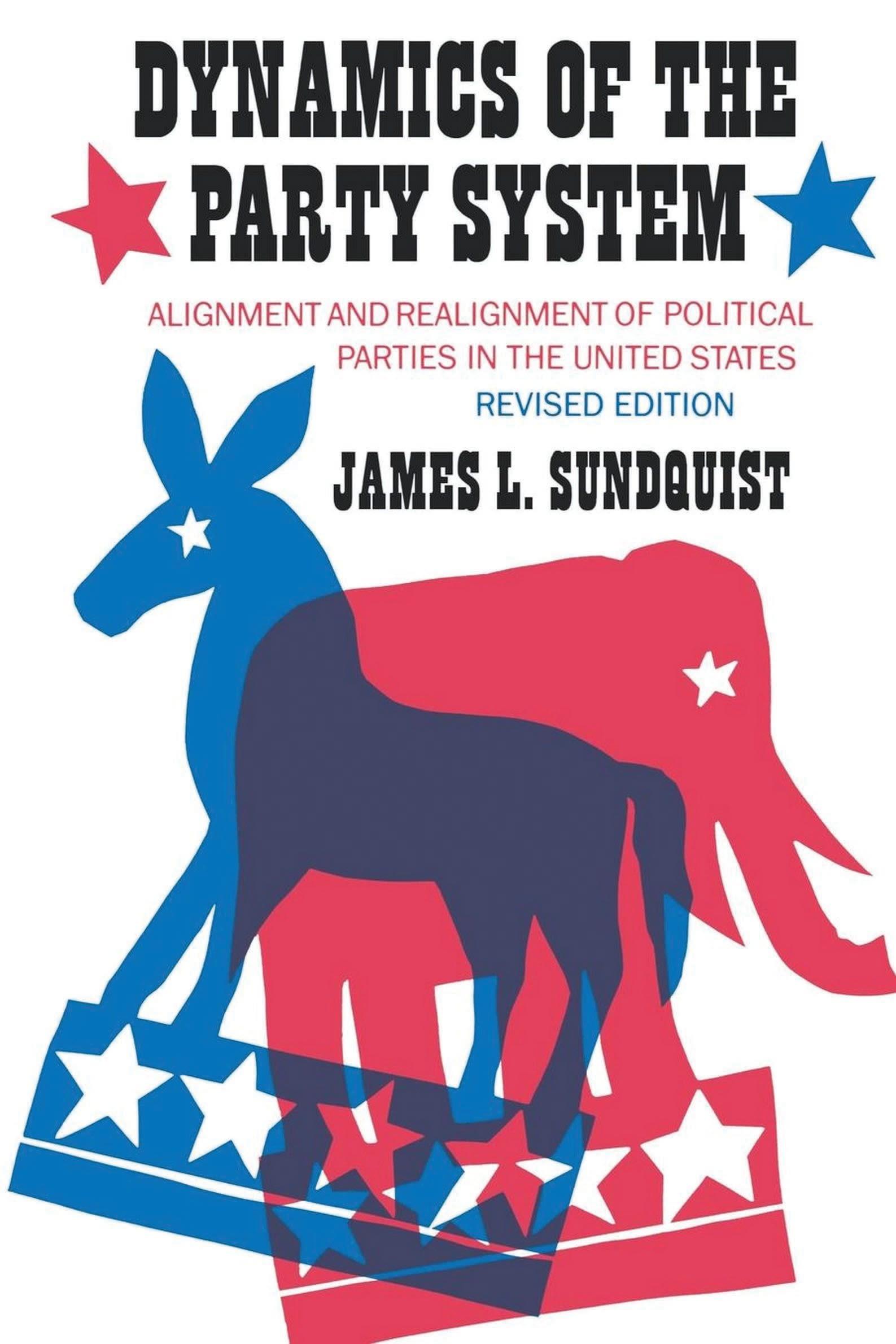
Since the original edition of Dynamics of the Party System was published in 1973, American politics have continued on a tumultuous course. In the vacuum left by the decline of the Democratic and Republican parties, single-interest groups have risen and flourished. Protest movements on the left and the New Right at the opposite pole have challenged and divided the major parties, and the Reagan Revolution--in reversing a fifty-year trend toward governmental expansion--may turn out to have revolutionized the party system too.
In this edition, as in the first, current political trends and events are placed in a historical and theoretical context. Focusing upon three major realignments of the past--those of the 1850s, the 1890s, and the 1930s--Sundquist traces the processes by which basic transformations of the country's two-party system occur. From the historical case studies, he fashions a theory as to the why and how of party realignment, then applies it to current and recent developments, through the first two years of the Reagan presidency and the midterm election of 1982.
The theoretical sections of the first edition are refined in this one, the historical sections are revised to take account of recent scholarship, and the chapters dealing with the postwar period are almost wholly rewritten. The conclusion of the original work is, in general, confirmed: the existing party system is likely to be strengthened as public attention is again riveted on domestic economic issues, and the headlong trend of recent decades toward political independence and party disintegration reversed, at least for a time.
In this edition, as in the first, current political trends and events are placed in a historical and theoretical context. Focusing upon three major realignments of the past--those of the 1850s, the 1890s, and the 1930s--Sundquist traces the processes by which basic transformations of the country's two-party system occur. From the historical case studies, he fashions a theory as to the why and how of party realignment, then applies it to current and recent developments, through the first two years of the Reagan presidency and the midterm election of 1982.
The theoretical sections of the first edition are refined in this one, the historical sections are revised to take account of recent scholarship, and the chapters dealing with the postwar period are almost wholly rewritten. The conclusion of the original work is, in general, confirmed: the existing party system is likely to be strengthened as public attention is again riveted on domestic economic issues, and the headlong trend of recent decades toward political independence and party disintegration reversed, at least for a time.
Payez facilement par carte, Klarna, Apple Pay ou Google Pay. Pas satisfait ? Vous avez toujours une garantie de remboursement de 14 jours. En savoir plus dans nos conditions. Si vous avez des questions, envoyez-nous un e-mail à hello@memmo.org.
Memmo facilite tes études, où que tu sois dans le monde. On rassemble tes manuels de cours et des outils d'étude intelligents au même endroit : résumés, quiz, podcasts et flashcards. Et il y a Ted, ton compagnon d'étude qui répond à toutes tes questions. Plus de 50 000 étudiants étudient déjà ici – conçu pour t'aider à apprendre plus vite et à moins stresser.