
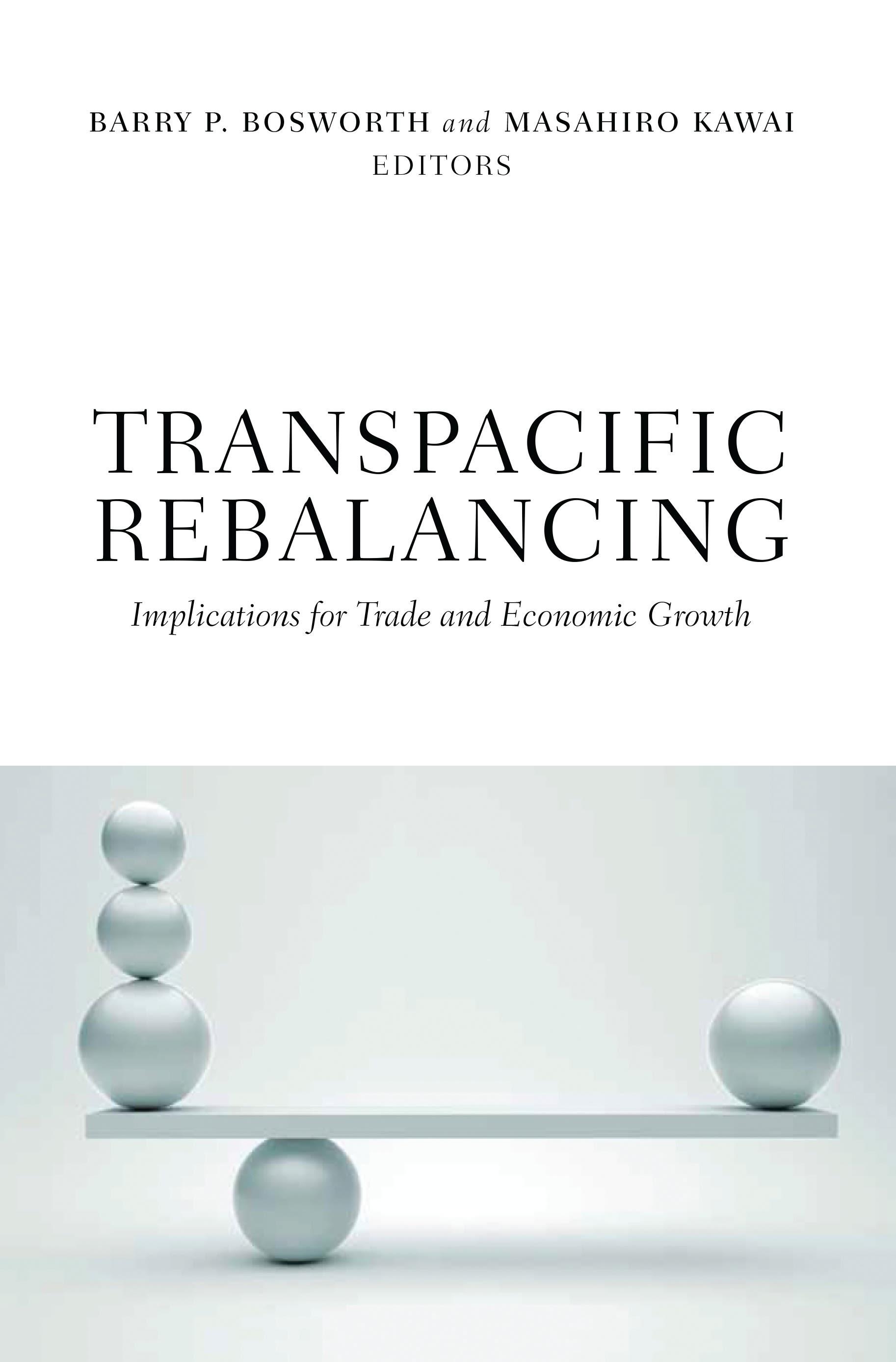
Persistently large external imbalances in the world economy contributed to the outbreak of the recent financial crisis. The current account imbalances were particularly severe among the economies that border on the Pacificthe United States ran large deficits, with offsetting surpluses in East Asia. The depth and breadth of the global recession also demonstrated the need for a coordination of national policies to achieve a sustained recovery.
While the magnitude of global-trade disruption led to some reduction in the size of the imbalances, closer examination suggests that the progress may prove temporary. On the other hand, significant changes in the underlying patterns of saving and investment suggest that some of the recent rebalancing may prove to be more permanent. Are such imbalances really a problem? If so, why and for whom? What should be done about themif anythingand what does the future likely hold for transpacific trade relations? In this timely book, Asian and American economists explore those important questions.
Copublished with the Asian Development Bank Institute, Transpacific Rebalancing is coedited by Barry Bosworthlong one of the Brookings Institution's leading economic analystsand Masahiro Kawai, dean of the ADBI. They brought together leading economists from either side of the Pacific to analyze such issues as:
The impact of exchange rates
The policy choices facing the ""Asian tigers""
The specifics and effects of trade imbalances in specific countries including the United States, South Korea, Thailand, India, and China
Contributors include Hwee Kwan Chow, Susan M. Collins, Barry Eichengreen, Joonkyung Ha, Yping Huang, Ginalyn Komoto, Jong-Wha Lee, Rajiv Kumar, Deunden Nikomborirak, Gisela Rua, Lea Sumulong, Chalongphob Sussankam, Kunyu Tao, Willem Thorbecke, and Pankaj Vashisht.
While the magnitude of global-trade disruption led to some reduction in the size of the imbalances, closer examination suggests that the progress may prove temporary. On the other hand, significant changes in the underlying patterns of saving and investment suggest that some of the recent rebalancing may prove to be more permanent. Are such imbalances really a problem? If so, why and for whom? What should be done about themif anythingand what does the future likely hold for transpacific trade relations? In this timely book, Asian and American economists explore those important questions.
Copublished with the Asian Development Bank Institute, Transpacific Rebalancing is coedited by Barry Bosworthlong one of the Brookings Institution's leading economic analystsand Masahiro Kawai, dean of the ADBI. They brought together leading economists from either side of the Pacific to analyze such issues as:
The impact of exchange rates
The policy choices facing the ""Asian tigers""
The specifics and effects of trade imbalances in specific countries including the United States, South Korea, Thailand, India, and China
Contributors include Hwee Kwan Chow, Susan M. Collins, Barry Eichengreen, Joonkyung Ha, Yping Huang, Ginalyn Komoto, Jong-Wha Lee, Rajiv Kumar, Deunden Nikomborirak, Gisela Rua, Lea Sumulong, Chalongphob Sussankam, Kunyu Tao, Willem Thorbecke, and Pankaj Vashisht.
Pages: 268
Catégorie: Ekonomi & Utveckling
e-ISBN: 9780815722618
Poids d'expédition: 1.2 kg
Expédié sous: 1-2 jours
Payez facilement par carte, Klarna, Apple Pay ou Google Pay. Pas satisfait ? Vous avez toujours une garantie de remboursement de 14 jours. En savoir plus dans nos conditions. Si vous avez des questions, envoyez-nous un e-mail à hello@memmo.org.
Memmo facilite tes études, où que tu sois dans le monde. On rassemble tes manuels de cours et des outils d'étude intelligents au même endroit : résumés, quiz, podcasts et flashcards. Et il y a Ted, ton compagnon d'étude qui répond à toutes tes questions. Plus de 50 000 étudiants étudient déjà ici – conçu pour t'aider à apprendre plus vite et à moins stresser.