
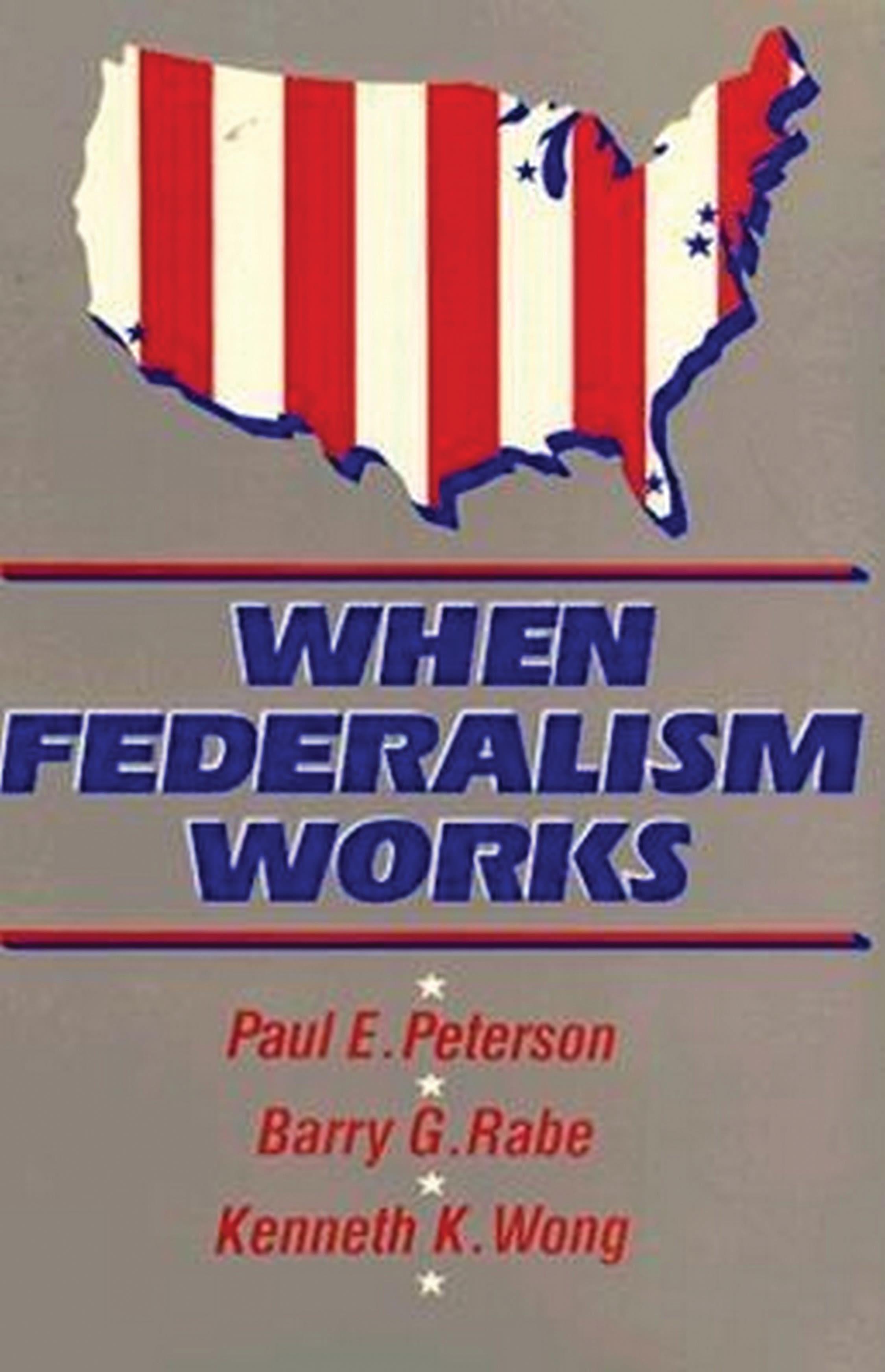
Twenty years ago cooperative federalism, in the form of federal grant-in-aid programs administered by state and local governments, was applauded almost without reservation as the best means of helping the handicapped, the educationally disadvantaged, the poor, and other groups with special needs. More recently these same programs have been criticized for excessive regulations and red tape, bureaucratic ineptitude, and high cost. The criticisms have been used to justify efforts to curb federal domestic spending and terminate many grants-in-aid.
In When Federalism Works, Paul E. Peterson, Barry G. Rabe, and Kenneth K. Wong examine the new conventional wisdom about federal grants. Through documentary research and hundreds of interviews with local, state, and federal administrators and elected officials, they consider the implementation and operation of federal programs for education, health care, and housing in four urban areas to learn which programs worked, when, and why. Why did rent subsidy programs encounter seemingly endless difficulties, while special education was a notable success? Why did compensatory education fare better in Milwaukee than in Baltimore? Among the factors the authors find significant are the extent to which a program is directed toward groups in need, the political and economic circumstances of the area in which it is implemented, and the degree of professionalism among those who administer it at all levels of government.
When Federalism Works provides a solid introduction to the most important grant-in-aid programs of the past twenty years and a thoughtful assessment of where they might be going.
In When Federalism Works, Paul E. Peterson, Barry G. Rabe, and Kenneth K. Wong examine the new conventional wisdom about federal grants. Through documentary research and hundreds of interviews with local, state, and federal administrators and elected officials, they consider the implementation and operation of federal programs for education, health care, and housing in four urban areas to learn which programs worked, when, and why. Why did rent subsidy programs encounter seemingly endless difficulties, while special education was a notable success? Why did compensatory education fare better in Milwaukee than in Baltimore? Among the factors the authors find significant are the extent to which a program is directed toward groups in need, the political and economic circumstances of the area in which it is implemented, and the degree of professionalism among those who administer it at all levels of government.
When Federalism Works provides a solid introduction to the most important grant-in-aid programs of the past twenty years and a thoughtful assessment of where they might be going.
Pages: 245
Catégorie: Statsvetenskap & Politik
e-ISBN: 9780815720492
Poids d'expédition: 1.2 kg
Expédié sous: 1-2 jours
Payez facilement par carte, Klarna, Apple Pay ou Google Pay. Pas satisfait ? Vous avez toujours une garantie de remboursement de 14 jours. En savoir plus dans nos conditions. Si vous avez des questions, envoyez-nous un e-mail à hello@memmo.org.
Memmo facilite tes études, où que tu sois dans le monde. On rassemble tes manuels de cours et des outils d'étude intelligents au même endroit : résumés, quiz, podcasts et flashcards. Et il y a Ted, ton compagnon d'étude qui répond à toutes tes questions. Plus de 50 000 étudiants étudient déjà ici – conçu pour t'aider à apprendre plus vite et à moins stresser.