
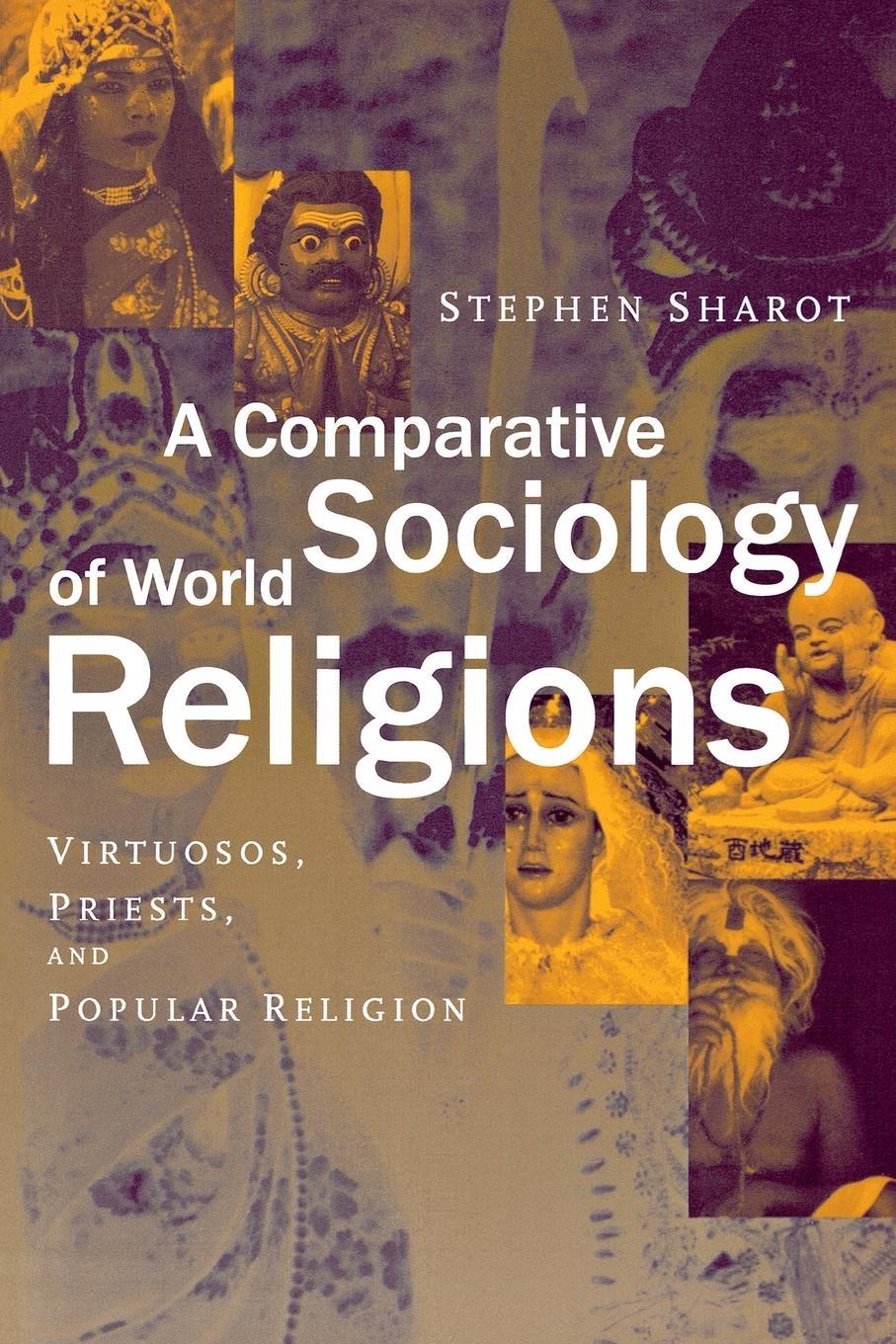
A Sociology of World Religions presents a comparative analysis of the world's religions, focusing on the differences and interrelationships between religious elites and lay masses. In each case the volume contextualizes how the relationships between these two religious forms fit within, and are influenced by, the wider socio-political environment.
After introducing the book's major themes, the volume introduces and builds upon an analysis of Weber's model of religious action, drawing on Durkheim, Marxist scholars, and the work of contemporary sociologists and anthropolgists. The following chapters each focus on major religious cultures, including Hinduism, Buddhism, Catholicism, Protestantism, Islam, Judaism, and the religions of China and Japan. This ambitious project is the first to offer a comparison of the popular, or folk, forms of religion around the world.
Sharot's accessible introductions to each of the world religions, synthesizing a vast literature on popular religion from sociology, anthropology, and historians of religion, make the project ideal for course use. His comparative approach and original analyses will prove rewarding even for experts on each of the world religions.
Payez facilement par carte, Klarna, Apple Pay ou Google Pay. Pas satisfait ? Vous avez toujours une garantie de remboursement de 14 jours. En savoir plus dans nos conditions. Si vous avez des questions, envoyez-nous un e-mail à hello@memmo.org.
Memmo facilite tes études, où que tu sois dans le monde. On rassemble tes manuels de cours et des outils d'étude intelligents au même endroit : résumés, quiz, podcasts et flashcards. Et il y a Ted, ton compagnon d'étude qui répond à toutes tes questions. Plus de 50 000 étudiants étudient déjà ici – conçu pour t'aider à apprendre plus vite et à moins stresser.