
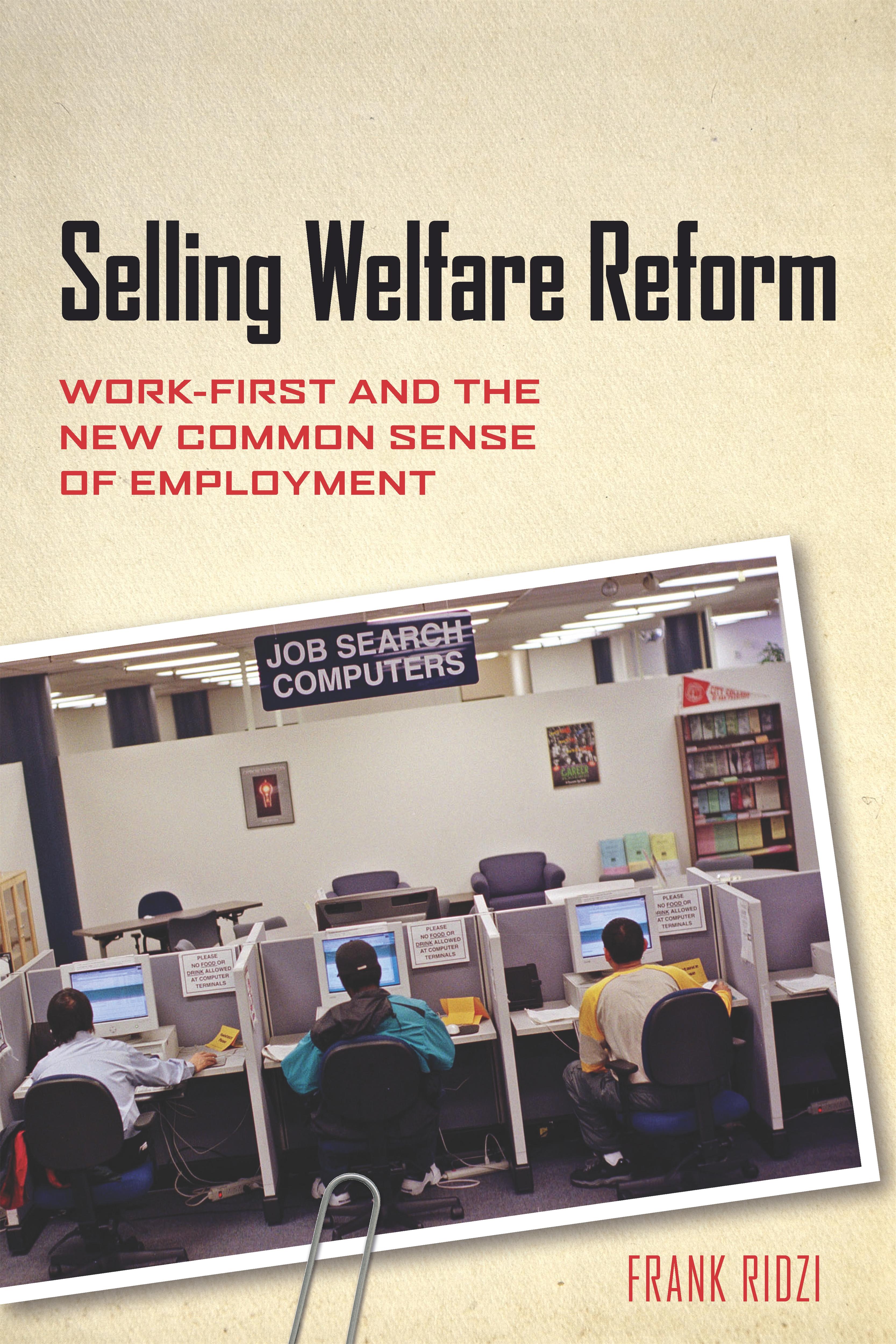
The 1996 Welfare Reform Act promised to end welfare as we knew it. In Selling Welfare Reform, Frank Ridzi uses rich ethnographic detail to examine how new welfare-to-work policies, time limits, and citizenship documentation radically changed welfare, revealing what really goes on at the front lines of the reformed welfare system. Selling Welfare Reform chronicles how entrepreneurial efforts ranging from front-line caseworkers to high-level administrators set the pace for restructuring a resistant bureaucracy. At the heart of this remarkable institutional transformation is a market-centered approach to human services that re-framed the definition of success to include diversion from the present system, de-emphasis of legal protections and behavioral conditioning of poor parents to accommodate employers. Ridzi draws a compelling portrait of how welfare staff and their clients negotiate the complexities of the low wage labor market in an age of global competition, exposing the realities of how the new "common sense" of poverty is affecting the lives of poor and vulnerable Americans.
Payez facilement par carte, Klarna, Apple Pay ou Google Pay. Pas satisfait ? Vous avez toujours une garantie de remboursement de 14 jours. En savoir plus dans nos conditions. Si vous avez des questions, envoyez-nous un e-mail à hello@memmo.org.
Memmo facilite tes études, où que tu sois dans le monde. On rassemble tes manuels de cours et des outils d'étude intelligents au même endroit : résumés, quiz, podcasts et flashcards. Et il y a Ted, ton compagnon d'étude qui répond à toutes tes questions. Plus de 50 000 étudiants étudient déjà ici – conçu pour t'aider à apprendre plus vite et à moins stresser.