
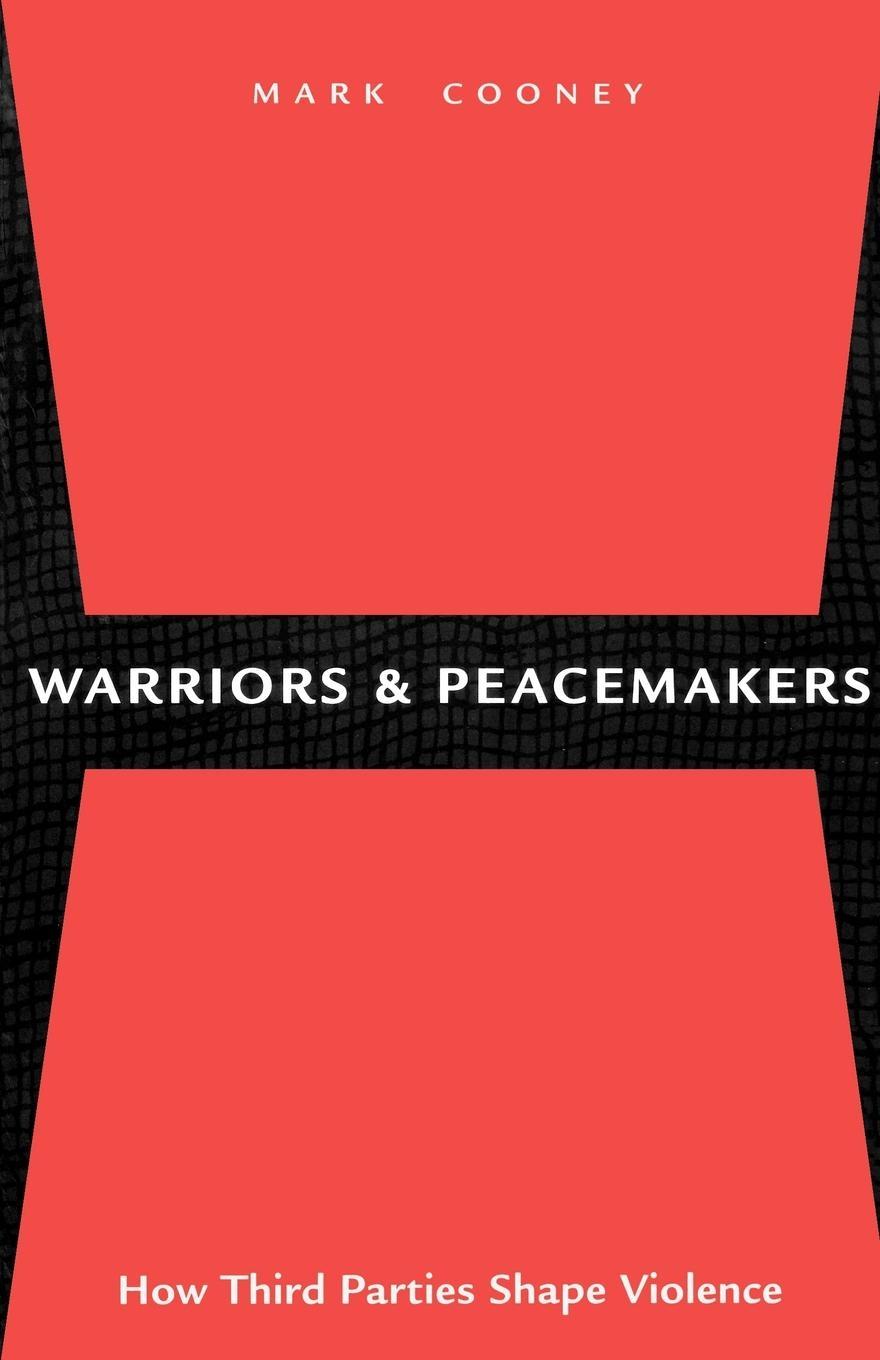
Why do some conflicts escalate into violence while others dissipate harmlessly? Under what circumstances will people kill, and why?
While homicide has been viewed largely in the pathological terms of "crime" and "deviance," violence, Mark Cooney contends, is a naturally-occurring form of conflict found throughout history and across cultures under certain social conditions. Cooney has analyzed the social control of homicide within and across over 30 societies and interviewed several dozens of prisoners incarcerated for murder or manslaughter, as well as members of their families. Violence such as homicide can only be understood, he argues, by transcending the traditional focus on the social characteristics of the killer and victims, and by looking at the role played by family members, friends, neighbors, onlookers, police officers, and judges. These third parties can be a source of peace or violence, depending on how they are configured in particular cases. Violence flourishes, Cooney demonstrates, when authority is either very strong or very weak and when third-party ties are strong and boundaries between groups sharply defined.
Drawing on recent theory in the lively new sociological speciality of conflict management, Mark Cooney has culled a vast array of evidence from modern and preindustrial societies to provide us with the first general sociological analysis of human violence.
Payez facilement par carte, Klarna, Apple Pay ou Google Pay. Pas satisfait ? Vous avez toujours une garantie de remboursement de 14 jours. En savoir plus dans nos conditions. Si vous avez des questions, envoyez-nous un e-mail à hello@memmo.org.
Memmo facilite tes études, où que tu sois dans le monde. On rassemble tes manuels de cours et des outils d'étude intelligents au même endroit : résumés, quiz, podcasts et flashcards. Et il y a Ted, ton compagnon d'étude qui répond à toutes tes questions. Plus de 50 000 étudiants étudient déjà ici – conçu pour t'aider à apprendre plus vite et à moins stresser.