
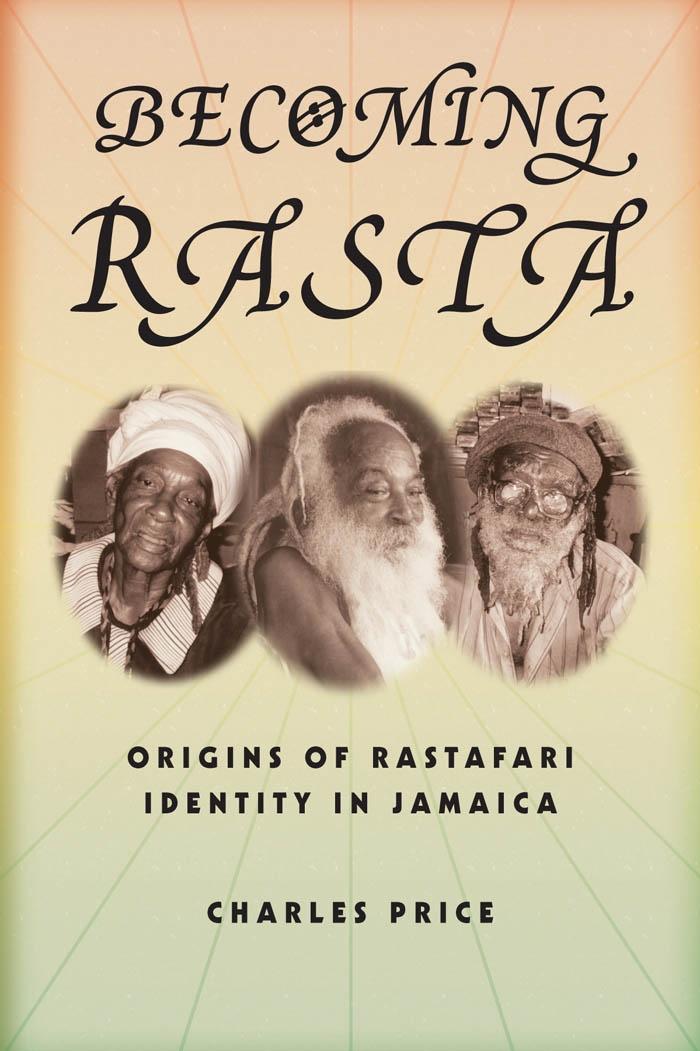
An exploration into why and how Jamaicans become Rastafari in spite of increasing incrimination of the religion
So much has been written about the Rastafari, yet we know so little about why and how people join the Rastafari movement. Although popular understandings evoke images of dreadlocks, reggae, and marijuana, Rastafarians were persecuted in their country, becoming a people seeking social justice. Yet new adherents continued to convert to Rastafari despite facing adverse reactions from their fellow citizens and from their British rulers.
Charles Price draws on in-depth interviews to reveal the personal experiences of those who adopted the religion in the 1950s to 1970s, one generation past the movement's emergence. By talking with these Rastafari elders, he seeks to understand why and how Jamaicans became Rastafari in spite of rampant discrimination, and what sustains them in their faith and identity.
Utilizing new conceptual frameworks, Price explores the identity development of Rastafari, demonstrating how shifts in the movement’s identity—from social pariah to exemplar of Blackness—have led some of the elder Rastafari to adopt, embrace, and internalize Rastafari and blackness as central to their concept of self.
Payez facilement par carte, Klarna, Apple Pay ou Google Pay. Pas satisfait ? Vous avez toujours une garantie de remboursement de 14 jours. En savoir plus dans nos conditions. Si vous avez des questions, envoyez-nous un e-mail à hello@memmo.org.
Memmo facilite tes études, où que tu sois dans le monde. On rassemble tes manuels de cours et des outils d'étude intelligents au même endroit : résumés, quiz, podcasts et flashcards. Et il y a Ted, ton compagnon d'étude qui répond à toutes tes questions. Plus de 50 000 étudiants étudient déjà ici – conçu pour t'aider à apprendre plus vite et à moins stresser.