
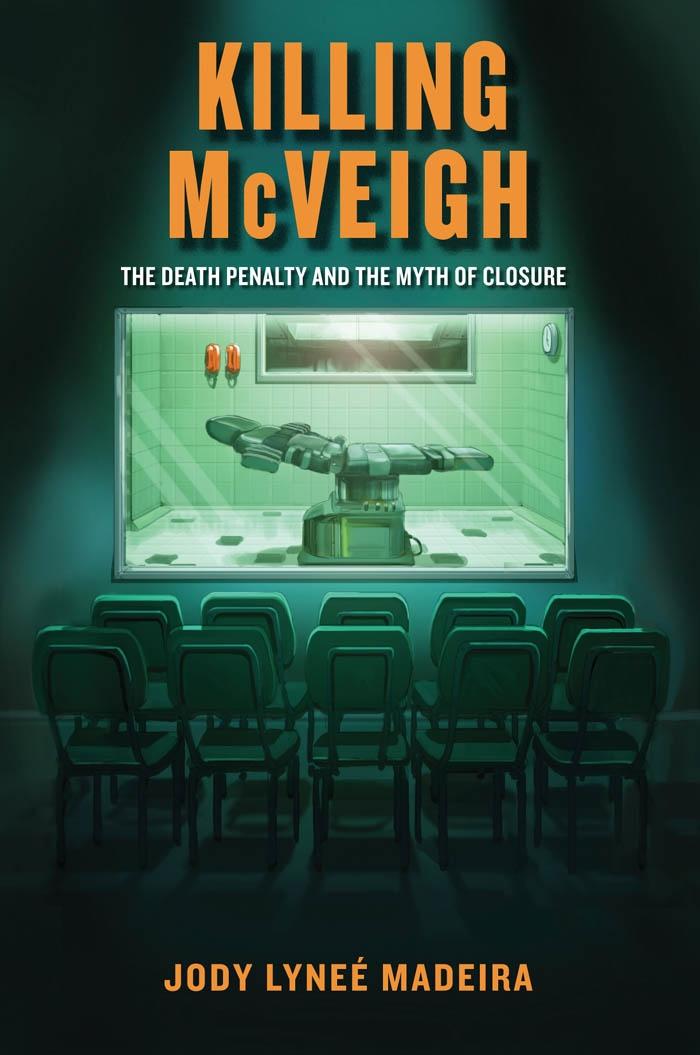
On April 19, 1995, Timothy McVeigh detonated a two-ton truck bomb that felled the Alfred P. Murrah Federal Building in Oklahoma City, killing 168 people. On June 11, 2001, an unprecedented 242 witnesses watched him die by lethal injection.
In the aftermath of the bombings, American public commentary almost immediately turned to “closure” rhetoric. Reporters and audiences alike speculated about whether victim’s family members and survivors could get closure from memorial services, funerals, legislation, monuments, trials, and executions. But what does “closure” really mean for those who survive—or lose loved ones in—traumatic acts? In the wake of such terrifying events, is closure a realistic or appropriate expectation?
In Killing McVeigh, Jody Lyneé Madeira uses the Oklahoma City bombing as a case study to explore how family members and other survivors come to terms with mass murder. The book demonstrates the importance of understanding what closure really is before naively asserting it can or has been reached.
Payez facilement par carte, Klarna, Apple Pay ou Google Pay. Pas satisfait ? Vous avez toujours une garantie de remboursement de 14 jours. En savoir plus dans nos conditions. Si vous avez des questions, envoyez-nous un e-mail à hello@memmo.org.
Memmo facilite tes études, où que tu sois dans le monde. On rassemble tes manuels de cours et des outils d'étude intelligents au même endroit : résumés, quiz, podcasts et flashcards. Et il y a Ted, ton compagnon d'étude qui répond à toutes tes questions. Plus de 50 000 étudiants étudient déjà ici – conçu pour t'aider à apprendre plus vite et à moins stresser.