
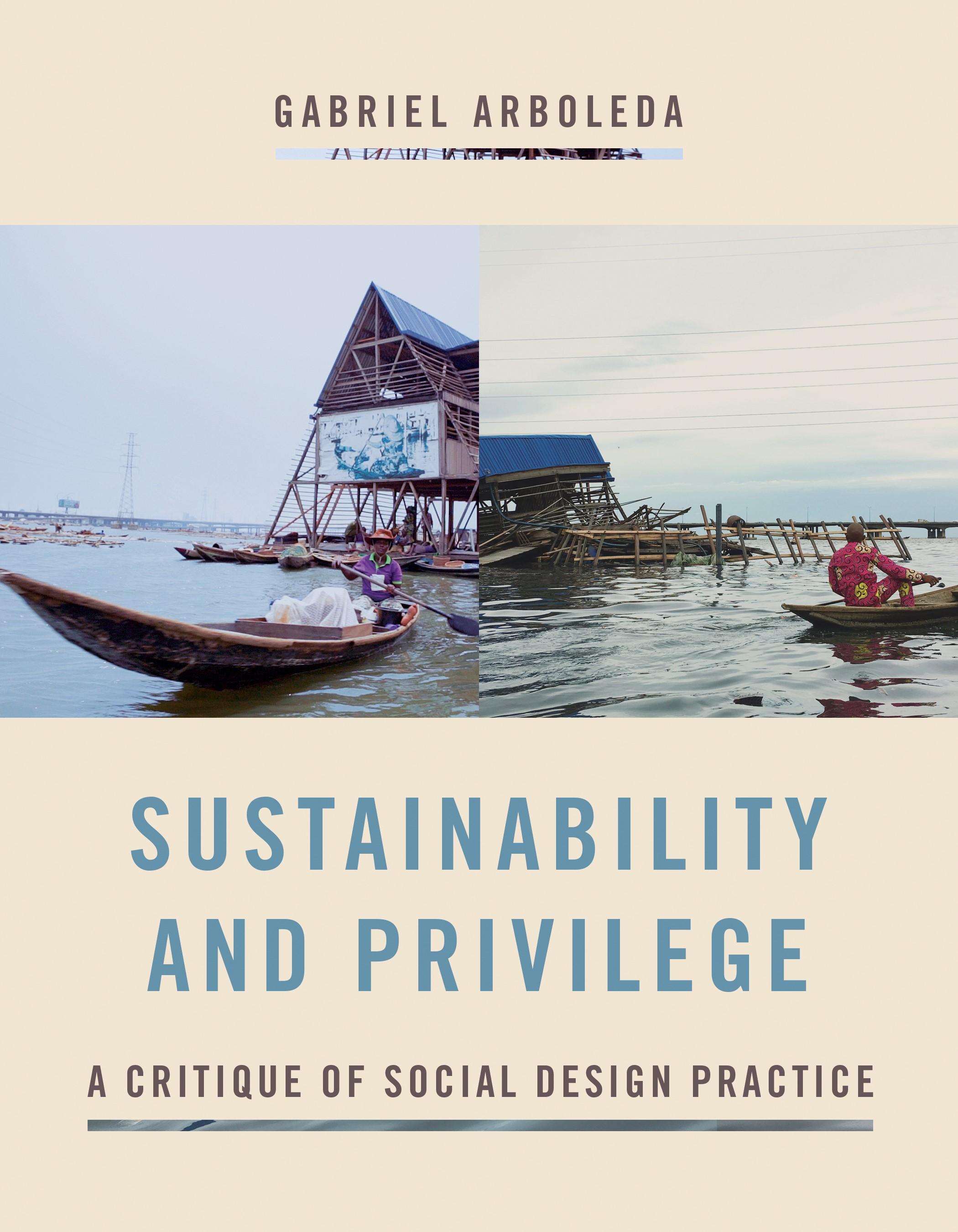
Social design—the practice of designing for poverty relief—is one of the most popular fields in contemporary architecture. Its advocates, focusing on the architect’s creativity and good intentions, are overwhelmingly laudatory, while its detractors, concerned with the experience of its beneficiaries, have dismissed it as an expression of cultural imperialism. Placed midway between innocuous celebration and radical critique, Sustainability and Privilege highlights the lessons that can be learned from social design’s current limitations and proposes a feasible way to improve this practice.
In this broad-ranging account, enlivened by fieldwork and case studies, Gabriel Arboleda contends that social design’s invocation of sustainability often serves to marginalize and displace vulnerable populations through projects that involve experimentation of faulty alternative technologies, or that result in so-called green gentrification, or that impose untoward economic and other burdens. Arboleda is fiercely critical of the way social design has been carried out in impoverished regions of the world, most notably in Africa and Latin America. In addressing the challenges posed by issues of privilege in social design’s use of sustainability, the book proposes a new interdisciplinary approach called ethnoarchitecture, arguing for a simpler, open-ended, and stakeholder-driven process that eliminates the casual imposition of the architect’s ideas on vulnerable populations, foregrounding the people’s voices, experience, and input in social design practice.
Payez facilement par carte, Klarna, Apple Pay ou Google Pay. Pas satisfait ? Vous avez toujours une garantie de remboursement de 14 jours. En savoir plus dans nos conditions. Si vous avez des questions, envoyez-nous un e-mail à hello@memmo.org.
Memmo facilite tes études, où que tu sois dans le monde. On rassemble tes manuels de cours et des outils d'étude intelligents au même endroit : résumés, quiz, podcasts et flashcards. Et il y a Ted, ton compagnon d'étude qui répond à toutes tes questions. Plus de 50 000 étudiants étudient déjà ici – conçu pour t'aider à apprendre plus vite et à moins stresser.