
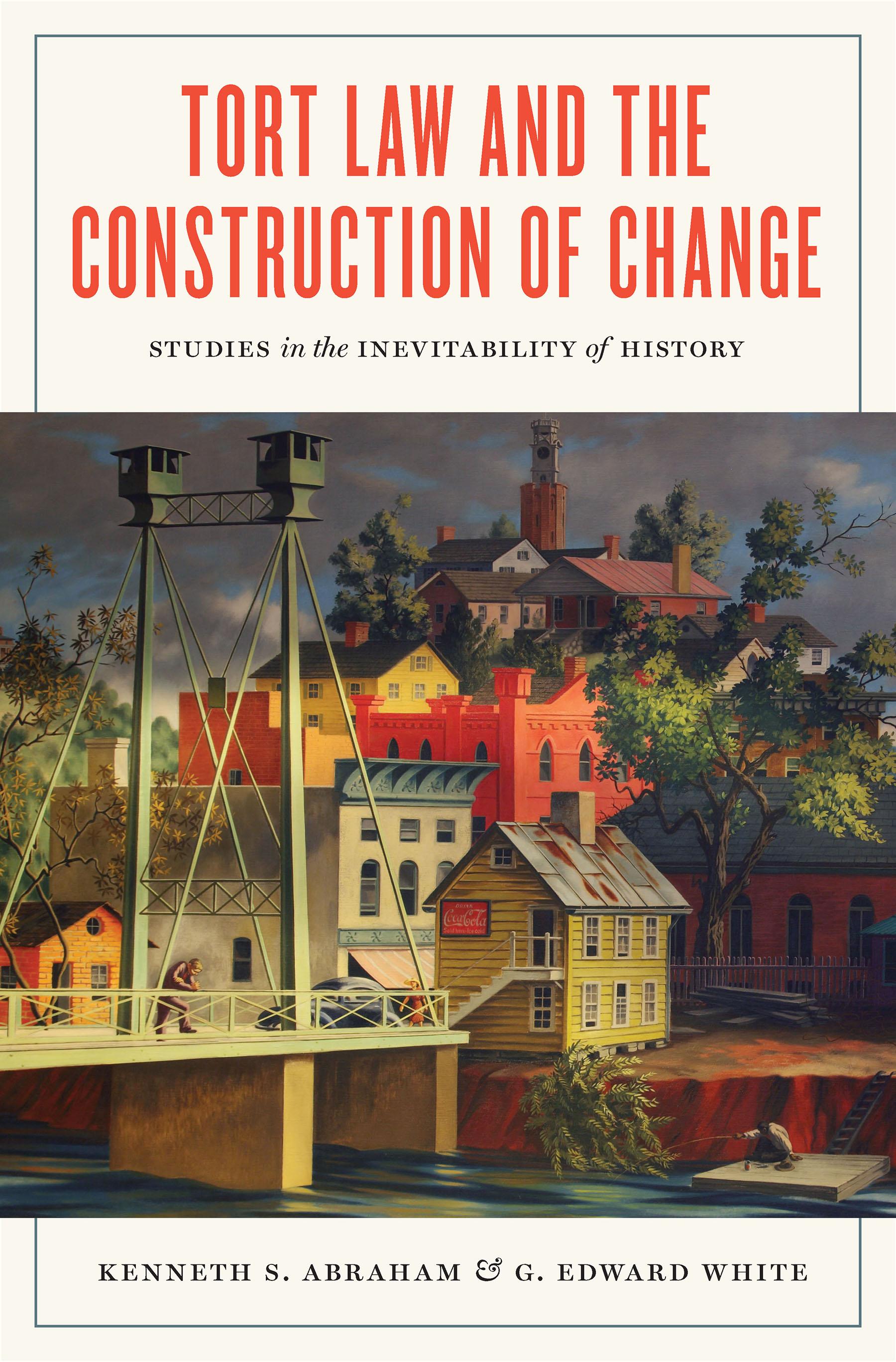
Tort Law and the Construction of Change studies the interaction of law and social change in American history. Tort law—civil law made by judges, not legislators—is traditionally thought to arise out of legal precedent. But Kenneth S. Abraham and G. Edward White show that American judges over the course of the previous two centuries also paid close attention to changing societal contexts in which lawsuits for civil injuries arose. They argue that two versions of history–one grounded in the application of previous legal rules and the other responsive to larger societal changes—must be considered in tandem to grasp fully how American civil law has evolved over time.
In five fascinating chapters, they cover understudied areas of tort law, such as liability for nonphysical harm—including lawsuits for defamation, privacy, emotional distress, sexual harassment, and the hacking of confidential information—and aspects of tort litigation that have now disappeared, such as the prohibition against "interested" parties testifying in civil actions or the intentional infliction of temporal damage without justification. What emerges is a picture of the complicated legal dance American judges performed to cloak their decisions to make at times radical changes in tort law in response to social transformations. When confronting established tort doctrines under pressure from emerging social changes, they found ways to preserve at least the appearance of doctrinal continuity.
Payez facilement par carte, Klarna, Apple Pay ou Google Pay. Pas satisfait ? Vous avez toujours une garantie de remboursement de 14 jours. En savoir plus dans nos conditions. Si vous avez des questions, envoyez-nous un e-mail à hello@memmo.org.
Memmo facilite tes études, où que tu sois dans le monde. On rassemble tes manuels de cours et des outils d'étude intelligents au même endroit : résumés, quiz, podcasts et flashcards. Et il y a Ted, ton compagnon d'étude qui répond à toutes tes questions. Plus de 50 000 étudiants étudient déjà ici – conçu pour t'aider à apprendre plus vite et à moins stresser.