
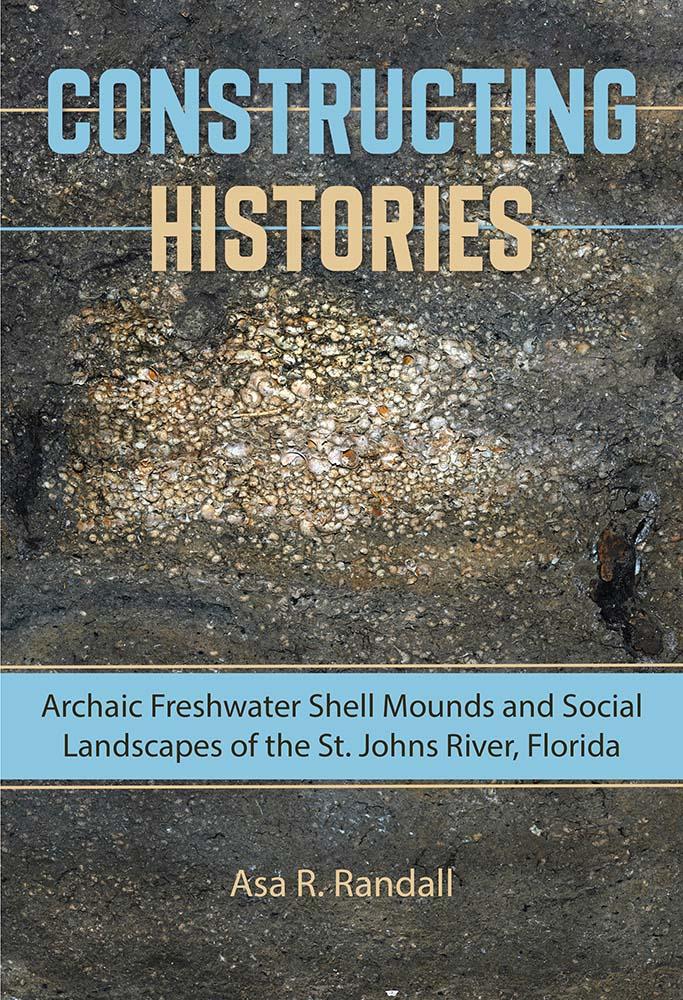
Large accumulations of ancient shells on coastlines and riverbanks were long considered the result of garbage disposal during repeated food gatherings by early inhabitants of the southeastern United States. In this volume, Asa R. Randall presents the first new theoretical framework for examining such middens since Ripley Bullen’s seminal work sixty years ago. He convincingly posits that these ancient “garbage dumps” were actually burial mounds, ceremonial gathering places, and often habitation spaces central to the histories and social geography of the hunter-gatherer societies who built them.
Synthesizing more than 150 years of shell mound investigations and modern remote sensing data, Randall rejects the long-standing ecological interpretation and redefines these sites as socially significant monuments that reveal previously unknown complexities about the hunter-gatherer societies of the Mount Taylor period (ca. 7400–4600 cal. B.P.). Affected by climate change and increased scales of social interaction, the region’s inhabitants modified the landscape in surprising and meaningful ways. This pioneering volume presents an alternate history from which emerge rich details about the daily activities, ceremonies, and burial rituals of the archaic St. Johns River cultures.
Payez facilement par carte, Klarna, Apple Pay ou Google Pay. Pas satisfait ? Vous avez toujours une garantie de remboursement de 14 jours. En savoir plus dans nos conditions. Si vous avez des questions, envoyez-nous un e-mail à hello@memmo.org.
Memmo facilite tes études, où que tu sois dans le monde. On rassemble tes manuels de cours et des outils d'étude intelligents au même endroit : résumés, quiz, podcasts et flashcards. Et il y a Ted, ton compagnon d'étude qui répond à toutes tes questions. Plus de 50 000 étudiants étudient déjà ici – conçu pour t'aider à apprendre plus vite et à moins stresser.